FEC corporate event attractions host a company group. Buyers need a named group to finish on a clock. A ride that stalls a 40-person arrival is a weak event pick.
Call (423) 892-7264 to schedule a design consultation
This guide covers the questions to settle before you add or rework those attractions. It stays on group size, session length, floor space, staffing, and private use. It does not price equipment, and it does not replace a team-building activity menu.
What FEC corporate event attractions have to do
A corporate booking is a timed promise. The host tells a planner that 30, 60, or 100 people can play, eat, and leave inside a set window. FEC corporate event attractions earn that promise only when four things are true at once.
- A full group can start without a long safety talk for every person.
- One session ends before the next wave needs the same floor.
- Guests who sit out still have a place to watch or wait.
- Walk-in families are not pushed out of the building for a modest buyout.
Birthday traffic and corporate traffic pull on the same floor in different ways. A party of eight can trickle through mini golf. A company group often arrives on one bus or in one lobby surge. If the attraction only works for the trickle, the event host ends up apologizing in the party room.
Amusement Products builds and supports attractions for that kind of floor, including Spin Zone bumper cars, LazerFury 360, electric go-karts, and compact group games. The right pick depends on the questions below, not on which ride is newest. A design and consultation review is the right time to test a group size against the real floor.
Which group facts should you collect first?
Ask the booker for numbers before you talk about themes. Five facts decide whether an attraction can host the group you are selling.
- Headcount and age mix. Note drivers, non-drivers, and anyone who will only watch. A buddy seat or a low height rule changes who can ride.
- Arrival shape. One bus at 5:30 is not the same as guests arriving across an hour. Wave size sets how many seats you need at once.
- Play window. Most company events want a short block, then food or awards. A 90-minute buyout with a 20-minute session leaves room for two or three turns, not unlimited replay.
- Private versus shared. Some groups want the arena alone. Others will share if the host can still start them together.
- Repeat use. A quarterly client night needs a format staff can reset fast. A once-a-year retreat can use a longer briefing.
Write those answers into the event sheet before you quote a package. If the sheet only says “team event, about 50 people,” you do not yet know whether the floor can hold them.
Operators who already plan the wider floor can use the family entertainment center attraction mix guide for the rest of the building. This article stays on the corporate booking itself.
How should session length and throughput line up?
Throughput is how many guests finish a fair turn before the clock runs out. It is not the same as how many people fit in a photo.
Start with three numbers: seats in one session, minutes per session including load and exit, and minutes the group actually has. Then divide. If 24 people have 40 minutes and each session holds 8 riders for 10 minutes, you can offer three turns with a little slack. If loading takes longer than you modeled, the last wave misses food.
Short, repeatable rounds suit a lobby surge. VEX PartyDash, which Amusement Products distributes in North America and Mexico, is a 4-player game in a 10 by 10 foot pad with rounds of about 2 to 5 minutes and no headsets. That shape works when many small groups rotate while the rest of the company is in a party room. It is a poor fit if the buyer wants all 40 people playing the same round together.
Longer shared sessions suit a private arena. LazerFury 360 is a laser-shooting vehicle that rotates fully and offers team or individual play, with a briefing video so staff are not inventing rules at the door. Arena footprint depends on the number of vehicles and the site layout. A buyer who wants one company-wide scoreboard is asking for this kind of session, not a two-minute pad game.
Go-karts need the same math, plus a safety limit. Electric karts from Amusement Products use four speed modes: Rookie, Novice, Family, and Competition. A mixed company group often stays in a slower mode so first-time drivers and experienced guests can share one session. Do not promise track time you cannot staff.
How much space does a corporate group actually need?
The arena is only part of the footprint. Corporate groups also need a lobby hold, a path that does not cross a queue, and a room for food or a short talk. If those pieces are on opposite ends of the building, the host loses the clock in the hallway.
| Question | What to measure | Why it changes the booking |
|---|---|---|
| Arena or course size. | Clear floor, not just the lease line. | A tight arena cannot take a full company wave. |
| Holding area. | Standing room for the next wave. | Stops the lobby from becoming the queue. |
| Party room link. | Steps from play to food. | Short paths keep a 90-minute event intact. |
| Viewing. | Seats or rail for non-riders. | Guests who sit out still feel included. |
| Shared paths. | Crossings with walk-in queues. | A private group should not block families. |
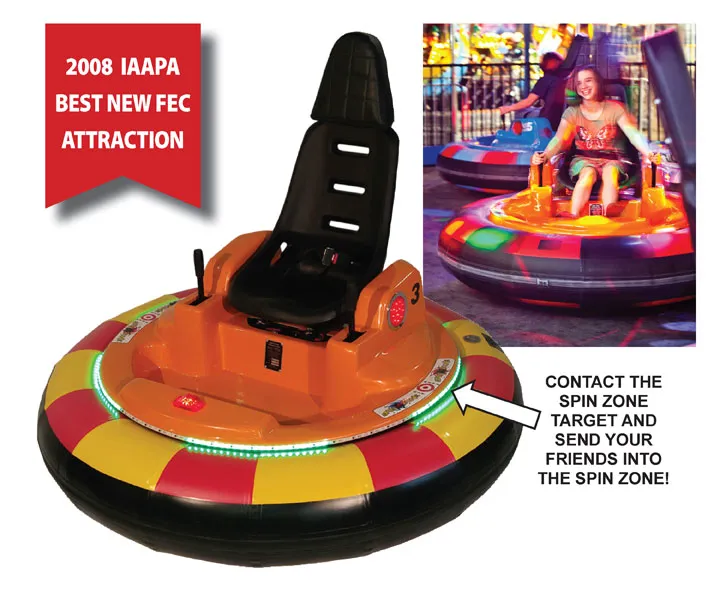
Spin Zone bumper cars show how specific this gets. The floor can be wood, concrete, asphalt, or even ice, and the layout is customized from about 600 to 1,500 square feet. A design note for a small Spin Zone pad is 25 by 25 feet for five cars. Top speed is 4 mph. Drivers start at age 5, and a buddy seat can hold a young passenger. That is a group-friendly floor, but only if the wave matches the car count.
Flip Zone is a different bumper car: the seat flips forward or backward, the minimum driver height is 42 inches, and the minimum age is 6. A mixed company outing that includes shorter guests may need Spin Zone cars, not a flip-only fleet. Putting both in one arena is possible, but staff must know who is cleared for which car.
Measure the party room as part of the attraction, not as an afterthought. If awards happen in the room, leave a clear door so a wave can exit without walking back through riders still on the floor.
What should operators confirm about safety and access?
Corporate buyers will ask who is liable, who gives the speech, and what happens when someone cannot ride. Answer with the rules for that attraction, not a generic waiver line.
Amusement ride design in the United States is commonly checked against ASTM F2291, the standard practice for design of amusement rides and devices. The current edition is published by ASTM International. Your local authority still decides inspection and licensing. IAAPA’s safety resources are a practical companion for operator training, not a substitute for the code your inspector enforces.
Access is a separate question. Public attractions must consider the ADA Title II regulations where they apply, including how a guest who cannot ride still joins the event. A viewing rail, a scoreboard outside the arena, or a non-riding role in a team game is part of the plan. Do not promise that every guest can drive every vehicle.
Height, weight, and restraint rules belong on the event page the planner sees before they pay. LazerFury 360 uses a padded shoulder restraint and a lap belt. Spin Zone caps combined rider weight at 350 pounds. Hiding those limits until arrival creates a bad event, even when the hardware is sound.
Staffing is part of safety. A private buyout still needs a trained operator on the floor, a person at the door, and someone who can move the next wave. If your Friday night roster cannot cover that, sell a smaller shared session instead of a full shutdown.
How do you keep walk-in guests and private groups apart?
The most common failure is not the ride. It is selling a private hour on a floor that families are already using.
Decide which of these you are actually offering:
- Shared floor, reserved start. The group gets the next session together, then the floor reopens. This works for short rounds and smaller headcounts.
- Zone buyout. One arena closes to the public. Other attractions stay open. Guests need a path that does not cut through the closed zone.
- Full building buyout. Walk-in sales stop. Use this only when the booking covers the labor and the lost public hour.
Put the choice in writing. A planner who hears “private” may expect an empty building. Your team may mean “private session inside one arena.” Those are different products.
Electric go-karts make the conflict obvious because the track is one shared asset. A company session in Rookie or Family mode can be fenced in time. Then the track returns to public races. Remote speed control and an all-stop are operator tools. They are not extras to skip when a group is “just having fun.” The electric go-kart lineup is built for indoor and outdoor commercial tracks. The event plan still has to name who is on the pit stand.
If bumper cars are the draw, read how to add a bumper car attraction to an existing FEC before you assume the current floor can close for an hour. Layout and power limits show up late if you start with the party menu.
Which questions belong in a design consult?
Bring a drawing and the event sheet, not a mood board. A useful consult answers whether the building can run the booking you want to sell next quarter.
Request a design and consultation review
Ask these questions in order:
- What is the largest wave we can start at once, and how many minutes does load, play, and exit take?
- Where do non-riders stand or sit without blocking the exit?
- Can a party room sit next to this floor, or do we need a holding area in between?
- What stays open for walk-in guests during a zone buyout?
- Which height, age, and weight rules must appear on the event page?
- How many trained staff does a private hour require on a Friday?
- What maintenance reset happens between a company group and the public reopening?
Amusement Products design work covers park layout, go-kart tracks, bumper car arenas, and miniature golf, drawing on decades of building and running these floors. Financing questions, if you have them, belong in a separate pass. The FEC equipment financing guide is the place for that topic. This consult is about whether the event can run.
If you are still choosing the rest of the building, the equipment planning guide walks through a broader shopping list. Keep corporate event rules as their own checklist so they do not get buried under catalog specs.
How do you turn the answers into a sellable event?
Once the numbers work, write the offer the way the planner will read it. Name the attraction, the largest group, the session length, what “private” means, and who cannot ride. Leave prices off the blog and off any public page that your team has not approved.
A clean offer has three lines a coordinator can forward:
- What the group does, in one sentence.
- How long one turn takes, and how many turns fit in the booking.
- What the venue needs from the planner 48 hours ahead, such as headcount and age mix.
Train the closer and the floor lead on the same sheet. If sales sells a full building and the supervisor planned a zone buyout, the guest feels the gap immediately. Review one real booking after 30 days and fix the sheet before you add a second attraction to the corporate menu.
Operators who want a wider view of venue trends can read the FEC industry trends brief. Use it as context. Do not let trend language replace the seven questions above.
Frequently asked questions
What counts as an FEC corporate event attraction?
It is any attraction you can honestly sell to a company group with a start time. A session length, and a cap on how many people play at once. A photo booth or an open arcade does not qualify unless you can start and stop it for that group.
How big a group can one attraction handle?
Only the session math can answer that. Multiply seats per session by how many sessions fit in the booking, then subtract time to load and exit. If the result is under the headcount, sell a smaller wave or a second attraction, not a longer speech.
Do corporate groups need their own room?
They need a place to gather and a short path back to food or awards. A dedicated party room helps, but a marked holding area can work for a short session if it does not spill into a public queue.
Can walk-in guests stay during a company booking?
Yes, if you sold a shared floor or a zone buyout and the paths do not cross. They cannot stay if you sold a full building buyout. Say which one is on the contract.
When should we call a design partner?
Call before you publish the package. If the largest wave, the party room path, or the private-use rule is still a guess, the booking is not ready to sell.
Plan the corporate event floor before you sell it
FEC corporate event attractions work when the wave size, the clock, and the floor agree. Collect the group facts, run the session math, and write down what private means. Then bring the drawing to a consult instead of guessing in the lobby.