Opening an FEC is not simply a matter of filling a building with attractions. Your choices need to fit the audience you want to serve, the site you can operate, the way guests will move through the venue, and the business model behind it. A practical plan connects equipment selection with capacity, staffing, infrastructure, guest experience, and room for future growth.
Request an FEC design consultation before you finalize your attraction plan.
Choosing family entertainment center equipment starts with your venue, customer profile, attraction mix, operating requirements, and revenue objectives, not with individual products alone. Build the plan around documented assumptions, then compare attractions by space, throughput, age-group fit, supervision, maintenance, and expansion potential.
Amusement Products supports FEC projects as a manufacturer, distributor, and service provider, with planning that can include site evaluation, feasibility work, layout development, and equipment specifications. Before comparing specific attractions, define the decisions that will shape the entire project.
What Should You Plan Before Choosing Family Entertainment Center Equipment?
Start with the business model, not a catalog. Before comparing attractions, define who the venue will serve, what experience you want guests to have, and how the facility will operate on an ordinary weekday as well as a busy weekend. A written business plan can serve as a roadmap through startup and future growth, while market analysis and financial projections help organize the assumptions behind the project. The U.S. Small Business Administration’s business-planning guidance identifies market analysis and financial projections as useful parts of a traditional plan.
Clarify your audience in practical terms. Are you designing primarily for young children and parents, school-age children, teenagers, corporate groups, birthday parties, or a broader mix? Age groups affect attraction selection, supervision, accessibility, dwell time, food and beverage needs, and the way guests move through the venue. Your local market research should also consider competing entertainment options, population characteristics, traffic patterns, and the reasons people would choose your center.
Next, document the site. Record usable square footage, ceiling heights, floor conditions, structural loading, columns, entrances, exits, loading access, utilities, restrooms, storage, parking, and spaces for staff and maintenance. The building may also need electrical, ventilation, lighting, point-of-sale, safety, and guest-service planning. Equipment decisions should follow those conditions rather than force an unsuitable attraction into the available shell.
Define the operating model and revenue objectives before selecting an attraction mix. Identify admission or session assumptions, party and group use, food or retail opportunities, staffing levels, supervision requirements, throughput, queue tolerance, cleaning, inspection, and maintenance responsibilities. This is not a request to predict revenue. It is a way to make the assumptions visible so your feasibility analysis and financial model can be tested.
Finally, decide how the center may expand. Reserve practical space for future attractions, circulation, utilities, storage, and service access instead of filling every open area at launch. Amusement Products describes planning that can include site evaluation, demographics, competition analysis, ROI projections, financial modeling, layout visualizations, and equipment specifications. Treat those as connected decisions. The best family entertainment center equipment plan is a system that fits the audience, site, infrastructure, operating team, and next phase of growth.
Which Attraction Categories Belong in Your FEC Mix?
Your attraction mix should reflect the guests you want to serve, how they move through the building, and how your team will operate the venue. A center focused on families with young children may prioritize age-appropriate play and party support, while a venue targeting older children, teens, and adults may need more active or competitive experiences. The SBA Office of Advocacy has described both models: one facility combined play areas for children under 10 with a cafe and party use, while another attracted older children and adults with activities such as nerf games, archery, and dodge ball. These examples illustrate the planning principle, not a fixed formula.
Consider each attraction’s capacity, energy level, supervision requirements, and role in the guest visit. Some experiences can serve as a primary destination, while others help fill quieter areas. Support parties, extend dwell time, or give different age groups something to do at the same time. The right commercial electric go-kart options may suit a venue built around active competition, while Spin Zone Bumper Cars may provide a distinct group experience. Neither belongs in every project.
| Attraction category | Planning role | Key fit question |
|---|---|---|
| Electric go-karts | Active, competitive anchor attraction | Can the site support the track, loading flow, safety systems, and intended rider groups? |
| Bumper cars | Group-oriented ride experience with broad appeal | Can the venue provide the appropriate arena footprint, surface, queue, and supervision? |
| Miniature golf | Social, repeatable activity that can support varied ages | Will the course fit the available layout and match the desired play experience? |
| Pitching machines | Skill-based activity for practice and friendly competition | Does the audience want a focused sports experience, and can staff manage the operating area? |
| VR attractions | Immersive experience for guests seeking technology-driven play | Can the operating model support equipment oversight, guest onboarding, and reset time? |
| Arcade and party support | Complements core attractions and serves social visits or events | Will these elements improve the guest flow and support the venue’s party and group strategy? |
Plan batting cages for space, safety, and throughput
Batting cages require more than the cage footprint. Plan the cage length and height, pitching-machine location, batter and spectator circulation, netting, protective screens, clearances, lighting, ceiling height, and staff access together. Evaluate expected sessions per hour and reset time so the area can support throughput without creating a queue or safety conflict. Decide how staff will supervise equipment, manage different age or skill groups, inspect the area, and handle balls and routine maintenance. Treat batting cages and pitching machines as a coordinated operating zone, not just an open bay on the floor plan.
Capacity and energy should be balanced rather than concentrated in one experience type. A medium-size venue, for example, may combine attractions with different capacities and energy levels, along with party space or food service. That mix can help families participate together without requiring every guest to choose the same activity. Before selecting equipment, map your primary age groups, expected visit occasions, staffing model, available space, and expansion plan. Then evaluate the categories as one operating system, not as a disconnected list of products.
Amusement Products lists electric go-karts, bumper cars, miniature golf, pitching machines, and VR attractions among its available categories. Its FEC equipment catalog can help you compare starting points, but the final mix should follow your site’s audience and operating assumptions.
How Should You Plan Space for Family Entertainment Center Equipment?
Space planning is not just a matter of measuring the attraction footprint and filling the remaining floor. A workable family entertainment center equipment plan must account for guest flow, operating capacity, safety, service access, and the way one attraction affects another. Start by comparing expected demand with hourly throughput, queue tolerance, and the age groups you intend to serve. A high-capacity attraction can create a bottleneck if its queue blocks party rooms, food service, restrooms, or another attraction.
Review the building itself before selecting equipment. Ceiling height, floor loading, concrete condition, surface flatness, electrical capacity, lighting, ventilation, and utility locations can all shape what is practical. Reserve room for operator stations, guest entry and exit, accessible circulation, storage, cleaning, inspections, and maintenance. Loading areas also need to work for installation and future replacement, not just opening day.
Plan the complete guest and service flow
Draw the movement of guests from arrival through check-in, queueing, participation, exit, and the next activity. Keep queues visible and manageable without allowing them to spill into active traffic lanes. Separate guest circulation from staff movement where possible, and provide clear access to emergency equipment and maintenance points. Staffing assumptions belong on the same plan. An attraction that requires close supervision, frequent reset, or dedicated loading support may need more operational space than its basic footprint suggests.
Attraction-specific details matter. Go-kart track planning may require attention to slope, concrete flatness, loading access, turn radii, traffic signals, control systems, and related amenities. Amusement Products’ go-kart track layout planning resource can help frame those questions. For bumper cars, plan the arena, entry and exit, operating surface, queue, and service access together. The Spin Zone Bumper Cars page describes example footprints ranging from 625 square feet for five cars to 1,800 square feet for 15 cars. These are product and design examples, not universal space requirements.
Leave room for maintenance and expansion
Lifecycle planning should include installation, inspection, cleaning, spare parts, energy use, operator training, and eventual replacement. A master plan can also protect future expansion by placing attractions where later additions will not disrupt utilities or guest circulation. Amusement Products describes planning that considers traffic flow, capacity, site optimization, and growth. So the layout can be evaluated as an operating system rather than a collection of isolated attractions. That approach helps connect the floor plan to staffing, maintenance, utilities, and the experience you want guests to have.
How Do You Budget and Model Revenue Without Guessing?
A credible financial plan begins before you select a piece of family entertainment center equipment. Start with market analysis: who lives or works near the venue, which age groups and occasions you intend to serve. What competing options exist, and how guests are likely to use the facility. The U.S. Small Business Administration identifies market analysis and financial projections as useful parts of a traditional business plan. And those same disciplines help turn an FEC concept into testable assumptions.
Build the model around the complete project, not an isolated equipment line. Document the site, attraction mix, guest flow, capacity, operating schedule, staffing model, utilities, maintenance, insurance, technology, guest amenities, installation, training, and permitting responsibilities. Include expansion plans as well. A layout that supports future growth may change what you build now and how you reserve space, infrastructure, and access for later phases.
Use capacity and throughput as operating assumptions
Revenue modeling should connect demand to what the venue can actually deliver. For each attraction, estimate practical capacity and hourly throughput, then test those assumptions against queue tolerance, operating hours, age-group needs, downtime, and staffing. Avoid treating maximum theoretical capacity as a forecast. A realistic pro forma separates busy periods from slower periods and distinguishes attraction utilization from secondary activity such as parties, food service, or other guest purchases.
Model scenarios, not one promised outcome
Create conservative, expected, and strong-demand scenarios. Change the assumptions that matter most, such as attendance patterns, session utilization, staffing coverage, maintenance interruptions, utility requirements, and the timing of an expansion. The goal is not to produce a dramatic revenue claim. It is to see which assumptions drive the project, identify its constraints, and understand what must be true for the operating plan to work.
Amusement Products describes planning support that can include site evaluation, feasibility analysis, demographics, competition analysis, financial modeling, layout visualizations, and equipment specifications. A design consultation can help connect those financial assumptions to a workable site and attraction plan.
What Should You Ask an FEC Equipment Supplier?
The right supplier conversation should cover more than which attractions you want to install. Your questions should reveal whether the supplier can support the project from design and manufacturing through opening day and routine operation. Use the following checklist when reviewing proposals for family entertainment center equipment.
- What is your manufacturing capacity and quality-control process? Ask where the equipment is made, how production capacity affects your schedule, and what testing occurs before shipment. Request the relevant specifications, materials information, inspection procedures, and safety documentation. If customization is proposed, clarify which elements are standard, which are modified, and how those changes will be tested.
- What exactly is included in the lead time and logistics plan? Confirm the expected production window, packaging, shipping responsibilities, delivery access, and requirements for receiving or storing equipment. Ask what could delay the schedule and who communicates changes. A useful proposal should also identify site conditions that must be ready before delivery, such as floor preparation, utilities, loading access, or other construction work.
- Who handles installation and commissioning? Determine whether the supplier provides installation, system setup, inspections, and commissioning, or whether those responsibilities fall to your contractor. Ask for drawings and a written scope that separates equipment work from civil works, local permits, utilities, and other exclusions. Attraction-specific planning may affect surfaces, traffic flow, loading areas, and operating systems.
- What will my team receive before opening? Ask how operator training is delivered, who attends, and whether it covers safe operation, guest procedures, daily checks, cleaning, shutdowns, and basic troubleshooting. Amusement Products states that it trains staff on its attractions after construction and installation, an important distinction from simply delivering equipment. Review the design and consultation service to understand how project support can connect installation with training.
- How are warranty, spare parts, and maintenance handled? Get the warranty terms in writing, including coverage period, exclusions, response process, and labor responsibilities. Ask which spare parts should be kept on site, how they are ordered, and whether technical support is available after opening. Also discuss inspection, cleaning, preventive maintenance, energy use, and replacement planning so the attraction is evaluated across its full operating lifecycle.
- What is not included in the proposal? Request a clear list of exclusions, assumptions, approvals, and owner responsibilities. The equipment plan should be treated as a complete operating system, not a list of individual attractions. Confirm that the proposal accounts for layout, safety, utilities, guest facilities, storage, maintenance, staffing needs, and the handoffs between your supplier, designer, builder, and local authorities.
A supplier who answers these questions directly gives you a stronger basis for comparing proposals and identifying project risk before construction begins. The best fit is not necessarily the company offering the longest equipment list. It is the partner whose capabilities, documentation, communication, and post-installation support match your venue and operating plan.
How Can Design Consultation Reduce Project Risk?
Design consultation helps turn a broad attraction concept into a plan that can be reviewed before construction, procurement, and installation begin. Instead of selecting family entertainment center equipment one item at a time, an operator can evaluate the site, audience, operating model, and long-term goals as connected decisions.
A planning process may include site evaluation, feasibility analysis, demographic and competition studies, financial modeling, ROI projections, layout visualizations, and equipment specifications. These activities do not guarantee a financial result. They give owners and developers a clearer way to test assumptions, compare scenarios, and identify questions that should be resolved before committing to a layout or attraction mix.
Resolve site and layout issues early
A master plan can place attractions where they fit the building, support traffic flow, account for capacity, and leave room for future expansion. It can also help coordinate preliminary zoning or permitting drawings with the broader project. Attraction-specific requirements matter. A go-kart track may require attention to configuration and loading areas, while bumper cars depend on the arena footprint and surface. Miniature golf requires its own decisions about course features and the intended play experience.
These details affect more than appearance. They influence how guests enter and leave attractions, where queues form, how staff supervise activity, and whether adjacent spaces remain useful. Reviewing them with the rest of the facility can reduce late design changes and avoid treating an attraction as if it were interchangeable with every other option.
Connect installation and operations to the design
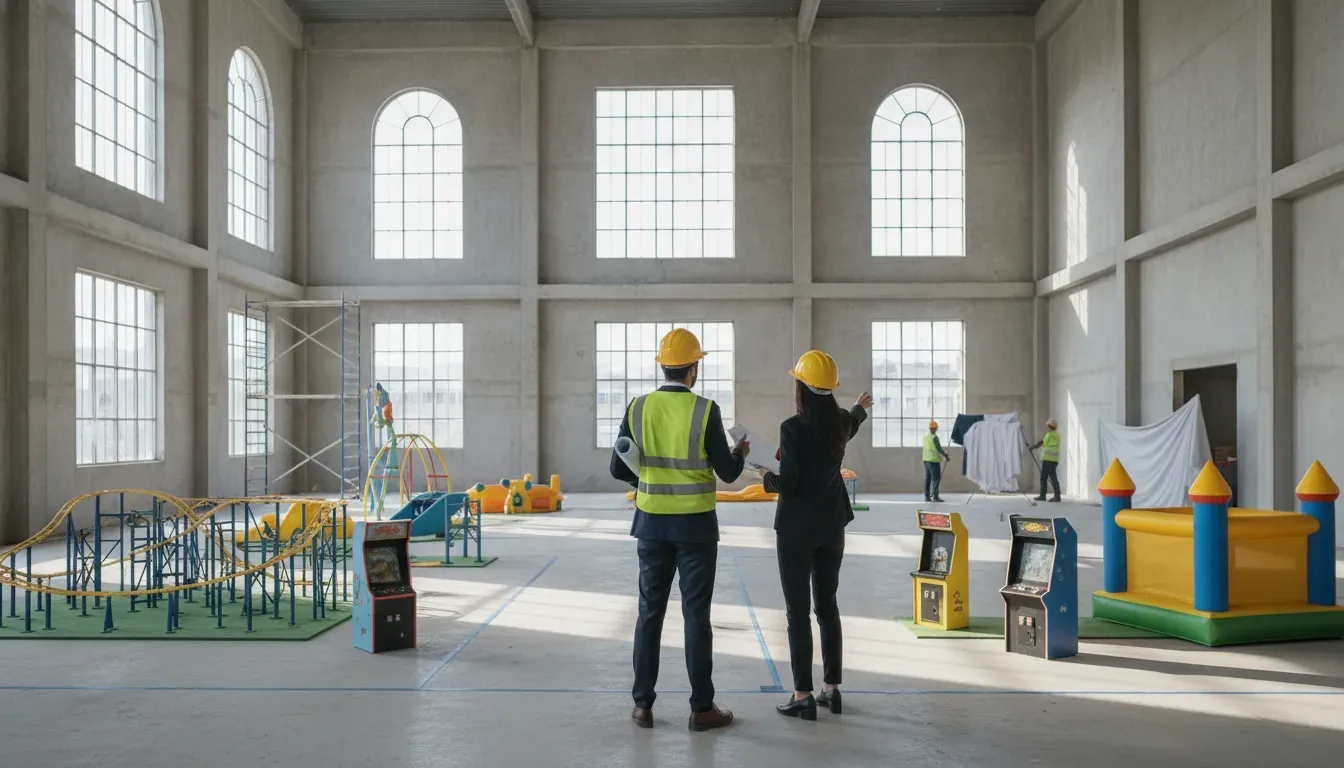
Risk planning should continue through construction and opening. Amusement Products describes support that can cover a single attraction or an entire park, including design, construction, and installation. Staff training on the attractions installed can help the operating team understand how to get started, rather than receiving equipment without an operating handoff.
Amusement Products brings experience as both an FEC operator and an equipment provider. That perspective can be useful when reviewing traffic flow, capacity, staffing needs, attraction-specific requirements, and expansion plans. Explore the FEC design and consultation service, or browse the FEC equipment catalog to see the categories available for discussion. The right plan is tailored to the site, local demographics, competition, and business model, not copied from a universal attraction list.
Request an FEC design and consultation to build a more informed project model.
Frequently Asked Questions
What are some examples of family entertainment center equipment?
Common attraction categories include electric go-karts, bumper cars, miniature golf, pitching machines, and VR attractions. Depending on your audience and venue, an FEC may also include arcade games, interactive attractions, party spaces, food service, or age-specific play areas. The right selection depends on your business model, available space, guest demographics, and operating plan rather than a universal equipment list.
How do I choose the right attraction mix?
Start by comparing the needs of your target age groups with each attraction’s space requirements, capacity, throughput, staffing needs, and role in the guest experience. A balanced mix may combine high-energy attractions with options for younger children, families, parties, or guests who prefer lower-intensity activities. Model how attractions work together instead of choosing products one at a time.
What should an FEC equipment quote include?
Ask for clear specifications, capacity details, drawings, safety documentation, materials, customization, shipping, installation, commissioning, operator training, warranty coverage, spare parts, maintenance support, payment milestones, and exclusions. Confirm whether site work, utilities, permits, or other civil works are included or remain your responsibility.
How should I plan space for each attraction?
Plan more than the equipment footprint. Account for guest circulation, queues, loading and unloading, sightlines, safety clearances, storage, staff access, utilities, ceiling height, floor loading, and future expansion. Attraction-specific conditions matter too. For example, go-kart layouts may require decisions about surface conditions, loading access, turn radii, signals, and control systems.
When should I request design help?
Request design support before final equipment selection or construction begins, especially when the project combines multiple attractions or requires significant site work. A planning process can connect site evaluation, demographics, feasibility, layout, traffic flow, capacity, equipment specifications, and expansion planning. Amusement Products describes support ranging from one attraction to a complete park layout, followed by training for staff on installed attractions.
Ready to Plan Your Family Entertainment Center?
A thoughtful equipment plan can help you connect attraction choices, available space, guest experience, and operating needs before construction decisions are finalized. If you are evaluating concepts or preparing for your next planning step, request a design consultation with Amusement Products to discuss a custom family entertainment center equipment plan.