Adding a bumper car attraction to an operating family entertainment center is a retrofit project, not simply an equipment purchase. The right plan has to protect guest circulation, staff workflows, existing attraction uptime, and the conditions needed for safe operation.
How to Add Bumper Car Attraction to Existing FEC Operations
Amusement Products helps FEC operators add bumper car attraction to existing fec operations. The team coordinates site review, arena layout, equipment specification, approvals, installation, commissioning, and operator training before work begins.
Layout matters because the placement of an attraction can affect operational efficiency and the way guests move through the venue. Amusement Products supports FEC operators with consultation, site planning, installation, and training for Spin Zone Bumper Cars. Review the Spin Zone Bumper Cars for FEC operators guide, then consider how the project can fit your facility and operating model.
For an operating family entertainment center, adding a bumper car attraction is a retrofit project, not simply an equipment purchase. Use a gated process that protects guest circulation, staff workflows, and current attraction uptime while defining what the new attraction must accomplish.
| Project phase | Primary FEC decision | Readiness evidence |
|---|---|---|
| Business case | What role will the attraction play? | Documented audience, operating, and revenue objectives |
| Site audit | Where can it function without disrupting the venue? | Measured footprint, circulation, access, and sightline plan |
| Installation | When can work occur safely? | Prepared site, coordinated delivery, and work-zone plan |
| Commissioning | What must be complete before reopening? | Testing, inspections, training, and handoff records |
- Build the business case. Define the role the attraction will play in your venue. Review your target demographic, current revenue streams, peak periods, and the guest experiences that already perform well. Establish the operating objectives before discussing equipment, such as adding a family-oriented activity, improving the use of an underperforming area, or creating a stronger group-event offering. Keep the assumptions visible so the project can be evaluated against actual operating data.
- Audit the site. Document the available footprint, adjacent attractions, guest paths, queue and dispatch locations, staff sightlines, emergency access, and service routes. An existing FEC has constraints that are easy to miss during a walkthrough, including doors, columns, low clearances, storage, and traffic conflicts. A layout review should consider operational efficiency as well as the arena itself. See this guide to designing your bumper car arena for more detailed planning considerations.
- Match the product and system to the venue. Compare the selected Spin Zone Bumper Cars configuration with the documented site conditions, audience, operating model, and integration requirements. Confirm the power approach, flooring, controls, guarding, access, maintenance needs, and operator workflow with the attraction team. Product selection should follow the site audit, not precede it. Use the guide to choosing the right bumper car attraction to structure that review.
- Coordinate approvals. Bring the venue owner, facility manager, licensed local professionals, authority having jurisdiction, insurer, and attraction supplier into the review at the appropriate stage. Amusement ride design, installation, operation, and maintenance requirements vary by state and site. Confirm the applicable permits, inspections, electrical requirements, egress provisions, and documentation before committing to an installation window.
- Prepare the installation window. Assign an owner for each readiness item, including work-zone isolation, site preparation, deliveries, equipment staging, staff communication, and guest-routing changes. Set reopening criteria in advance. The schedule should be based on site readiness, equipment scope, inspections, and venue coordination, rather than an unsupported generic timeline.
- Commission, train, and hand off. Complete installation checks, required inspections, functional testing, and operational sign-off before opening to guests. Train operators on the approved procedures, emergency response, daily checks, and escalation path. Transfer maintenance records, manufacturer guidance, and ownership of recurring inspections to the responsible team. A documented handoff gives management a controlled transition from construction to operating a successful bumper car attraction.
Assessing Your FEC Floor Space for a Bumper Car Arena
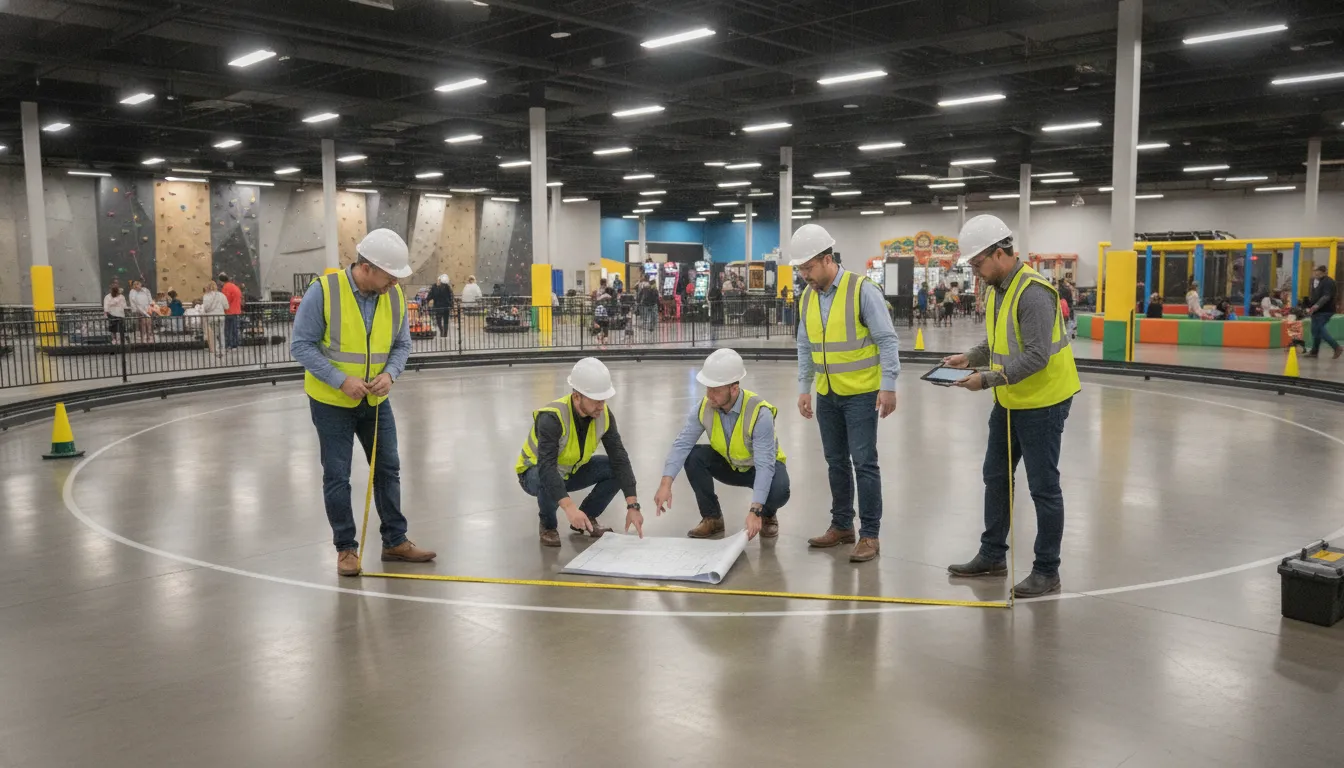
A retrofit begins with a measured site audit, not a product catalog. Record the usable footprint, columns, doors, ceiling obstructions, floor transitions, utilities, and any areas that cannot be occupied during normal operation. Then map the full guest journey from arrival and queueing through dispatch, the arena experience, exit, and return to the rest of the facility. The objective is to understand how the attraction will function inside your existing building, rather than treating an open rectangle as the entire requirement.
Measure the operating footprint
Separate the arena footprint from the space needed for queue formation, ticketing or check-in, dispatch, spectator viewing, and staff circulation. Leave clear paths for emergency access and routine maintenance. Sightlines matter as well. Team members should be able to observe the queue, dispatch point, and active attraction without relying on guests to report problems. Keep entrances and exits legible, and avoid forcing guests to cross staff-only routes or collide with traffic from another attraction.
Plan around the rest of the venue
Study adjacency to current attractions, food service, restrooms, redemption, and primary circulation routes. A bumper car arena can become a strong anchor, but its placement should support the existing operating model instead of creating a bottleneck. Consider sound, spectator gathering, loading patterns, and whether a nearby attraction needs to remain open while construction or daily dispatch is underway. Layout decisions influence operational efficiency and the success of attraction-based enterprises, as outlined in research from Auburn University’s block layout study.
Retrofit planning differs from a greenfield build because the building already has revenue-producing attractions, established guest habits, and fixed constraints. Your team must protect circulation and uptime while fitting the new operating workflow into the available space. For practical guidance on organizing the arena, queue, and support areas, review this bumper car arena layout design guide.
Use the measured plan to identify open questions for the design review: how guests enter and leave, where staff stand, how emergency responders reach the area, and which neighboring attractions may be affected. Final egress, guarding, floor, electrical, and inspection requirements remain specific to the selected system and local jurisdiction. A site plan is a planning foundation, not an engineering approval.
What Electrical Infrastructure Does a Commercial Bumper Car Attraction Need?
Electrical planning should begin before equipment is ordered, not after an installation date is chosen. Bring the attraction manufacturer, a qualified local electrical professional, the facility manager, and the authority having jurisdiction into the same planning conversation. Their walk-through should review the selected Spin Zone Bumper Cars system, the existing building services, the proposed arena location, and how the attraction will operate alongside the rest of the FEC.
Start with the building and distribution plan
Document the available service capacity and the path from the building service to the attraction. The local professional can determine whether the existing distribution equipment, panels, disconnects, raceways, and branch circuits are suitable for the approved equipment plan. This is also the time to identify conflicts with fire protection, structural elements, drainage, guest circulation, or other attractions. Do not rely on a generic electrical assumption. The final requirements depend on the selected system, the building, and the jurisdiction.
Ask the project team to map every system that needs power or coordination. Depending on the design, that may include attraction controls, operator stations, lighting, communications, charging equipment, ventilation, and service access. If the selected bumper car system uses a charging or battery-power approach rather than an electrified floor, the charging location still needs a deliberate plan for access, protection, housekeeping, and daily operating workflow. The manufacturer should provide the applicable equipment documentation so the electrical professional can design from verified requirements rather than estimates.
Plan grounding, protection, and inspection together
Grounding and bonding, overcurrent protection, disconnecting means, equipment placement, and protection from accidental contact should be reviewed as one system. The goal is not simply to connect equipment. It is to create an installation that protects guests and staff, supports reliable operation, and can be inspected and maintained safely. Keep approved drawings, equipment documentation, installation records, and inspection results in the project file.
Amusement ride design, construction, installation, operation, and maintenance are regulated at the state level. For example, Florida law directs the adoption of rules covering those areas. Georgia rules also require amusement devices to be operated and maintained according to manufacturer specifications and adopted safety standards. Review the applicable requirements with local officials because rules and inspection processes vary by jurisdiction.
Build inspection coordination into the schedule before commissioning. Confirm who requests inspections, which approvals are required before guest operation, and what corrections would prevent opening. A documented electrical walk-through gives the venue, installer, and operator a shared basis for final testing and handoff.
How Long Does Bumper Car Installation Take?
There is no responsible one-size-fits-all answer for an operating FEC. The schedule should be based on readiness, equipment scope, inspections, and coordination with the venue. A retrofit can move efficiently when each decision gate is completed before the next phase begins.
1. Design and approvals
The project starts with consultation and site planning. The team confirms the attraction footprint, guest circulation, staff workflow, operating concept, and how the arena will connect with existing revenue streams. The design then moves through the approvals required by the facility and the local jurisdiction. Amusement ride design, construction, installation, operation, and maintenance are regulated at the state level, so the approval path depends on the location and project details.
2. Site preparation and delivery
Before equipment arrives, the work area must be ready for the selected system. This may include clearing the footprint, coordinating flooring and electrical work, confirming access for delivery, and protecting nearby attractions from construction activity. Final requirements are site-specific and should be confirmed with qualified local professionals and the installation team. Delivery timing also depends on equipment scope, access conditions, venue coordination, and whether other contractors must finish work first.
3. Installation, testing, and handoff
Once the site is ready, the installation team assembles the attraction and completes the required system checks. Testing should cover the installed equipment and operating environment before opening. Inspection requirements vary by jurisdiction and may involve local officials or other designated parties. Operator training follows commissioning so staff understand the controls, operating workflow, emergency procedures, and manufacturer requirements. The attraction should open only after the required inspections, training, records, and internal readiness checks are complete.
Practical decision-gate checklist
- Is the final footprint coordinated with guest circulation, egress, sightlines, and nearby attractions?
- Are approvals, permits, inspections, and local safety requirements identified?
- Is the work area ready, including access, flooring, electrical coordination, and contractor sequencing?
- Has the venue selected an installation window that protects existing attraction uptime?
- Are testing, inspection records, operator training, and reopening criteria assigned to specific owners?
When these answers are clear, the installation conversation can focus on a realistic project schedule rather than an unsupported promise of a certain number of days.
How Can You Manage Venue Downtime During Installation?
An installation inside an operating FEC should be managed as a controlled transition, not an interruption that affects the entire venue. Start by marking a work zone with clear physical boundaries, protected access points, and visible safety signage. Separate guests from tools, materials, vehicles, and unfinished surfaces. Preserve emergency exits, accessible routes, staff corridors, and sightlines to nearby attractions throughout the work.
Build the schedule around your operating pattern
Use attendance data and manager experience to identify low-demand periods for deliveries, demolition, floor preparation, equipment placement, and testing. The best window may involve several smaller work periods rather than one long closure. Coordinate each phase with the installer, facility team, inspectors, and venue leadership. Do not set reopening dates from a generic installation promise. Base them on site readiness, completed work, required inspections, testing, and staff training.
Protect the rest of the venue
Map how guests and employees will move around the work zone before the first delivery arrives. Keep queues, food service, restrooms, point-of-sale areas, and neighboring attractions accessible where possible. If a temporary route is necessary, use a simple, consistent path and brief every shift on how to direct guests. Stage equipment and materials in an approved area so they do not become obstacles or interfere with existing revenue-producing activities.
Make communication and reopening criteria explicit
Give staff a concise daily update covering the work area, changed routes, delivery activity, expected noise, and escalation contacts. Post guest-facing notices only when they clarify a real change, and avoid inviting guests into a space that is still being commissioned. Before reopening, confirm that the work zone is clean and secure, guest circulation is restored, required inspections and records are complete, operating staff understand the procedures, and all safety controls remain visible. Amusement attractions must be designed, installed, operated, and maintained according to applicable state requirements, manufacturer specifications, and adopted safety standards. Final requirements remain specific to the equipment and jurisdiction.
What Happens When You Add Bumper Car Attraction to Existing FEC Operations?
Installation is not the finish line. It is the point at which the arena moves from a construction project into an operating attraction. A disciplined handoff gives your team a clear record of what was installed, how it should be operated, and who owns each part of the ongoing maintenance process.
Complete commissioning and inspection records
Before opening, the project team should walk through the completed arena, controls, barriers, guest access points, operator position, and surrounding circulation. Record the inspection findings, corrections, approvals, and any site-specific requirements in one accessible file. Amusement ride design, installation, operation, and maintenance requirements are regulated at the state level, so the final inspection process depends on your location and the applicable authorities. Treat this record as part of the attraction’s operating documentation, not as paperwork to file and forget.
The handoff should also identify what was reviewed during commissioning and what remains the venue’s responsibility. This distinction helps facility managers respond quickly when a question arises and prevents assumptions about electrical, floor, guarding, or egress requirements.
Train operators before the first guest session
Operator training should cover the normal start-up and shutdown sequence, guest briefing, dispatch workflow, emergency response, daily visual checks, and escalation procedures. Training is most useful when it takes place in the installed arena, where staff can practice the actual sightlines, controls, queue movement, and communication process. Use the manufacturer’s operating guidance as the foundation, then adapt the opening and closing routines to your venue’s staffing model.
For a practical reference, review commercial bumper car operating practices. The goal is not simply to certify that someone attended training. It is to ensure every shift knows who checks the attraction, who may authorize opening, and who should be contacted when a condition falls outside the approved routine.
Assign maintenance ownership and review early operation
Define maintenance ownership before the attraction opens. Your handoff package should include the recommended inspection and maintenance schedule, service contacts, documentation requirements, and a process for recording defects and completed work. Attractions should be operated and maintained according to manufacturer specifications and adopted safety standards. The Spin Zone maintenance planning guide can help your team organize that responsibility around repeatable routines.
During the first operating period, schedule an early review with the venue team and installation partner. Discuss operator feedback, guest circulation, queue and dispatch workflow, recurring questions, and any adjustment that would improve consistency. Amusement Products can support the project through consultation, site planning, installation, and operator training. Those services help establish a workable launch process, but ongoing performance depends on site conditions, trained staff, documented procedures, and consistent maintenance after handoff.
Frequently Asked Questions
How do I know whether my FEC has enough space for a bumper car attraction?
Start with a measured site review, not just the ride footprint. Map the arena, queue, dispatch point, guest circulation, staff sightlines, emergency access, and nearby attractions. The layout should support efficient operations without creating conflicts with existing revenue areas. Because layout is a critical factor in attraction-based enterprise performance, review the plan with an attraction designer before committing to the space (Auburn University layout research).
What should we plan for electrically before installation?
Have a licensed local professional review the selected system, available service, distribution, controls, grounding, protection, charging or power approach, and inspection requirements. Do not rely on a generic voltage or amperage assumption. Final electrical requirements depend on the equipment specification, existing building conditions, and local jurisdiction.
What makes an existing FEC ready for bumper car installation?
Readiness means more than an open room. Confirm the approved layout, permits and inspections, prepared floors and utilities, delivery access, work-zone controls, staff communication plan, and a defined installation window. Coordinate consultation, site planning, installation, commissioning, and operator training so each handoff has a clear owner.
What should we verify before reopening the attraction?
Complete commissioning, required inspections, operating checks, staff training, emergency procedures, maintenance documentation, and a guest-flow review before reopening. Keep records and follow the manufacturer’s specifications and adopted safety standards, as required by applicable regulations (Georgia amusement-ride rules). Reopen only when the responsible team has approved the checklist.
Get Started With Your Bumper Car Attraction Plan
Adding a bumper car attraction to an operating FEC requires decisions that connect the venue, floor plan, attraction fit, installation readiness, and operating goals. A design consultation can help your team review those factors together and identify the next planning steps for your facility.