Spinny cars, in a family entertainment center, are the guest nickname for bumper cars that spin when a driver hits a target. At Amusement Products, that attraction is Spin Zone Bumper Cars. The same two words also name a large used-car marketplace, so an operator search and a guest search are not the same query.
Schedule a design consultation to match a spinning bumper-car arena to your floor, guest mix, and ride program.
This guide answers the FEC meaning first. It separates the nickname from the car marketplace, names which Amusement Products models the nickname does and does not cover, and lists the facts to confirm on the current product page before you buy. It does not replace the Spin Zone operator guide, the buyer’s comparison, or the ROI comparison.
What Do Guests Mean by Spinny Cars?
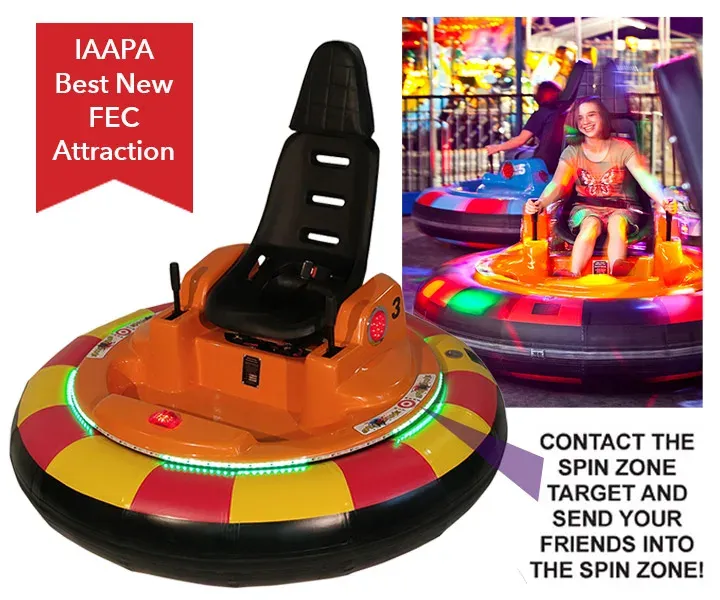
Guests use spinny cars for a short, repeatable arena ride where a good hit does more than a simple bump. On Spin Zone, a driver aims at a target mounted on another car. A successful hit sends the struck car into an uncontrolled spin. The cars are battery powered, so the arena does not need a conductive electric floor.
The name is guest language. The product name is Spin Zone Bumper Cars. Amusement Products has manufactured attractions since 1960, and the live bumper car product page still describes the line as battery-powered cars with patented target-hit play. Use the product name on a purchase order. Use the nickname only when you are explaining what a parent just heard a child say.
These cars are not go-karts, and they are not a toy ride-on car with a 360-degree wheel. They are a commercial arena attraction built for repeated sessions. The spin is the feature families describe when they say spinny cars inside an FEC.
Why the same words pull up used cars
Type the exact phrase into Google and the first results are Spinny, a used-car marketplace, plus its phone apps and city price lists. Those pages sell cars. They do not sell an arena attraction. A research brief that treats the phrase as pure FEC demand will plan the wrong article and the wrong page title.
Operators still hear the nickname on the floor. Parents use it in reviews of venues that run Spin Zone, and attendants use it when the queue is moving. A useful article catches that language, says what it is not, and points to the manufactured ride. Ranking against a car dealer is not the goal.
Which Models Count as Spinny Cars?
Amusement Products builds four bumper car experiences, and the live product page says none of them need an electric floor. Only the spinning models match the nickname. Flip rides and laser combat do not, even when they share a fence or a parts catalog.
- Spin Zone. The original spinning bumper car. A target hit sends the struck car into an uncontrolled spin. This is the model most guests mean.
- Spin Zone Z. The same spin idea without the inflatable tube. A rubber-cushioned plastic bumper absorbs impact, and an electronic sensor detects the hit with no moving parts.
- Flip Zone. Not a spinny car. It flips forward or backward, uses bump targets, and gives a timid rider a way to turn the flip off. It is a different ride story.
- Spin/Flip arena. Spin Zone Z and Flip Zone cars can share one arena, with a light and sound show and wireless controls. Name both rides in the staff script so the gate does not promise a spin and deliver a flip.
LazerFury 360 is a separate laser-combat vehicle. The product page points to it as a next ride, not as a spinning bumper car. If a proposal says spinny cars and never names Spin Zone or Spin Zone Z, ask which car is in the quote before you compare floor plans.
What the published operator guide already owns
The operator guide covers how a typical arena fits a building, how many cars a floor can hold, and who may drive. This article does not repeat that operating manual. It only draws the line between the nickname, the spinning models, and the rides that are easy to mix up.
How Do Spinny Cars Differ From Classic Bumper Cars?
Classic bumper cars usually take power from a conductive floor or a ceiling grid. Spin Zone cars carry their own batteries. The product page says they run on wood, concrete, asphalt, or ice, and that they run up to 16 hours between charges. Removing the electric floor is one of the larger installation differences versus a traditional arena.
The play is different too. Classic cars reward contact. Spin Zone rewards a hit on a specific target, then turns that hit into a spin. Operators who want the side-by-side return comparison should read the Spin Zone versus classic ROI comparison. This section only stops the nickname from being treated as every bumper car on the market.
| Question | Spinny cars (Spin Zone) | Classic conductive-floor cars |
|---|---|---|
| Power | Battery power, up to 16 hours between charges on the product page. | Usually a floor or ceiling grid. |
| Floor | Wood, concrete, asphalt, or ice. No electric floor. | Conductive floor in most systems. |
| Guest moment | A target hit triggers an uncontrolled spin. | Contact and steering. |
| Indoor space | Most indoor arenas need about 600 to 1,500 square feet, customized to the floor. | Set by that manufacturer’s grid. |
| Search name | Guests say spinny cars. Buyers should say Spin Zone. | Usually just bumper cars. |
Keep dollar amounts out of a blog comparison. Customer guidance allows one payback note: Spin Zone pays for itself in 2 years or less. That figure is a window, not a ticket price and not a promise for every building. Labor, wages, and hours open all change the result. A consultation prices the arena, the car count, and the charging plan.
What Should You Confirm Before You Buy?
The buy decision is a fit check against the current product page, not a slogan check. The page is the source for the claims below. If a spec is missing there, ask the sales team instead of copying an older brochure into a staff manual.
- Confirm the model name. Say Spin Zone or Spin Zone Z in the quote. Do not accept “spinny cars” as the only description.
- Confirm the floor. The cars run on wood, concrete, asphalt, or ice. You do not install an electric floor for this line.
- Confirm the charge window. The product page rates battery power at up to 16 hours between charges. You still need a dry, supervised spot for chargers.
- Confirm the footprint. Most indoor arenas need about 600 to 1,500 square feet, built to your exact floor. The arena layout guide is the place for rail and queue detail.
- Confirm who rides. The published operator guide says drivers must be at least 36 inches tall, and children as young as three may ride with an adult in a buddy seat. Ask sales for the current height, age, and weight sheet before you print a gate sign. Do not invent a number the current page does not show.
- Confirm safety review. Follow the current ASTM F2291 standard practice for amusement ride design and your local inspector. A published standard does not replace a site review.
- Confirm parts. Genuine parts are ordered through FECPartsMart.com. Daily checks belong in the Spin Zone maintenance guide.
Package contents, top speed, and patent numbers change by configuration. The live page supports patented target-hit technology. It does not publish a miles-per-hour cap or a parts list for a “standard package” in the public copy used for this article. Treat any speed claim or inclusion list as a question for the current quote, not as a fact you already own.
If you are adding the ride to a venue you already run, start with how to add a bumper car attraction. A new building should fold the arena into the attraction mix before walls and power are locked. Moving a 600 to 1,500 square foot pad after construction is the expensive version of this decision.
How Should Spinny Cars Fit the Rest of the FEC?
Spinny cars work best as a short session inside a larger visit. Guests can see the spins from the queue, which helps a walk-up decision. The arena still needs a clear load path, a staff sightline to every car, and room to park a car that must come off the floor.
Put the arena where music will not fight a golf game or a redemption counter. Battery cars avoid an electric floor, but chargers still need a routine. Build that into the back-of-house plan with the rail, not after opening week.
Match the model to the guest you already serve. Spin Zone and Spin Zone Z cover family groups that want the spin. Flip Zone is a different show. A mixed Spin/Flip arena tells two ride stories inside one fence. Naming the wrong one at the gate creates the wrong expectation.
Throughput is a ride-program choice. Timing tools can end a session and play an exit message. They do not add cars. If the queue outgrows the fence, the fix is a layout review. Read the attraction mix guide before you give this ride the only open pad. A bumper car arena and a kart track solve different visits.
How Do You Explain Spinny Cars to Your Team?
Use one sentence with guests and another with your build team. Guests hear that spinny cars spin when you hit the target. The build team hears Spin Zone or Spin Zone Z, battery power, no electric floor, and a target-hit spin.
That split prevents three expensive mix-ups. The first is ordering Flip Zone when the brief asked for spinny cars. The second is budgeting a conductive floor the cars do not use. The third is describing LazerFury 360 as a spinny car because it also sits in a fenced arena.
A fourth mix-up is quieter. Someone on the project team Googles the nickname, lands on the Spinny used-car site, and decides the topic has no FEC demand. Show them this page and the product page together. The search result and the floor nickname are different things.
Write the public description in product language first. “Spin Zone bumper cars” tells a buyer which file to open. “Spinny cars” tells a parent what the ride feels like. Use both, in that order, on the page that sells tickets. Use only the product name on the purchase order, the insurance form, and the parts request.
Amusement Products manufactures these cars. It does not resell another factory’s ride under a nickname. If a proposal never names Spin Zone, Spin Zone Z, Flip Zone, or a mixed arena, stop and ask which car is in the quote. Then compare that car with the floor you already measured.
At IAAPA Attractions Expo 2008, SpinZone Bumper Car took first place in the Family Entertainment Center Ride/Attraction category, as reported in Blooloop’s coverage of the IAAPA awards. That award supports the product history. It does not replace the spec sheet you confirm before you buy.
Request an attraction planning consult before you reserve floor space for spinny cars.
Frequently Asked Questions
What are spinny cars?
In an FEC, spinny cars are bumper cars that spin when a target is hit. At Amusement Products, that is Spin Zone and Spin Zone Z. The same phrase also names a used-car marketplace, which is a different business and a different search.
Are spinny cars the same as Flip Zone?
No. Flip Zone flips forward or backward. Spin Zone spins. A Spin/Flip arena can run both car types together, but they are different rides and should be named separately at the gate.
Do spinny cars need a special floor?
They do not need an electric floor. The product page says Spin Zone cars operate on wood, concrete, asphalt, or ice. Most indoor arenas use roughly 600 to 1,500 square feet, customized to the building.
Who can ride spinny cars?
The published operator guide says a driver must be at least 36 inches tall, and a child as young as three may ride with an adult in a buddy seat. Ask Amusement Products for the current height, age, and weight rules before you post them. Those details belong on the quote, not in a guessed sentence.
How long do spinny cars run between charges?
The product page says the cars run up to 16 hours between charges. Plan charger space into the back-of-house layout so the arena can reopen on schedule.
Plan the Ride, Not the Nickname
Spinny cars, for an FEC operator, are Spin Zone Bumper Cars: a battery-powered target-hit ride that spins the struck car and does not need an electric floor. Confirm the model, the square footage, and the current rider rules before you treat a nickname as a purchase order. Call Amusement Products at (423) 892-7264 or use the design and consultation page to review your space.
Request a design and consultation review before you reserve floor space for Spin Zone Bumper Cars.