By Dutch Magrath
Reliable bumper car uptime starts before the first rider enters the arena. This spin zone bumper car maintenance guide gives family entertainment center operators a practical way to schedule inspections, document symptoms, and remove questionable cars from service. For broader equipment planning, review the Spin Zone Bumper Cars guide for commercial FEC operators.
Request a consultation with Amusement Products for attraction maintenance support.
How to Build a Spin Zone Bumper Car Maintenance Schedule
A useful maintenance schedule assigns each inspection to a role, defines what staff should observe, and records the result. Use the operations and maintenance manual for the applicable Spin Zone model as the controlling source for procedures, measurements, tools, and service limits. The schedule below is an operator framework, not a substitute for model-specific instructions.
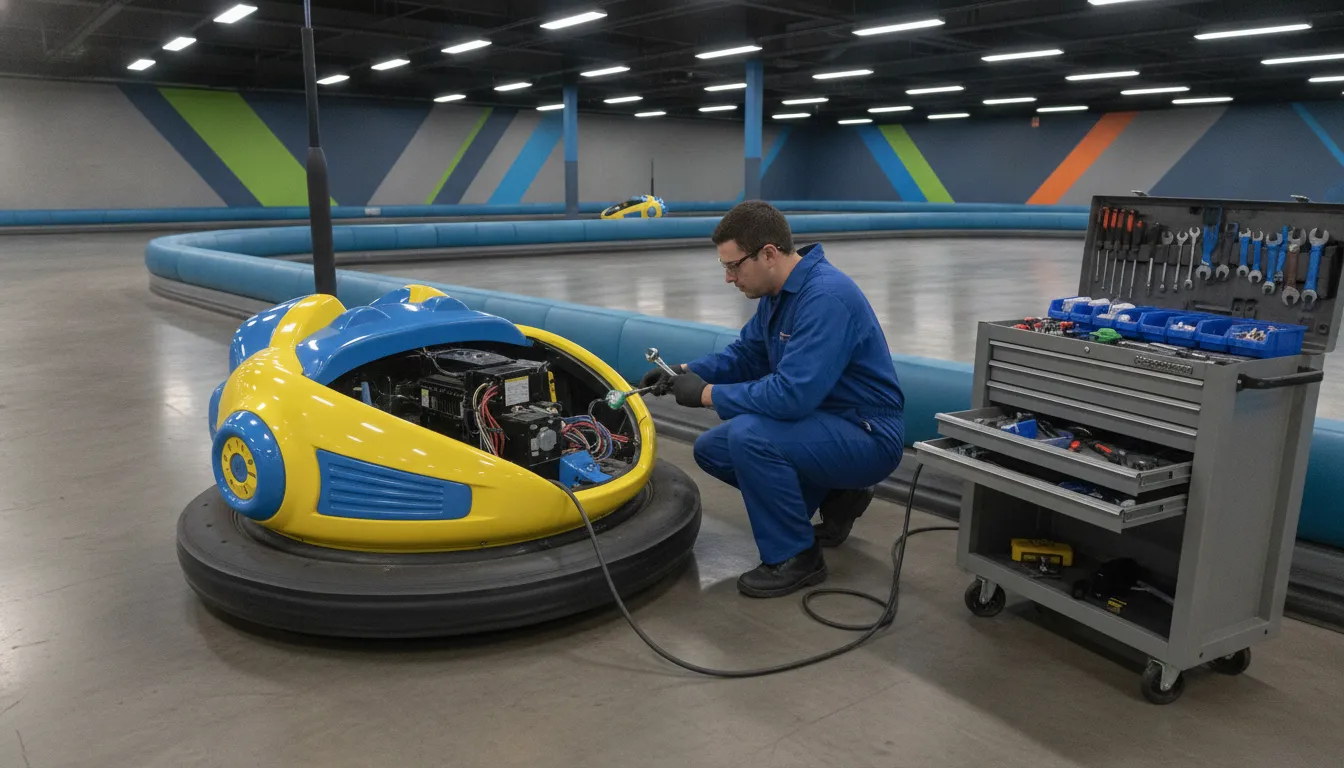
- Daily pre-opening: Inspect every car and the arena. Check charging status, accessible battery connections, bumpers, wheels, controls, contacts, and visible wiring for damage or unusual conditions.
- Before operation: Complete the approved operational check in the model manual. Remove a car for abnormal response, damaged components, exposed or loose wires, charging concerns, or another unresolved condition that could affect safe operation.
- Weekly review: Compare daily records for recurring warnings, intermittent behavior, charging concerns, loose hardware, and cars repeatedly removed from service.
- Monthly management audit: Reconcile out-of-service cars, open service requests, parts questions, inspection completion, and training status.
- After any uncertain finding: Stop use, identify the car, record the symptom and operating conditions, isolate equipment as directed, and escalate before return to service.
Make the inspection record useful
Record the date, car or system identifier, observed condition, action taken, and return-to-service approval. Keep observations factual. A symptom that disappears during one check still belongs in the log if it has occurred before.
Assign daily checks to a named shift role. That person should know which cars are included, where the checklist is stored, and who may authorize a stop-use decision. During weekly review, compare symptoms by car, charger, ride-area condition, and shift. That pattern can help qualified service staff investigate without asking operators to diagnose technical faults.
How Should FEC Teams Maintain the Electrical System?
Electrical maintenance should combine visual observation with the procedures approved for the applicable model. Staff can identify charging, contact, terminal, and wiring concerns, but they should not improvise tests, open energized equipment, bypass protective devices, or substitute unfamiliar components.
Check charging, terminals, and contacts
Inspect charging integrity and accessible terminal connections as part of the pre-operation routine. Look for charging that does not complete as expected, visible looseness, corrosion, damage, or contamination. Clean contacts only with the method specified by the manufacturer. Do not guess at voltage readings, torque values, replacement sizes, or wiring changes.
Document electrical symptoms before escalation
Record a car that responds inconsistently, behaves differently from the fleet, or develops a recurring electrical symptom. Note the car identifier, observed behavior, timing, and recent operating conditions. Before handling components, stop the car and follow the manual’s shutdown and isolation instructions. Keep riders and unauthorized staff away from the work area. The CDC and NIOSH equipment-maintenance toolbox talks can support workplace safety discussions, while the Spin Zone manual governs equipment procedures.
Remove a car from service when charging, terminals, contacts, wiring, or controller behavior presents an unresolved safety or reliability concern. A temporary return to normal does not remove the need to investigate a repeated symptom.
What Mechanical Issues Should Operators Watch For in This Spin Zone Bumper Car Maintenance Guide?
A seasonal review connects routine inspection records with the operating conditions expected during the next busy period. Confirm that the current model manual, inspection forms, service contacts, and out-of-service tags are available to every shift. Clarify which checks staff may perform and which work requires qualified service personnel.
Review records before demand increases
Look for patterns instead of counting only repairs. A car that repeatedly shows charging concerns, a contact issue after cleaning, or unusual wheel wear may need a different response than one isolated observation. Compare the car identifier, date, symptom, operating conditions, and action taken. Give the service team a concise record of what staff observed and what they did not attempt.
Confirm the handoff process
Check that each shift knows where to find the manual and current checklist. Confirm who can tag out a car, who can approve return to service, and how an open service request is communicated. If a repair or inspection changes operating procedure, brief the team before reopening. This prevents a car from returning to operation because one employee missed a paper note or verbal warning.
Do not use a seasonal checklist to create new technical limits. Use it to verify readiness, ownership, and communication. The applicable Spin Zone documentation remains the authority for maintenance procedures.
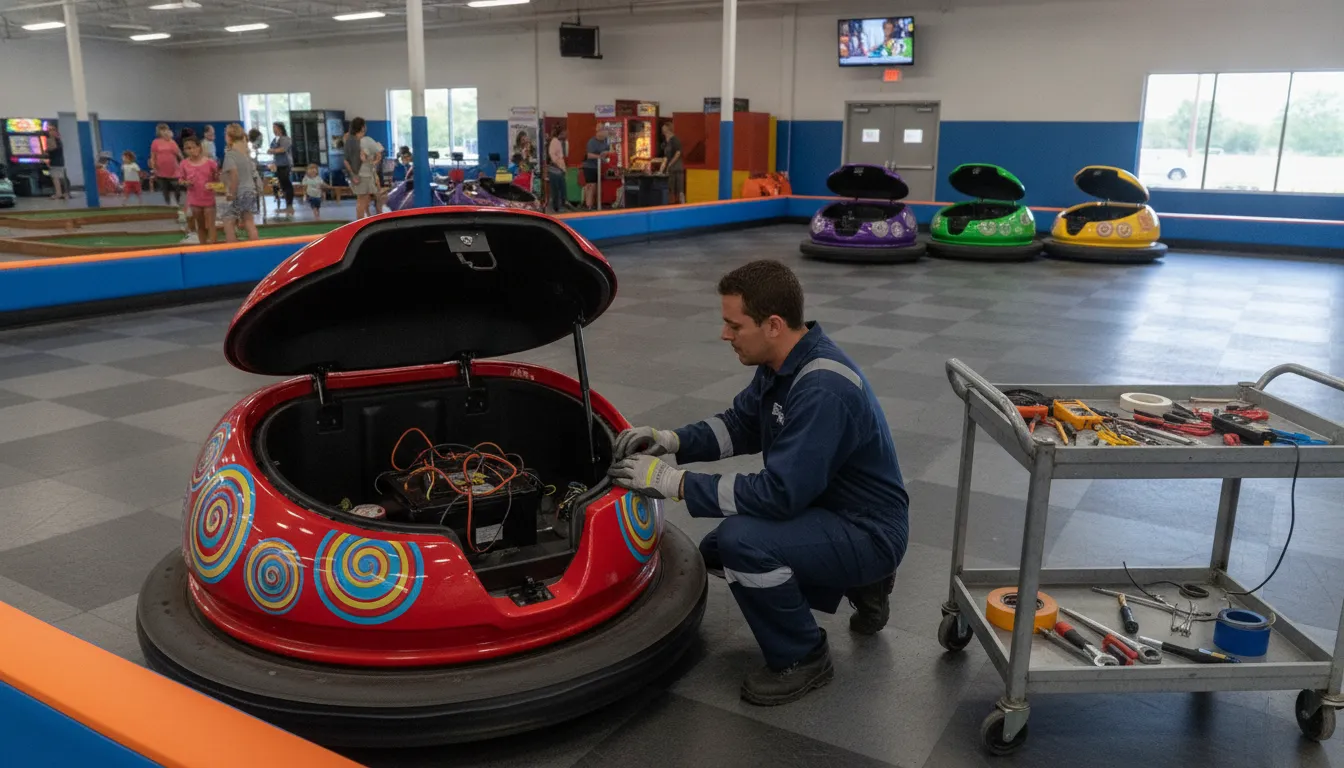
Mechanical concerns are often visible before they interrupt a session. Operators should identify changes from normal condition and operation, then document them. They should not disassemble a car or diagnose failed components at the ride area.
Inspect bumpers, wheels, and accessible hardware
Check bumpers for unusual wear, separation, deformation, or damage that could affect integrity. Inspect wheels for visible wear or damage. Look for loose, missing, or visibly damaged fasteners around accessible components. The Spin Zone Bumper Cars product information provides product context, but the applicable manufacturer documentation controls inspection and repair decisions.
Use changed behavior as a stop-use signal
Grinding, scraping, rattling, clicking, vibration, altered steering response, unusual movement, or changed stopping behavior deserves follow-up. Stop operation and record when the symptom occurs, which car is affected, and whether it repeats. Tag out a car with damaged bumpers or wheels, abnormal noise, visible structural damage, loose hardware, or an unexplained control symptom. Do not continue operating it because the condition seems temporary.
When Is Professional Service Better Than DIY Repair?
Operators should own routine checks, documentation, and first response. Qualified personnel should handle work that requires disassembly, electrical testing, replacement, alignment, or a model-specific adjustment. A clear boundary protects riders and reduces the chance that an improvised repair creates a second problem.
| Task | Operator or trained technician | Qualified professional service |
|---|---|---|
| Routine inspection | Follow the manufacturer checklist, observe normal operation, and record findings. | Review recurring findings and recommend corrective work. |
| Visible wear | Identify damage on accessible bumpers, wheels, contacts, and hardware. | Assess work requiring disassembly, replacement, alignment, or model-specific adjustment. |
| Fault response | Stop the car, isolate it as directed, document symptoms, and follow approved troubleshooting. | Investigate complex faults, complete repairs within equipment requirements, and verify return to service. |
Use professional help when a fault returns, the manual is unclear, the issue involves protected electrical or mechanical systems, or the required work exceeds staff training. Amusement Products’ maintenance training resources can help FEC managers create consistent inspection and escalation practices. Training complements the equipment manual and does not replace it.
Talk with Amusement Products about maintenance training and attraction uptime.
How Does US Manufacturing Support Parts and Uptime?
Support is more useful when the service team understands how an attraction was designed and intended to operate. Amusement Products is a US manufacturer and service provider with more than 60 years of experience serving the commercial amusement industry. That background gives FEC owners a resource for maintenance planning, training, troubleshooting, and parts guidance.
Manufacturer support does not mean every component is always immediately available. It gives your team a deliberate way to identify the correct part, confirm its application, and decide whether work belongs with an operator or qualified service personnel. Keep model information, serial details, manuals, and prior service notes together so service questions begin with useful context.
Turn records into a parts and service plan
Review logs for repeated failures, recurring wear, or components that take longer to source. Ask the manufacturer or service provider to confirm compatibility before ordering parts that affect electrical or mechanical systems. Visit the Amusement Products company information page for additional manufacturer context.
At shift change, tell the incoming team which cars are tagged out, which checks remain open, and whether a service request has been submitted. When contacting Amusement Products, provide the model, serial information when available, car identifier, symptom, date first observed, recent action, and current status. This makes a service handoff more useful without turning routine operators into unauthorized repair technicians.
Preventive maintenance is a repeating management system, not a reaction to the last failure. Pair the applicable manual with clear ownership, short records, weekly review, and qualified escalation. For equipment selection and operational planning, revisit the commercial Spin Zone Bumper Cars planning guide.
Managers can make this process easier by keeping one current checklist for each applicable model and one consistent naming system for cars, chargers, and service requests. Review the process after a significant repair or a change in staffing. The goal is not to make every operator a technician. The goal is to make observations consistent, decisions traceable, and qualified service easier to begin.
Request a consultation with Amusement Products to strengthen your attraction maintenance process.
FAQs About the Spin Zone Bumper Car Maintenance Guide
How do you perform routine maintenance on Spin Zone bumper cars?
Use the applicable manufacturer’s checklist to organize daily, weekly, and monthly inspections. Review the arena and fleet condition, record findings, remove unsafe cars from service, and escalate work beyond the approved operator checklist.
What are common maintenance issues for Spin Zone bumper cars?
Common concerns include charging or terminal problems, dirty contacts, loose wires, controller symptoms, and wear on bumpers or wheels. Document the symptom and escalate unusual noise, control problems, visible damage, or repeated faults.
How often should I check the battery on my bumper cars?
Check charging integrity and accessible terminal connections daily as part of pre-operation. Follow the equipment manual for charging and battery-care procedures. Remove a car from service if connections, cables, or battery condition appear unsafe.
What should I do if a bumper car is not working?
Stop using the car, identify and record the symptom, and consult the model-specific troubleshooting section. Do not bypass a safety device or guess at a repair. Contact qualified support before returning the car to commercial operation.
Should operators repair bumper cars themselves?
Operators can complete approved routine checks and document visible conditions. Repairs requiring disassembly, electrical testing, replacement, alignment, or model-specific adjustment should be handled by qualified personnel using manufacturer documentation.
Ready to Keep Your Spin Zone Bumper Cars Ready for Operation?
A practical review can help your team align routine checks, maintenance records, and escalation steps with the needs of your attraction. Request a consultation with Amusement Products to discuss maintenance training and attraction support. Keep model-specific work grounded in the official manual and qualified service guidance.