
Marketing an FEC starts before the first campaign. Define who you serve, what experience you provide, and how guests move from discovery to a visit. For owners planning an attraction upgrade, expansion, or stronger day-to-day operation, the useful plan connects positioning, local visibility, content, partnerships, and measurement instead of treating each channel as a separate fix.
Discuss your FEC design and consultation needs with Amusement Products.
Family entertainment center marketing presents an FEC to the right audiences and promotes its attractions and experiences. It helps local guests find and choose the venue while measuring qualified visits and repeat engagement. The strongest plans reflect operational capacity and avoid promising results that the data cannot support.
That practical approach begins by defining what belongs in the marketing system, from audience and offer decisions to the channels and signals an operator should track.
What Does Family Entertainment Center Marketing Include?
Family entertainment center marketing is the coordinated work of attracting the right local guests, explaining the experience clearly, and giving them useful reasons to visit again. For an FEC operator, it is broader than posting on social media or running occasional promotions. It connects positioning, local discovery, content, customer communication, and measurement to the way the venue actually operates.
The starting point is the audience. A new venue may need to reach families, school groups, birthday-party planners, and corporate event organizers. An established center may be focused on attracting new guests, filling quieter periods, or supporting an attraction upgrade. Existing FEC owners and operators often evaluate marketing alongside expansion and operational improvement. So the message should reflect the experience the venue can reliably deliver, not an abstract brand promise.
A practical framework keeps each marketing activity tied to a business question:
| Audience | Channel role | Measurement |
|---|---|---|
| Families and parents comparing local activities | Search, maps, social content, and clear attraction pages make the venue easy to find and understand. | Profile actions, website visits, inquiries, bookings, and the questions guests ask before visiting. |
| Birthday-party and group organizers | Dedicated landing pages, email, event content, and direct follow-up explain planning details and next steps. | Qualified inquiries, booking-page engagement, response time, and completed group reservations. |
| Returning guests and nearby community partners | Post-visit communication, seasonal programming, community involvement, and useful social content support repeat consideration. | Repeat visits, email engagement, review activity, referrals, and participation by campaign or event. |
Marketing decisions should be measurable without promising a guaranteed attendance or revenue outcome. Review performance by audience and channel, then compare the findings with operational capacity. A campaign that fills one attraction but creates congestion may need a different offer, schedule, or landing page. Operators can also use current FEC industry trends to keep planning grounded in how the category is changing. The next step is positioning: deciding which guests the center serves best and what experience it can credibly own.
How Do You Position an FEC for the Right Audience?
Start with the people you need to reach, not with the attractions you want to sell. A family entertainment center (FEC) may serve parents planning a weekend, schools arranging group activities, companies organizing events, or local organizations seeking a dependable venue. Each audience has a different decision process, so your message should make the relevant use case clear without trying to speak to everyone at once.
For families, position the venue around the experience and the practical questions that shape a visit: who can participate, what happens on-site, how activities fit different ages, and what makes the outing worth repeating. For schools, employers, and group organizers, emphasize planning confidence, capacity, scheduling, staff support, and a clear path from inquiry to event. These are positioning decisions, not attraction-purchasing decisions. Select equipment only after the intended audience, operating model, and site requirements are understood.
Next, define a defensible point of difference. It might be a strong mix of activities, a well-designed flow between zones, programming for underserved age groups, or an experience that works for casual visits and organized groups. A peer-reviewed study on family-oriented recreation recommends assessing children’s preferences and satisfaction while monitoring competing offers. Use that guidance to gather guest feedback, review comparable venues, and test whether the promise matches the experience you can consistently deliver. The study’s findings on preference, satisfaction, and differentiation can inform that process.
Keep claims specific and measurable. Avoid promising guaranteed attendance, profitability, or universal appeal. Describe what the venue is built to do and identify indicators that show whether the position is working, such as qualified inquiries, group bookings, repeat visits, or review themes. Existing operators evaluating upgrades or expansion can ground their message in practical experience. Learn more about Amusement Products’ FEC experience, then compare your plan with current FEC industry trends before finalizing the campaign.
Which Channels Should an FEC Use to Reach Local Families?
Local families rarely follow a single path from awareness to a visit. A parent may discover an FEC through a Google search, check recent photos and reviews, see an event shared by a community group, and return later after receiving an email reminder. Effective family entertainment center marketing connects those touchpoints instead of treating each channel as a separate campaign.
Start with local search and Google Business Profile
Make local discovery the foundation. Keep the Google Business Profile accurate, including hours, address, phone number, attraction categories, booking options, and holiday changes. Add fresh photos that show the facility active and well maintained, and respond to reviews and questions promptly. Review growth and the quality of questions people ask can provide useful signals about local visibility and customer needs.
Build supporting pages around the experiences families actually search for, such as birthday parties, school groups, rainy-day activities, or specific attractions. Each page should lead to the next practical action, whether that is checking availability, reviewing requirements, or requesting information.
Use social media to show the experience
Social content should help local parents picture a visit. Event recaps, short behind-the-scenes clips, staff introductions, guest-approved content, and timely answers to common questions can make the venue feel current and approachable. Use the platforms that local families already use rather than spreading a small team across every network. Create an event listing for each scheduled promotion or community activity, then reinforce it with organic posts and, when appropriate, paid local reach.
Build retention through email and community relationships
Email is useful for reminders, seasonal updates, event invitations, and relevant follow-up after a visit. Keep messages permission-based and segment them when practical, such as by birthday-party interest, school groups, or past event attendance. Community partnerships can extend that reach through schools, youth organizations, nonprofits, local employers, and nearby businesses. A local campaign study similarly identifies email, Google campaigns, social media, and community involvement as complementary outreach channels. Read the Winona thesis for its academic discussion of local communication and community involvement.
Choose a manageable publishing cadence, track inquiries and bookings by source, and adjust based on real audience response. If you are mapping channels alongside a new build or expansion, discuss your FEC project with the Amusement Products team.
How Can Attractions Become Marketing Assets?
An attraction becomes a marketing asset when it gives your team useful material before, during, and after a guest visit. Instead of describing equipment with generic features, show the experience: who it is designed for, what participation looks like, and how the attraction fits into a memorable visit. That approach gives families a reason to stop, share, ask questions, and consider booking.
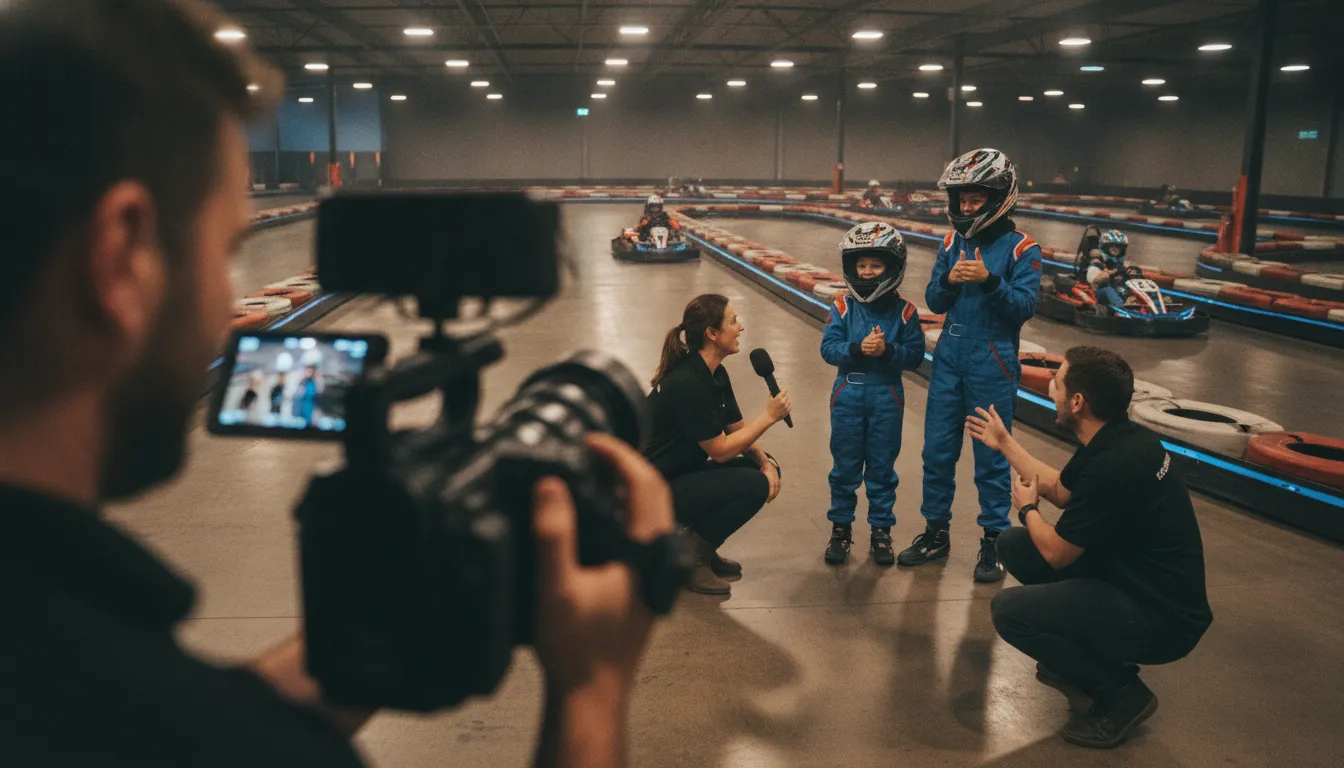
Start with visual proof. Capture short clips of the attraction in operation, wide shots that show the surrounding environment, and close views of the details guests care about. A clean, well-composed photo can help a potential customer understand the atmosphere more quickly than a paragraph. Create a shareable moment in each major area, such as a photo wall, distinctive lighting, or an oversized prop, without making the experience feel staged.
Show the people behind the experience
Staff stories and guest perspectives add context that equipment photos cannot provide. Introduce the team members who prepare the attraction, explain how they welcome first-time players, or show the venue changing from setup to open hours. With permission, reshare guest tags and testimonials. Event recaps, candid clips, and customer questions can make the venue feel active while giving prospective guests a more realistic picture of the visit.
Connect content to the booking decision
Every attraction post should lead to a relevant next step. If the content features an interactive bumper car attraction, send interested readers to information that explains the experience and supports their planning. Do the same for an electric go-kart attraction. Paid or social traffic should land on the matching attraction, party, or event page rather than a generic homepage.
Finally, frame attractions for repeat play without promising results. Rotate creative around new challenges, seasonal themes, group visits, staff tips, and guest-created content. A balanced mix of useful or entertaining posts and promotional messages keeps the attraction visible between visits. The goal is a connected content system that helps families remember what they enjoyed and gives them a fresh reason to plan another visit.
How Do You Build a Repeat-Visit Content Calendar?
A repeat-visit calendar should make the venue feel active, familiar, and worth revisiting without turning every post into an advertisement. Start with a cadence your team can sustain for at least six months. A practical four-week cycle can combine planned updates with authentic, lightly produced content from daily operations.
Week 1: Show what just happened
Publish an event recap with photos or a short video, then invite guests to tag the venue or share their favorite moment. Reshare appropriate guest-generated content after receiving permission. This gives prospective visitors a clearer sense of the experience and gives recent guests a reason to look for themselves online. Reply to comments and questions promptly, especially when they concern event times, age guidance, reservations, or operating details.
Week 2: Put the people and preparation on camera
Share a behind-the-scenes post featuring staff, attraction setup, maintenance preparation, or a quick transition from an empty space to a party-ready venue. A phone-recorded clip can be more useful than a heavily produced video when it shows a real part of the operation. Add an email reminder that points subscribers toward an upcoming activity or a timely reason to visit.
Week 3: Create a community moment
Highlight a school, nonprofit, local partner, team, or community event when appropriate. Promote scheduled events through the channels local families actually use, and answer questions in relevant community conversations without posting as if every group were an advertising feed. Community participation can strengthen awareness while keeping the content connected to the market you serve.
Week 4: Teach, invite, and review
Publish a useful tip, attraction spotlight, or planning idea, then pair it with a modest invitation to visit. Review the month’s comments, guest questions, email activity, and content themes. Keep the posts that generated meaningful conversations or useful inquiries, and adjust the next cycle rather than chasing every trend. For operators still shaping their offer, mini golf business planning can help connect attraction decisions with marketing and retention. Ongoing FEC operator education and networking can also provide broader planning context.
- Plan one event or community highlight.
- Capture one behind-the-scenes moment.
- Invite and permission-check guest content.
- Send one useful email reminder.
- Review comments and questions before planning the next cycle.
Review your FEC marketing and project goals with a design and consultation team.
How Should Family Entertainment Center Marketing Be Measured?
A practical measurement framework connects visibility to actions and guest behavior. Start by separating signals that show whether people noticed the venue from signals that show whether the marketing helped someone choose, book, visit, or return. This keeps a busy social feed or rising impressions from being mistaken for business impact.
Track the path from reach to qualified action
At the top of the funnel, monitor branded search activity, website visits, Google Business Profile interactions, post reach, video views, and new review activity. These indicators help reveal whether local families are discovering the venue and whether the listing presents an active, credible experience. Google Business Profile photos and updates can be tracked alongside calls, direction requests, website clicks, and booking-page visits.
Next, define qualified actions for each priority audience. A birthday-party inquiry, group-event form completion, online reservation, phone call, or request for availability usually matters more than a general pageview. Use campaign links, call tracking, and consistent form fields where practical so the team can compare channels without pretending that every conversion is perfectly attributable.
Measure repeat behavior and channel contribution
Review first-time and returning guests separately when your booking or point-of-sale systems allow it. Watch repeat booking rate, email engagement, loyalty activity, review velocity, and the time between visits. Reviews are not only reputation signals. Their volume and recency can also indicate whether the venue is generating enough notable guest experiences to prompt follow-up.
For channel reporting, compare the source of inquiries and bookings with the quality of the resulting visit or event. A channel that produces fewer leads may still be valuable if those leads fit group bookings or return visits. Data analytics and predictive modeling can support personalization and marketing adjustments, but technology requires thoughtful integration, staff readiness, and cybersecurity practices. This Murray State academic review provides neutral context for those considerations.
Use the following checklist in a monthly review:
- Record reach, local discovery, and review growth.
- Compare qualified actions, inquiries, bookings, and cancellations.
- Separate new guests from returning guests where possible.
- Review channel contribution by audience and booking type.
- Note tracking gaps before drawing conclusions.
For a related planning resource, see these FEC attraction revenue benchmarks as a modeling reference, not a promise of results.
When Should an FEC Bring in Outside Planning Support?
Outside planning support is most valuable when a family entertainment center is making decisions that affect several parts of the business at once. A new build, major expansion, or change in attraction mix can influence the guest experience, staffing, maintenance, marketing message, and daily operating model. Bringing in an experienced planning partner early can help the team examine those connections before they become expensive or difficult to change.
Consider support before the layout is fixed
A new facility or expansion is a clear trigger. So is adding a major attraction to a building that already has established entrances, party rooms, queues, and service areas. Planning should account for how guests enter, move between activities, wait, gather, and exit. It should also consider sightlines, traffic flow, capacity, and how the attraction mix serves different groups. Amusement Products describes design and consultation support for individual attractions and complete FEC layouts, from feasibility work through grand-opening support. Learn more about FEC design and consultation.
Coordinate the attraction mix and launch plan
Outside input can help when deciding which attractions belong together and how each area supports the experience. It can also guide the facility’s introduction to the market. The goal is not to promise attendance or revenue. Instead, connect the physical plan with audience fit, operating requirements, guest communication, and measurable marketing decisions. That coordination can support a useful launch calendar and a clear marketing explanation.
Support does not have to mean handing over every decision. Some operators need a feasibility perspective, while others need help with layout, traffic flow, attraction selection, or launch readiness. Education can fill another gap. The FEC operator education and networking program covers marketing, customer acquisition and retention, attraction design, operations, and technology and data analytics. With those planning questions in view, the FAQ below addresses common decisions operators face when building a more coordinated approach.
Request practical guidance for your FEC design, attraction mix, and marketing plan.
Frequently Asked Questions
What are some practical marketing ideas for a family entertainment business?
Start with the experience you want to be known for, then build content and promotions around it. Feature individual attractions, show behind-the-scenes preparation, recap events, invite guests to share appropriate photos, and publish useful details about parties, groups, and seasonal activities. Keep your website, local listings, social channels, email, and on-site messaging aligned so families receive the same promise wherever they find you.
How often should a family entertainment venue post on social media?
Choose a schedule your team can sustain during busy and quiet periods. A consistent rhythm of useful, entertaining, and promotional posts is more valuable than bursts of content followed by silence. Plan around your event calendar, capture content during normal operations, and reuse strong themes in different formats. Review engagement and inquiries regularly, then adjust the cadence based on what your local audience responds to.
Which marketing channels should an FEC prioritize?
Prioritize channels that match how local families plan activities. Maintain an accurate Google Business Profile and clear attraction or booking pages, then support them with social content, email, community relationships, and event promotion. The right mix depends on your audience, location, attractions, and staffing. Track qualified actions from each channel instead of assuming that the largest reach produces the most valuable visits.
How can an entertainment center encourage guests to share their visit?
Make the guest experience worth sharing before asking for a post. Create visually engaging moments, keep the venue welcoming and easy to photograph, and invite guests to tag the center when appropriate. You can also reshare customer content with permission and use testimonials as part of your content plan. Do not let the request interrupt the experience or substitute for reliable service.
When should an FEC consider outside marketing or planning support?
Outside support is useful when a new build, expansion, attraction change, layout decision, or launch requires coordination beyond the current team. An experienced partner can help connect attraction planning, traffic flow, operations, audience fit, and promotion before campaigns begin. Establish the decisions you need help with, the information already available, and the outcomes you want to measure so the engagement remains practical and focused.
Ready to Plan Your FEC Marketing Next Steps?
A clear marketing plan works best when it aligns your attraction mix, guest experience, and project goals. If you are evaluating a new family entertainment center, expanding an existing venue, or refining your next campaign, contact us to discuss your FEC marketing and planning needs. Amusement Products can help you move from broad ideas to practical decisions about attractions, layout, and promotion.