Electric go-kart sustainability is a planning question, not a label that settles every environmental or operational issue. For a family entertainment center (FEC), the useful question is how the attraction will use energy, how the fleet will be charged and maintained, and how those choices fit the building and guest experience. A careful evaluation before purchase helps operators compare the complete operating system rather than the vehicle alone.
Call to discuss your attraction plans
What does electric go-kart sustainability mean for an FEC?
Sustainability has several connected parts. The first is the energy needed to operate the attraction. The second is the equipment and infrastructure that support it, including charging, batteries, controls, and the facility. The third is how well the operating plan keeps equipment available, safe, and in useful service over time. A purchase decision should consider each part in the context of the specific venue.
Electric propulsion changes some on-site routines: the operator plans charging rather than fuel handling, and guests experience an electric attraction. But the full environmental picture depends on the electricity source, how the fleet is used, the equipment lifecycle, and local operating conditions. Do not assume that one drivetrain automatically answers every sustainability question or that a general claim applies equally to every site.
Define the scope before comparing options. Are you selecting a new attraction, replacing an existing fleet, expanding capacity, or designing a new center? An expansion may need to fit an existing electrical service and daily schedule. A new build can coordinate the attraction layout and building plan from the beginning. The boundaries of your comparison should be clear, too: equipment only, attraction operations, or the facility systems that support it.
Which questions should buyers ask first?
Start with details that can be answered or verified for the specific venue and equipment. Ask what information is available about electrical demand, charging requirements, battery configuration, routine service, and expected operating schedule. Request system documentation instead of relying on broad sustainability language. Keep a list of confirmed facts and a separate list of questions that require an engineer, utility provider, or local authority.
- Energy: What electrical loads should the design team account for, and when will those loads occur?
- Charging: What charging arrangement is included or required, and how does it fit the planned operating hours?
- Battery: Which configurations are compatible, and what care, inspection, and replacement guidance does the supplier provide?
- Facility: What electrical capacity, space, access, and safety provisions should be evaluated for the selected system?
- Operations: Who will manage inspections, charging routines, records, and escalation when equipment needs attention?
- Evidence: Which claims are supported by product documentation, and which depend on site-specific assumptions?
These questions separate known requirements from estimates that still need review. They also make supplier discussions more useful. Instead of asking whether a system is “green,” ask for the information needed to assess your operating plan and the basis for any environmental comparison.
How do electric and gas operations compare?
A comparison should focus on operating differences that matter to your venue. The table is a planning framework, not a claim that one option has the same impact in every location. Confirm equipment requirements with the supplier and facility professionals. Compare equivalent operating periods and write down what each evaluation includes.
| Planning area | Electric go-kart operation | Gas go-kart operation | What to verify |
|---|---|---|---|
| Energy supply | Uses electricity for propulsion and requires a charging plan. | Uses fuel for propulsion and requires a fuel supply plan. | Site energy sources, expected schedule, and applicable local requirements. |
| On-site routine | Staff coordinate charging, battery care, and equipment checks. | Staff coordinate fuel handling and engine-related checks. | Written procedures, staff training, and service responsibilities. |
| Facility planning | Electrical capacity and charging-area layout need review. | Fuel storage, handling, and related site provisions need review. | Requirements for the selected system, site, and jurisdiction. |
| Environmental assessment | Consider electricity generation, system use, and battery lifecycle. | Consider fuel use, emissions, and equipment lifecycle. | Comparable documented information with a clearly defined boundary. |
| Guest experience | Consider sound, track atmosphere, throughput, and operating controls. | Consider sound, track atmosphere, throughput, and operating controls. | Evaluate the experience against your audience and venue plan. |
The table is deliberately qualitative. Electricity sources and operating patterns vary, and comparisons that use unlike boundaries can be misleading. For general environmental information, consult the U.S. Environmental Protection Agency; then use supplier documentation and site-specific data for your actual equipment and facility. Ask who prepared any comparison, what it measures, and which assumptions it uses.
How should energy and charging fit the operating plan?
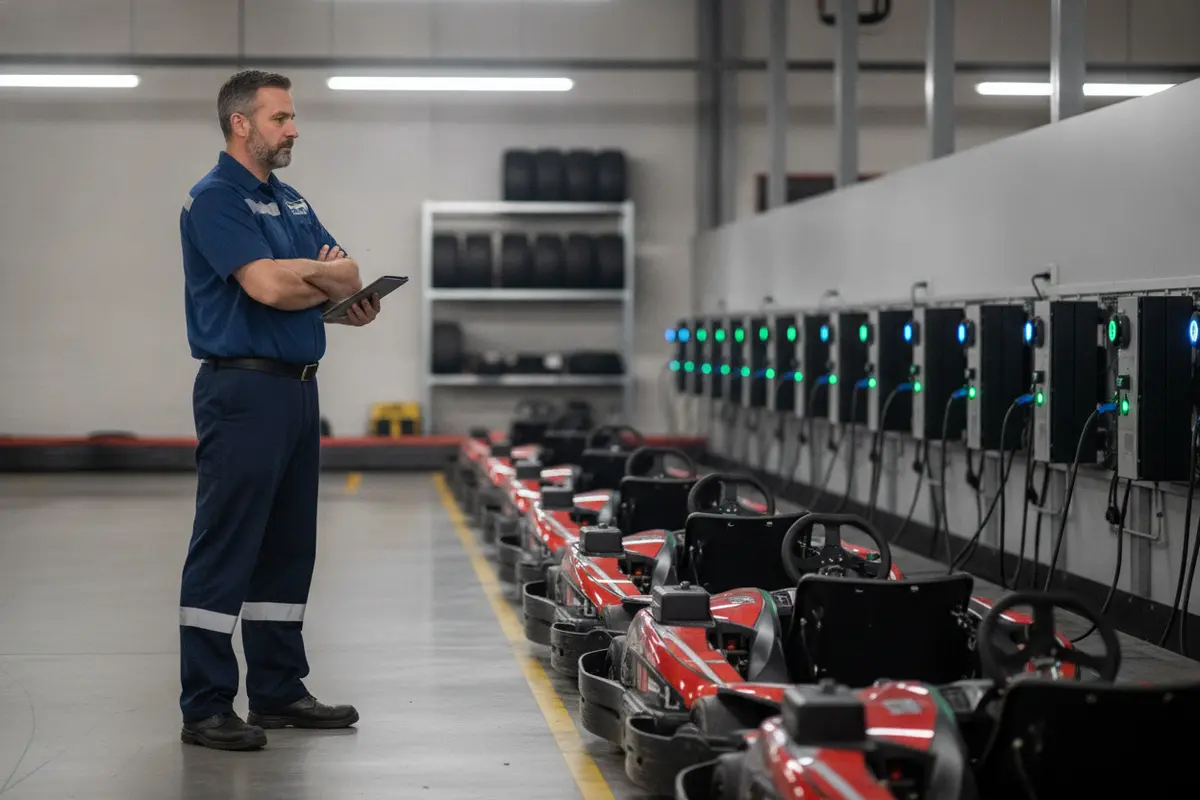
Map the attraction schedule before settling on a charging approach. List planned operating hours, anticipated busy periods, breaks, seasonal changes, and the time available for routine checks. Review charging requirements with the supplier and the person responsible for electrical design. Do not assume a generic charging schedule applies to every fleet or location.
- Define the use case. Document daily hours, operating days, seasonal changes, expected demand periods, and special events. Note whether the attraction is expected to run continuously or in scheduled sessions.
- Gather system data. Ask for the electrical and charging specifications of the exact equipment under consideration. Record what is confirmed and what still needs engineering review.
- Review site capacity. Have a qualified professional assess existing or planned electrical service alongside the building’s other loads. Do not treat a general equipment description as a site design.
- Place charging in the layout. Consider staff access, vehicle movement, guest circulation, storage, and separation from public areas as applicable to the approved design.
- Build an operating routine. Assign responsibility for charging, inspections, records, and escalation when a vehicle or charging component needs attention.
- Validate after opening. Compare the plan with actual operating patterns and adjust procedures through the appropriate technical channels.
Amusement Products manufactures electric go-kart systems and offers a Park & Charge System. Discuss the configuration and documented requirements for your venue rather than assuming a standard setup. The electric go-kart information and Park & Charge System page can help frame equipment questions. For a new layout, include charging in the early design conversation instead of treating it as a late add-on.
What role do batteries play in sustainability?
Batteries affect system operation, maintenance planning, and end-of-life considerations. Ask which battery configurations are compatible with the equipment, what inspection and care instructions apply, and how the supplier supports troubleshooting. Confirm battery information against the specific product documentation. Do not transfer specifications from one kart or system to another.
Battery lifecycle also belongs in a responsible assessment. Ask what guidance is available for service, replacement, and appropriate handling when a battery reaches the end of its useful service. Local collection or disposal requirements may apply, so confirm the correct procedure with relevant authorities and the battery supplier. Keep a record of the selected process and make staff responsibilities clear.
For ThunderVolt systems, Amusement Products’ approved guidance identifies 12V and 48V configurations with 30Ah to 50Ah capacities, and identifies LiFePO4 as the best battery choice for that system. Optima AGM 12V batteries are also compatible. These details are specific to ThunderVolt and should not be assumed for another kart or system. Review the product-specific information with the supplier before selecting a configuration.
How can the facility make the plan more complete?
Electric go-kart sustainability is easier to evaluate when the attraction is considered alongside the rest of the building. Coordinate the track, pit area, charging location, electrical service, guest circulation, and staff work areas during design. That can reveal practical conflicts early, such as a charging zone that interrupts vehicle flow or a required electrical load that was omitted from initial planning.
- Include attraction and charging requirements in the facility’s electrical planning.
- Coordinate vehicle circulation with guest routes, staff access, and emergency egress.
- Plan lighting and operating controls for the actual hours and use of the venue.
- Identify who owns daily checks, maintenance coordination, and records.
- Ask the design team to document assumptions that depend on site conditions or local approvals.
- Review the guest route from arrival through the attraction, including where instructions and staff interactions take place.
Amusement Products’ design and consultation team can discuss how an attraction fits into a broader facility plan. The FEC equipment and attractions catalog provides a broader view of the equipment to consider when mapping the guest experience. Bring the site plan, schedule, and open questions to that discussion.
How can operators measure progress after opening?
Choose a small set of useful measures before the attraction starts operating. The purpose is not to claim a particular environmental result without evidence. It is to create a consistent record that can guide decisions and reveal where operating routines may need attention.
- Energy records: Track electricity use where metering or system records make it practical. Note the period, equipment included, and any known changes to the facility.
- Operating context: Record operating hours and charging activity so energy information can be interpreted alongside fleet use.
- Availability: Log inspections, service events, and downtime to understand fleet availability and maintenance needs.
- Procedures: Review staff routines periodically, especially after changes to hours, capacity, equipment, or layout.
- Assessment assumptions: Document the boundaries used in any comparison so future reviews are based on the same scope.
For example, if a center expands operating hours midway through a season, a simple before-and-after electricity total will not explain what changed. Record the hours, fleet size, and other relevant conditions alongside the readings. If the available data cannot isolate the attraction’s energy use, state that limitation rather than presenting a facility-wide number as a kart-only result.
Keep the method consistent when reviewing trends. Record changes in opening hours, fleet size, charging procedures, or facility systems that affect the comparison. A straightforward record with clear context is more useful than an unsupported claim or a number without a defined boundary.
What should you bring to a design consultation?
Preparation turns a general sustainability goal into a practical design discussion. Gather the information already available, mark what remains unknown, and ask the supplier to identify which points need confirmation by an engineer or local authority. You do not need a finished engineering plan to start the conversation, but basic site and schedule information makes it more focused.
- Site location, available plans, and known electrical service information.
- Whether the project is a new venue, replacement, expansion, or retrofit.
- Desired operating days and hours, including seasonal or event-related changes.
- Initial expectations for fleet size, guest flow, attraction capacity, and staff workflow.
- Questions about charging, battery compatibility, maintenance, procedures, and documentation.
- Sustainability goals or reporting requirements that define how you need to assess the project.
- A list of assumptions that require confirmation, such as available electrical capacity or local approval steps.
Amusement Products manufactures electric go-kart equipment and provides design and consultation. Explore the go-kart attraction overview and the product gallery to identify the systems you want to discuss. For operating teams, maintenance training information can help prompt questions about staff readiness and routine upkeep. A consultation can clarify design considerations; final electrical and regulatory decisions should be confirmed with qualified professionals for your location.
When you contact the team, describe the project stage and what you need to decide next. A replacement project may focus on fitting a new system into existing workflows, while a new center may have more room to coordinate charging and guest circulation from the outset. If you are still gathering information, say which items are estimates so they can be checked rather than treated as final requirements.
Request a design and consultation discussion
Frequently asked questions
Are electric go-karts automatically sustainable?
No single label answers the full question. Consider the electricity source, equipment and battery lifecycle, operating schedule, charging plan, and maintenance practices. Ask for documentation that supports any claim for the specific system and site.
Can I compare electric and gas systems using one environmental figure?
Only when the figures use a comparable scope and clearly stated assumptions. Electricity generation, fuel use, operating hours, and lifecycle boundaries can change what a comparison represents. Ask who prepared it and what it includes before using it to make a decision.
Does every electric kart use the same battery?
No. Battery configuration depends on the equipment. Confirm compatibility and care instructions with the supplier. ThunderVolt guidance, for example, covers specified configurations and compatible choices; do not apply those details to other systems.
What is the first step for a new FEC project?
Describe the site, operating schedule, attraction goals, and any sustainability criteria. Then coordinate equipment requirements with facility planning and qualified technical professionals before finalizing the layout.
How can an operator avoid making unsupported sustainability claims?
Define the boundary of each claim, keep the supporting records, and identify assumptions that have not been verified. If available information does not isolate the attraction’s impact, say so and avoid presenting a broad facility measure as a precise kart-specific result.
Contact Amusement Products to discuss your FEC project
Plan the operation before choosing the system
A sound electric go-kart sustainability assessment connects equipment documentation to the realities of the venue: energy supply, charging, batteries, staff routines, and facility design. Define what you want to evaluate, verify the system-specific requirements, and record the assumptions behind your decisions. That gives your team a practical basis for selecting and operating an attraction.