Choosing equipment for an electric kart attraction is not simply a matter of comparing vehicle specifications. FEC operators also need to understand how the fleet will fit the site, track, controls, staffing model, safety process, and long-term maintenance plan.
A commercial go kart manufacturer should provide more than karts. The right partner can connect equipment specifications with track layout, capacity planning, controls, commissioning, staff training, parts, and ongoing support. Amusement Products describes its role across those project stages, including site evaluation, feasibility analysis, construction, training, and service support. Review the documented consultation scope before comparing proposals.
Request go-kart design and consultation for your FEC project.
Start by asking whether a supplier can explain the complete operating system in practical terms. That includes how the fleet serves your rider mix, how controls support your track plan, and what documentation your team will use after launch. The following criteria provide a grounded way to evaluate that fit before you commit to a project partner.
What Should a Commercial Go Kart Manufacturer Provide?
A commercial go kart manufacturer should bring more than a vehicle catalog to an FEC project. The right evaluation asks whether the company can help you connect the fleet to the track, operating model, safety process, and long-term maintenance plan. A kart attraction is a working system. Layout, loading, controls, staffing, inspections, parts, and training all affect how reliably it can operate.
Start with project fit
Assess whether the manufacturer understands your facility and rider mix. The conversation should cover indoor or outdoor use, available space, track slope and concrete flatness. Entry and exit loading areas, turn radius, traffic signals, capacity, and the control system. A manufacturer that provides site evaluation and feasibility analysis can help identify integration issues before equipment is ordered.
It should also explain how fleet configuration supports your audience, such as single-rider and two-seat options where appropriate. Every venue has different physical and operating conditions. Avoid treating a standard package as a complete project plan.
Look beyond the kart
Ask how the proposed fleet connects to daily track operations. Controls may affect speed management, pit entry, race starts, turn zones, and attendant response. Charging infrastructure can also influence pit layout and staff workflow. A complete proposal should identify what is included in equipment specifications, installation or commissioning, operator training, maintenance guidance, parts access, and ongoing service.
Amusement Products has worked in the FEC industry for more than 60 years, dating to 1960. The company describes its history as evolving from operating 64 FEC locations, including 28 go-kart tracks, into manufacturing and project support. That operator-to-manufacturer background can inform practical questions about throughput, guest flow, staffing, and serviceability. It should supplement, not replace, a venue-specific evaluation.
- Project fit: site conditions, rider mix, capacity, and future expansion.
- Integration: track layout, fleet configuration, controls, pit workflow, and charging.
- Safety process: written procedures, inspections, emergency guidance, and operator responsibilities.
- Launch support: commissioning scope, staff training, maintenance documentation, parts, and service contacts.
The strongest commercial electric go-kart proposals make these connections visible. They give operators enough information to compare project fit and lifecycle support, not just the appearance or specifications of individual karts.
How Do You Evaluate a Commercial Go Kart Manufacturer for an FEC?
Use a project checklist rather than a product brochure. The right partner should explain how the fleet, track, controls, charging approach, documentation, and service plan work together in your facility. Ask for specific deliverables and responsibilities before you compare proposals.
| Evaluation area | What to verify | Questions to ask |
|---|---|---|
| Project fit | Whether the proposed fleet and layout match your site, rider mix, loading areas, turn radius, slope, and operating plan. | Will you review the site and feasibility before specifying equipment? |
| Fleet integration | How kart configurations, speed controls, track controls, pit workflow, and charging infrastructure operate as one system. | How will the controls support different rider groups and daily launch procedures? |
| Documentation | Written operating procedures, inspection guidance, maintenance information, training materials, and records. | Which manuals, checklists, diagrams, and training resources are included? |
| Commissioning | Clear ownership for installation, testing, staff training, handover, and open items before launch. | What does commissioning include, and who signs off that the system is ready? |
| Support | Parts access, service contacts, diagnostic tools, maintenance training, and a defined technical-question process. | How will mechanics identify problems and obtain parts or guidance? |
| Future expansion | Whether controls, infrastructure, documentation, and support can accommodate later changes. | What should we plan now if capacity, kart mix, or the track changes? |
Ask the manufacturer to connect recommendations to your actual operating conditions. Amusement Products describes site evaluation, feasibility analysis, equipment specifications, and capacity planning as part of its consultation process. Its electric go-kart range also documents selectable speed settings and multiple kart configurations. Review the commercial electric go-kart fleet details alongside your site requirements.
Request a written list of inclusions and exclusions. A thorough proposal should make clear what covers design, construction, commissioning, training, parts, and ongoing support. That clarity makes technical comparisons more useful as the project moves from concept to daily operation.
What Should an Electric Go-Kart Manufacturer Document Before Delivery?
Before an electric kart fleet arrives, the manufacturer should give your team more than a packing list. You need a usable operating record that connects the karts, track, controls, staff, and service plan. That record helps your FEC confirm what was designed, how the attraction should be commissioned, and what operators should check each day.
- Safety design and operating guidance: Request explanations of controls, braking behavior, speed management, rider limits, pit procedures, emergency actions, and attendant responsibilities. The guidance should match the equipment delivered and your planned workflow.
- Inspection procedures: Identify what staff inspect before opening, during operation, and after a shift. Checks can include brakes, speed-limiting devices, controls, tires, visible damage, the track, pit area, and barriers. State requirements vary. Use the manufacturer’s instructions alongside local rules. Review Maryland’s inspection reference as one example.
- Training materials: Operators need role-specific instructions for dispatch, pit entry, rider assistance, shutdowns, and emergencies. Ohio’s rule provides one example of training topics: see the Ohio training reference.
- Commissioning scope: Clarify track and loading-area checks, control-system setup, fleet testing, staff training, acceptance criteria, and responsibility for open items. Design and consultation support can connect these decisions.
- Parts and support contacts: Include parts identification, service intervals, troubleshooting steps, escalation contacts, and instructions for requesting technical help.
Make documentation part of commissioning, not an afterthought. Have supervisors walk through it with the installation or training team. Record unanswered questions and store final versions where attendants and maintenance staff can access them.
How Does an Electric Fleet and Control System Affect Operations?
The fleet and control system shape more than the ride itself. They influence how operators match vehicles to guests, manage the track during a session, and respond when operating conditions change. When evaluating a commercial electric go-kart manufacturer, ask how the proposed system fits your rider mix, layout, staffing plan, and operating procedures.
Can one fleet serve different rider groups?
Amusement Products documents four selectable electric-kart speeds: Rookie, Novice, Family, and Competition. That range may help an operator serve first-time drivers, family groups, and more experienced racers with one fleet. The practical question is how those settings would be assigned and supervised at your facility. Review track design, rider requirements, attendant workflow, and local operating rules before selecting a configuration.
What should operators verify about controls?
The ThunderVolt commercial electric operating system is documented as an operating platform for electric go-karts. Its control approach includes remote speed changes, including incremental reduction in one-mile-per-hour steps. Ask who can adjust settings, how changes are communicated to the track team, and how controls fit the inspection and training process.
VirTech diagnostics and Power Up technology are also documented as part of the electric-kart offering. Ask what each system covers for the specific fleet, what information staff can access, and which maintenance decisions require manufacturer support.
Request go-kart track design and consultation for your project.
Evaluate integration beyond the karts. Confirm how the fleet, controls, loading area, track layout, and daily operating checklist work together. A commercial electric go-kart manufacturer should discuss those connections in project-specific terms and document the assumptions before installation.
Which Support and Maintenance Capabilities Matter After Installation?
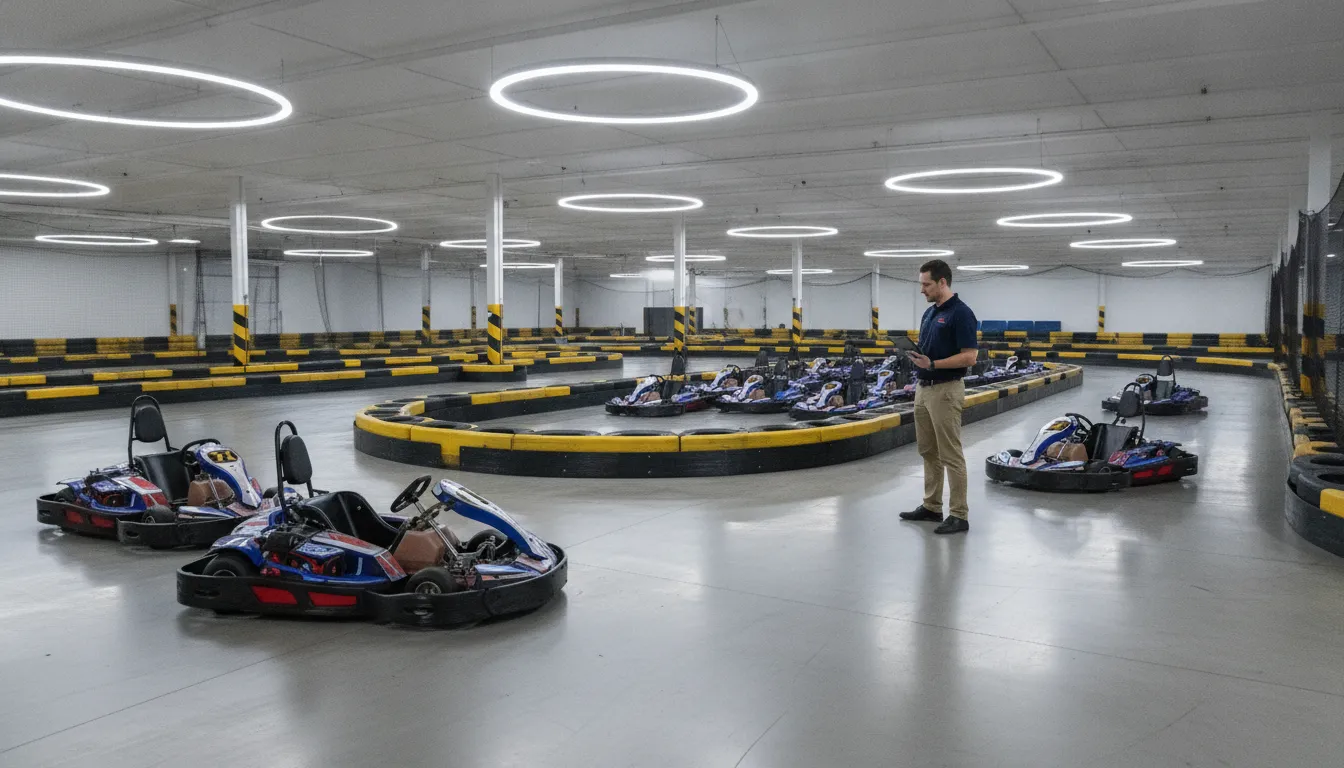
The equipment handoff is the beginning of daily operations, not the end of the manufacturer relationship. Before selecting a commercial go kart manufacturer, ask how the team will help operators keep the fleet available. Identify problems, train new staff, and escalate issues that cannot be resolved onsite.
Support should be practical and documented. A useful partner can explain what happens during normal operation, what an attendant can check, and when a technical issue requires specialized service.
Parts access and service documentation
Ask which wear items and replacement parts are commonly stocked, how parts are identified, and who can confirm compatibility with your kart configuration. Service documentation should cover inspection points, approved adjustments, troubleshooting steps, and boundaries for work requiring qualified technicians.
A written escalation path is equally important. Confirm the service contact, the information needed to diagnose a problem, and how issues are tracked through resolution. For a deeper reference, review the commercial electric kart maintenance guide.
Training, diagnostics, and inspection routines
Training should include operating procedures, assigned duties, safety practices, and emergency response. Requirements vary by jurisdiction. Maryland requires a go-kart operation to be inspected each day before opening, while Pennsylvania guidance emphasizes inspecting the full facility, not only the vehicles. Use the manufacturer’s checklist alongside applicable local requirements.
The strongest support plan combines accessible parts, useful diagnostics, repeatable training, documented inspections, and a clear route to expert help when an issue exceeds the onsite team’s scope.
What Questions Should You Ask a Commercial Go Kart Manufacturer?
A useful manufacturer conversation should test more than the kart itself. Ask questions that reveal whether the proposed equipment, controls, documentation, and support model fit your facility and operating plan.
- What project scope can you support? Confirm whether the manufacturer provides equipment only or can also contribute to layout planning, commissioning, training, parts, and ongoing support.
- How will you evaluate our site and rider mix? Discuss indoor or outdoor use, available space, slope, concrete flatness, loading areas, turn radius, traffic signals, and rider needs.
- Which fleet configuration fits our operation? Ask about single-rider and two-seat options, fleet size, vehicle mix, session flow, and loading and unloading.
- How are speed and track controls managed? Ask how operators select or adjust speed settings, control access, manage pit entry, and respond to changing conditions.
- What safety documentation will we receive? Request operating procedures, inspection guidance, emergency procedures, control information, and maintenance documentation. Requirements vary by jurisdiction.
- What does commissioning include? Clarify who verifies installation, track integration, controls, charging, and operational readiness.
- How is staff training delivered? Ask whether training covers assigned duties, normal operation, safety, emergencies, inspections, and troubleshooting.
- How will we obtain parts and service? Identify the service contact, parts-ordering process, diagnostic tools, response process, and maintenance guidance.
- How can the system expand later? Discuss whether controls, charging, fleet, and facility planning can accommodate future changes.
The answers should help your team compare project fit and lifecycle support on consistent criteria. If the site, fleet, and operating questions need a deeper review, design consultation can turn them into a documented plan.
Request go-kart track design and consultation
Frequently Asked Questions
What should an FEC ask a commercial go kart manufacturer before selecting a fleet?
Ask how the proposed karts fit your track layout, rider mix, operating environment, control system, charging plan, and maintenance workflow. Request information about commissioning, staff training, parts access, service contacts, inspections, and future expansion.
Are electric go-karts suitable for both indoor and outdoor FECs?
Some commercial electric go-kart systems are designed for both indoor and outdoor operation. Confirm intended use with the manufacturer, then review site conditions such as slope, concrete flatness, loading areas, turn radius, ventilation, and electrical infrastructure.
How can operators manage different rider abilities with one electric fleet?
Look for adjustable operating controls that let attendants match the experience to rider groups and track conditions. Amusement Products documents four selectable speeds, Rookie, Novice, Family, and Competition. The right setup still depends on facility procedures, track design, and applicable requirements.
What safety and maintenance records should a kart operation keep?
Operators should maintain written inspection, training, emergency, and maintenance procedures, plus records showing when checks were completed and issues were corrected. Requirements vary by jurisdiction. Maryland includes speed limiters, brakes, and controls among inspection points: Maryland COMAR 09.12.64.06.
What support should continue after installation is complete?
Confirm who handles commissioning, operator training, parts, troubleshooting, maintenance guidance, and future system questions. A lifecycle-focused partner can also help with site evaluation, capacity planning, equipment specifications, and ongoing support.
Plan Your Commercial Go-Kart Project With the Right Partner
A clear project conversation can connect your facility needs, fleet goals, track considerations, and operating plans before you make a supplier decision. If you are evaluating a commercial electric go-kart manufacturer for an FEC project, request a design and consultation conversation with Amusement Products to discuss the right next steps.