Indoor karting is on track to double from $1.5 billion to $3.0 billion by 2033. This fast-growing sector offers a high-return anchor attraction for family entertainment centers. Yet, launching a successful track needs precise planning to avoid costly design and equipment errors.
How to start a go-kart business needs a structured plan that covers track design, fleet sizing, local zoning permits, and reliable track safety equipment. Indoor recreation centers can pack 700 feet of track into 30,000 square feet of indoor space. Launching with an efficient fleet of 15 to 20 electric go-karts helps manage starting costs while securing high-throughput capacity to generate strong cash flow. Partnering with a turnkey manufacturer who delivers complete equipment, operator training, and track construction guarantees a smooth launch and prevents costly mistakes during setup.
Browse our commercial electric go-kart lineup and schedule a free consultation to get expert guidance on choosing the right system for your facility.
If you want to know how to navigate this process, you must start with a solid blueprint. The first phase of building your layout starts by selecting the right environment for your facility.
How To Start A Go Kart Business: Step 1: Choosing Your Go-Kart Track Format (Indoor vs Outdoor)
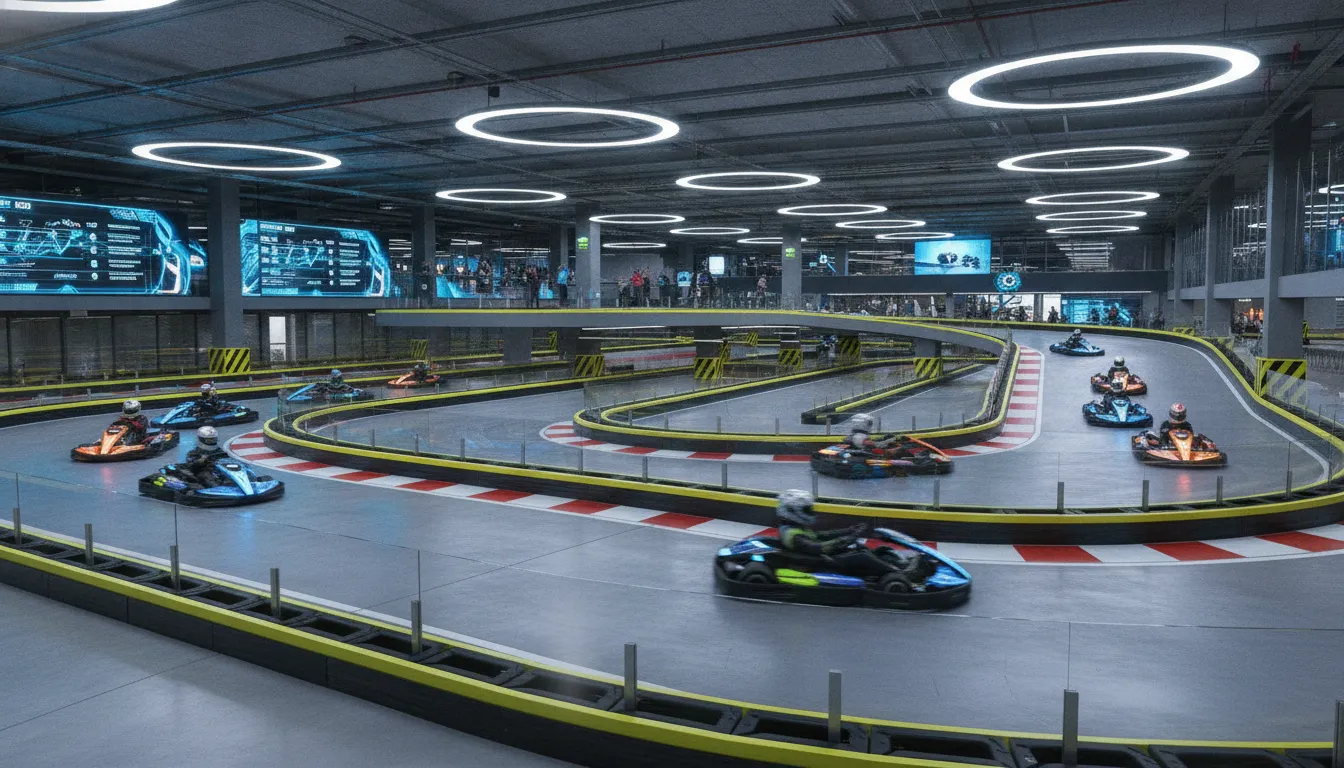
When learning how to start a go kart business, choosing between indoor and outdoor track formats determines your land needs, startup costs, and year-round revenue potential. Indoor tracks use electric karts and require 30,000 to 45,000 square feet of climate-controlled space, while outdoor tracks need multiple acres and often rely on gas-powered karts with seasonal operation.
Go-kart tracks range from outdoor lots using gas-powered karts to indoor sites running on electric karts. This choice shapes your land needs, startup costs, and year-round sales. Amusement Products has run 64 FEC locations over 60 years, using this background to help owners build the best track format for their market.
Space needs and site planning
Space limits will guide your choice. Outdoor tracks need many acres of land to build. This large footprint allows you to build longer layouts with hills and bridges.
In contrast, indoor tracks use much less space. An indoor site can pack 700 feet of track into 30,000 square feet of indoor space. It can also fit 1,000 feet of track into 45,000 square feet. This makes indoor tracks perfect for city areas where land is hard to find or too costly.
Power source and ventilation
If you build indoors, you must think about air quality. Gas karts produce toxic exhaust. To run gas karts indoors, you would need massive air systems that are loud and cost a lot to run. Electric karts solve this issue. They do not emit fumes or exhaust, making them the safe choice for indoor tracks. When choosing the right go-kart system, electric models keep the indoor air clean and quiet for your guests.
Air systems for gas karts need high upfront costs and constant power. If the fan system fails, you must close your doors. Electric karts remove this business risk fully. Your guests get a clean, odor-free visit, and your staff does not have to breathe engine fumes all day.
Operational costs and return on investment
The choice between gas and electric karts has a huge effect on your profits. Gas karts need daily fuel, frequent engine work, and oil changes. These costs add up fast.
In contrast, ThunderVolt electric go-karts reduce your ongoing costs. Operators can save more than $35,000 each year when they compare this system to traditional gas. These savings come from lower power costs, fewer moving parts, and less daily care.
With an electric fleet, you do not need to buy or store fuel on site. Charging batteries during off-peak hours can lower your power bills. This business shift lets you put more cash back into growing your new track.
The high return of the karting business has drawn interest from large investors. By choosing smart electric systems, you can secure high returns while keeping your track clean and modern.
| Track Format | Recommended Karts | Space Requirements | Operational Season | Ventilation Required |
|---|---|---|---|---|
| Indoor Format | Electric only | 30,000 to 45,000 sq ft | Year-round (climate-controlled) | None (zero emissions) |
| Outdoor Format | Gas mostly | Multiple open acres | Seasonal (weather-dependent) | Natural open airflow |
Step 2: How Many Karts Do You Need to Open Profitably?
To start a profitable go-kart business, a fleet of 15 to 20 karts is the standard launch size. This range lets you run full races during peak hours while keeping reserve karts for charging and maintenance. Fleet sizing depends on track length, kart type, and your target market, with startup costs for karts between $45,000 and $180,000.
Fleet size is a key choice in how to start a go kart business. You must balance your startup costs with the need to keep tracks full. If your fleet is too small, wait times will grow too long and guests will leave. If you buy too many karts, your upfront costs will drain your cash flow before you build a steady crowd.
Recommended startup fleet sizing
For most new tracks, a fleet of 15-20 karts is the standard. This setup lets you run full races while keeping extra karts in reserve for charging and quick repairs. With this size, you can handle peak weekend crowds when guest count climbs.
When planning your fleet size, keep these factors in mind:
- Track length: Longer tracks need more karts to keep the race exciting.
- Kart type: Electric karts charge fast, so you need fewer spares than gas fleets.
- Target market: Adult racers want high speeds, while family tracks need two-seat karts for kids.
Estimated startup costs and construction
Starting a go-kart track needs a clear budget for both karts and building. A fleet of 15-20 karts will cost between $45,000 and $180,000. Building your track is your biggest cost, often ranging from $100,000 to $500,000 or more. You must also budget $15,000 to $45,000 for safety and timing systems. Getting permits and your first insurance plan adds $15,000 to $30,000 more. In total, you will likely spend between $175,000 and $750,000 to get open. You can study these costs in our guide on building a profitable go-kart track.
Understanding throughput and scaling
Your hourly throughput controls how fast you can pay off your startup costs. Each kart on the track makes direct sales, so keeping them moving is vital. If you choose electric karts over gas, your running costs drop. Choosing electric over gas can save you over $35,000 each year in fuel and parts. Most tracks run three to four races per hour. If each race has ten karts, your track can host up to forty riders every hour. You can start with a modest fleet of 15 karts and use early profits to buy more as your crowd grows.
Get a detailed cost breakdown for your go-kart track build and see how our turnkey packages simplify your launch process.
Step 3: Selecting Your Electric Go-Kart Manufacturer
Selecting the right go-kart manufacturer is the most critical decision when learning how to start a go kart business. Look for a partner with decades of hands-on FEC operations experience, US-based manufacturing for fast parts delivery, and complete turnkey support including track design, installation, and staff training. The right manufacturer determines your fleet uptime and long-term profitability.
When you are learning how to choose a commercial go-kart manufacturer, this is your most important choice. A top kart attraction can achieve strong financial returns, but you can only hit these goals if your karts stay on the track and out of the repair shop. High downtime will quickly drain your profits and hurt your brand.
Key criteria for commercial karts
You need a partner with deep industry experience. Amusement Products brings over 60 years of hands-on experience, including operating 64 of our own locations. We design and build all karts in the USA to ensure durability and fast parts delivery. This domestic supply chain keeps your fleet running and prevents costly downtime during your busiest weekends. Learn more about our company history and manufacturing standards.
When you compare brands, focus on these main areas:
- Chassis warranty coverage, frame strength, and overall build quality.
- Availability of local technical support and fast replacement parts.
- Turnkey help with track design, zoning, and final installation.
Explore our full commercial electric go-karts for sale to see available models and configurations.
Operating systems and safety tech
Modern electric tracks need advanced software to run safely and protect your profits. Our ThunderVolt electric go-karts use a smart operating system to control speed and monitor kart health. For a deeper look, read our ThunderVolt electric go-kart operating system guide that explains speed control, remote diagnostics, and fleet management features. This technology lets you adjust kart speeds for different age groups or slow down all karts at once if there is an issue. Using this electric system can save your business over $35,000 annually compared to traditional gas options.
Reducing operational risk with education
Starting a new attraction can feel complex, but you do not have to do it alone. Our turnkey services can complete your track build in two to six weeks to help you avoid common design and engineering mistakes. This fast timeline lets you open your doors sooner so you can start earning revenue right away.
To protect your investment, you must also train your staff to manage the track safely. We help you do this through the FEC Success Institute, which is the only IAAPA-accredited educational program in our industry. Find out what the latest electric go-kart technology can do for your FEC.
This program teaches you the best ways to run your facility, manage safety, and grow your sales. You will learn directly from industry experts who understand the daily needs of a successful operator. By combining premium equipment, advanced software, and top-tier training, you set your business up for long-term growth.
Step 4: Track Layout and Safety Certification Requirements
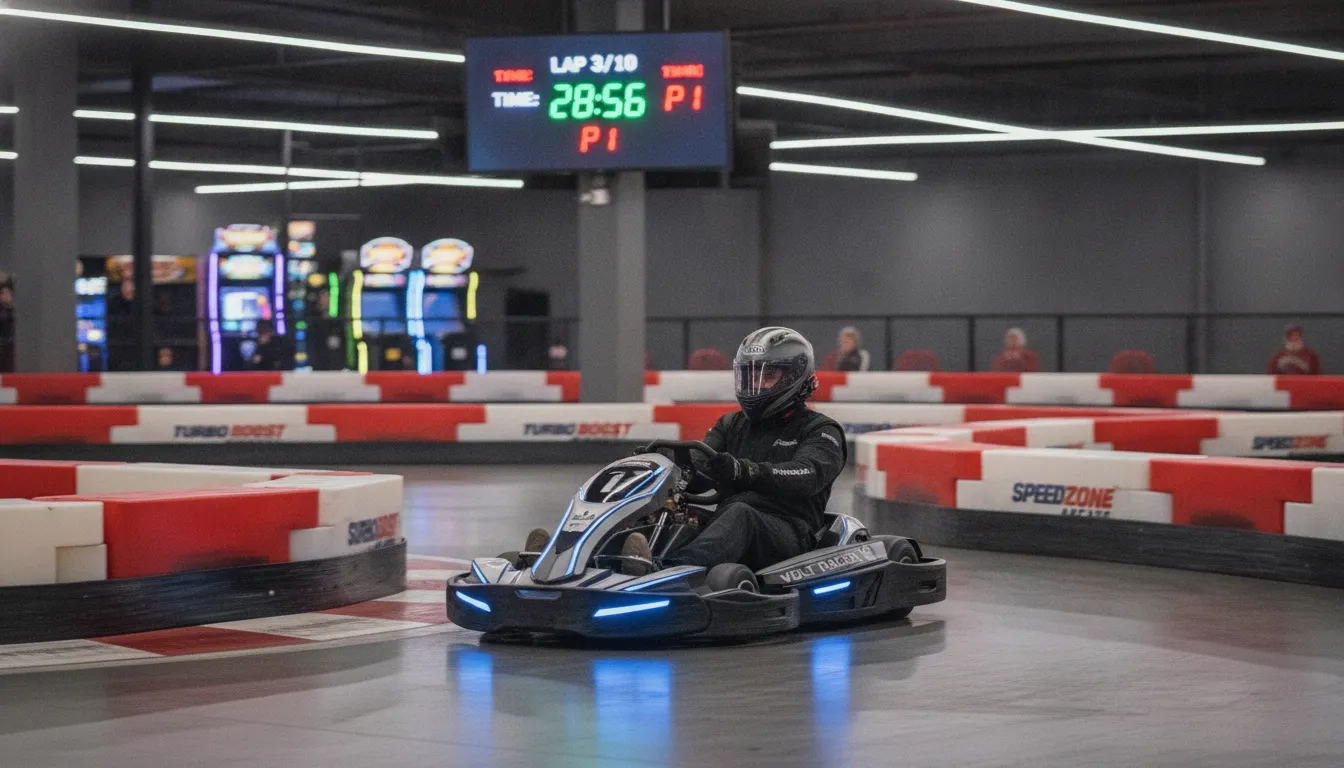
Planning your go-kart track layout requires maximizing thrills with elevation changes and varied turns while meeting ASTM and IAAPA safety standards. Indoor tracks can fit 700 to 1,000 feet of racing in 30,000 to 45,000 square feet. Safety and timing systems cost between $15,000 and $45,000 and include remote shut-off controls and spring-loaded barrier walls.
Planning a go-kart track is more than just pouring concrete. You need a layout that keeps racers thrilled. A great track should use elevation changes and many turns to make the ride fun.
Maximizing Track Layout and Space
When planning your track, keep these core rules in mind:
- Include elevation changes like slopes and bridges to add thrills.
- Vary the direction of your turns so drivers do not get bored.
- Ensure the track lane is wide enough to let karts pass each other safely.
To build a track that works, you should get help from experts. You can work with our design and consultation team to plan the best layout. Our team has planned and built tracks for over 60 years.
Safety Systems and Remote Barriers
Safety is the main focus of any kart track. Modern tracks use tough barriers and smart control systems to shield drivers. These safety and timing systems can cost from $15,000 to $45,000. You can slow down or stop all karts on the track with a remote control, which prevents crashes and keeps your guests safe.
Track safety systems do not just protect your guests. They also make the race more fun with live scoring and lap timing. Modern systems use spring-loaded barrier walls to absorb shocks. These barrier systems are a must-have for safe, high-speed racing.
You should also make sure your track is open to all guests. Some venues now use hand-controlled karts to let guests in wheelchairs race, as reported by Michigan State University. Your safety rules should meet ASTM and IAAPA standards to keep everyone safe.
Zoning, Permits, and Insurance Costs
To start your business, you must deal with local laws and rules. First, you need to find land or a building zoned for commercial play. You will also need to get local building and business permits. Each town has its own rules for business sites. You will need to check with your city hall before you sign any lease or buy land. First-year insurance and permits will often cost between $15,000 and $30,000. These costs are key to budget for when planning how to start a go kart business.
Here is a step-by-step overview of the go-kart track launch process from planning to opening day:
- Survey your land or building space and check local zoning codes for commercial recreation use before signing a lease.
- Design your track layout with elevation changes, varied turns, and proper barrier placement following ASTM safety standards.
- Select your go-kart manufacturer and purchase a fleet of 15 to 20 electric karts with a full operating system.
- Install safety and timing systems including remote shut-off controls, spring-loaded barriers, and lap-counting electronics.
- Train your staff through the FEC Success Institute and implement daily inspection routines before opening to the public.
Step 5: Staffing and Operating Your Kart Fleet
Operating a go-kart track requires a well-trained team including cashiers, a pit boss, and track marshals. You need one track marshal for every five to six active karts. Electric karts simplify daily maintenance compared to gas models because they have fewer moving parts and no engine oil or spark plugs to check, reducing labor costs significantly.
Learning how to start a go kart business requires a solid plan for your daily track staff to keep races safe and throughput high.
Staffing ratios and track roles
For a standard track, your team will include cashiers, a pit boss, and track marshals. Cashiers manage bookings, while the pit boss controls how karts load and exit. Track marshals watch the track closely to handle any spinouts on the floor.
Your staff count will depend on your driver-to-kart ratios. A standard track needs one track marshal for every five to six active karts. If you run a fleet of 15 to 20 karts, you should have at least three marshals on duty. This staffing level ensures quick response times to protect your guests and keep track risk low.
Daily inspection routines and maintenance
Daily inspection routines are vital to prevent breakdowns and keep your fleet running safely. Every morning, your crew must perform a fast check of tire pressure, brake wear, steering, and seat belts. For gas karts, staff must also check fuel levels, motor oil, and spark plugs. This extensive daily prep can take hours of labor and adds to your business costs.
Electric karts make maintenance much simpler than gas models because they have fewer moving parts. You can read about choosing the right go-kart system to see how electric karts save on parts and fuel.
Remote diagnostics and training
Operating a large kart fleet is much easier when you use advanced software. The ThunderVolt electric operating system features remote diagnostics to track each kart’s health in real time. If a kart has a low battery or motor issue, the system alerts the pit boss on a central screen. This automated tracking lets you fix issues quickly before they cause track delays or stop the fun.
To build a strong business, you must also focus on proper team training. The FEC Success Institute is the only IAAPA-accredited training program in the family entertainment industry. This specialized program teaches new owners how to manage staff, run daily tracks, and boost revenue. If you are ready to build, a turnkey construction plan can be finished in two to six weeks to prevent common setup errors.
Talk to our design team about your go-kart track project and get expert guidance on layout, equipment, and operations from concept to opening day.
How Profitable Is a Go-Kart Business? Revenue and ROI Breakdown
A well-run go-kart track is a highly profitable anchor attraction for any family entertainment center. The United States karting market has grown approximately 5.7% to reach $120 million, with the global indoor karting segment projected to double from $1.5 billion to $3.0 billion by 2033. Electric karts reduce ongoing operational costs by over $35,000 per year compared to gas fleets, helping you reach your breakeven point faster.
Many owners who want to know how to start a go kart business ask if the model is profitable. Yes, a well-run track is a strong anchor attraction that draws steady foot traffic. By acting as a main draw, it boosts sales for other on-site offerings like food, drinks, and arcade games.
Market size and industry growth
The United States karting market has grown about 5.7% to a value of $120 million. Indoor tracks are the fastest-growing part of this market. Experts expect the global indoor karting sector will rise from $1.5 billion to $3.0 billion by 2033. This growth is fast because new tracks use electric karts. These karts do not make exhaust fumes, which solves the biggest problem of indoor racing.
Private equity returns and average ROI
Big investment firms also see high value in these tracks. According to a study by London Business School, karting investments have yielded a 2.3x multiple on invested capital and a 29% gross internal rate of return. These numbers show that a track is not just a fun game, but a serious asset that yields high profits. This financial success makes karting a prime choice for business owners. Explore our complete guide to commercial electric go-karts for FECs for more insights on building a profitable karting operation.
Profit margins and operational cost savings
To build a strong business, you must manage your space and upkeep. Indoor tracks have high space efficiency. Owners can fit a 700-foot track into a 30,000 square foot building. This layout helps you get more sales from every square foot of your floor. When you are building a profitable go-kart track, space planning is vital. A smart track design ensures that you make the most of your local real estate.
Electric karts also help you keep more of the cash you make. They cut down on fuel and engine repairs. An advanced electric kart system can save you over $35,000 each year compared to gas karts. These savings go straight to your bottom line. Over time, these lower costs help you reach your breakeven point much faster. Learn more about adding complementary attractions like bumper cars to boost your FEC revenue across multiple guest segments.
Frequently Asked Questions
How much does it cost to start a go-kart business?
Starting a go-kart track can cost between $175,000 and $750,000 based on your scale. Track construction runs about $100,000 to over $500,000. Buying a fleet of 15 to 20 commercial karts runs from $45,000 to $180,000, while safety and timing systems add $15,000 to $45,000. Permits and insurance add another $15,000 to $30,000 for your first year.
What licenses and permits do I need for a go-kart track?
To run a go-kart business, you must get local zoning approval for commercial recreation first. You also need a general business license, building permits, and health permits if you sell food. Many states also need safety certifications that follow ASTM standards to ensure your track is safe for guests.
What kind of insurance is mandatory for a go-kart business?
You must buy general liability insurance to protect your business from injury claims. Most lenders also need property insurance to cover your building and equipment. If you plan to hire staff, you must also carry workers compensation insurance per state law. Expect first-year insurance costs between $15,000 and $30,000.
How much can you earn from a go-kart business annually?
Annual revenue for a go-kart track depends on your location, track size, and operating season. With 15 to 20 electric karts running three to four races per hour, your track can serve up to 40 riders per hour. Many tracks see strong six-figure annual revenues with 20% to 35% profit margins before debt service.
Are electric go-karts better than gas for a new track?
Yes, electric go-karts are the better choice for most new tracks, especially indoor facilities. They produce zero emissions, require less daily maintenance, and can save over $35,000 per year in fuel and parts compared to gas karts. Electric karts also give you year-round operation without costly ventilation systems.
Ready to Build Your Go-Kart Track?
Starting a go-kart business is a complex but rewarding process. From choosing your track format to selecting the right equipment and training your staff, every decision shapes your long-term success. You do not have to navigate this journey alone. Amusement Products brings over 60 years of experience in designing, building, and operating successful FEC attractions across the country.
Contact our design team today to schedule a free consultation and take the first step toward building a profitable go-kart attraction for your family entertainment center.