
For an FEC operator, a timing system is not just another software purchase. It can affect how races are started and how lap results are captured. It can also shape how staff answer customer questions during a busy session. The right choice begins with the track, kart fleet, control systems, and daily workflow rather than a feature list.
Discuss your track and control-system requirements with Amusement Products.
A go kart timing system for sale should be evaluated as part of the complete attraction. Confirm how it identifies each kart, detects laps, records and displays results, integrates with the track, and is supported after installation. Product-specific accuracy, equipment, software, and service terms should be verified directly with the supplier.
That evaluation becomes much easier when you separate the timing function from related systems such as kart control, scoring, displays, and customer registration. Start by defining what the system must do during an actual race and what information your team needs before, during, and after each session.
What Does a Commercial Go-Kart Timing System Do?
A commercial go-kart timing system records the relationship between a kart and the time it takes to complete each lap. At the most basic level, the system needs a way to identify each kart. A detection point at the start and finish line, and software that records the resulting lap times. When a kart crosses the line, the system associates that crossing with the correct kart and creates a race record.
Amusement Products describes its go-kart race timing system as a racing management tool. Its published configuration includes one kart-identification component per kart, a start/finish detection point, timing software, and optional additional detection points. The page also states that the system is accurate to 1/1000 of a second. Operators should confirm the exact components, installation requirements, and support terms for the system being evaluated.
Timing is different from kart control
Timing tells an operator and racers when a kart crosses a detection point and how its laps compare. Kart control manages the vehicle during the attraction. A control system may set operating speeds, reduce speed in designated areas, or stop karts for an operational or safety response. Those functions can work alongside race timing, but they do not replace the timing system’s job of identifying laps and recording results.
Timing is not the same as gamification
Gamification adds competitive or interactive layers, such as scores, challenges, player feedback, or themed race features. A timing system can provide the underlying race data that supports a result display, but the display and the game experience are separate decisions. The published race-timing page notes that computers and LED or projection displays are not included. So a facility should identify what hardware and software it already has and what it needs to supply.
For an FEC operator, the practical value is a repeatable record rather than manual observation. Automated lap records can make results easier to review and present, while an operator-friendly workflow reduces confusion during busy race sessions. Ask a supplier how the system identifies karts, stores results, displays them to staff or racers, and fits the track’s control and operating procedures. A university race-timing project likewise identified automated recording, stored results, and accessible displays as useful improvements over manual timing workflows. Review the race-timing project description for that educational example.
Which Components Should Buyers Expect?
A commercial timing package should be evaluated as a complete operating system, not just as a screen that shows lap times. The live race-timing specifications identify the core components below, while facility-side equipment may need to be planned separately. Confirm the exact equipment list, compatibility, and installation scope with the supplier before selecting a system.
| System element | What it does | Buyer question |
|---|---|---|
| Kart identification | Identifies each kart at a detection point. The system can then associate a lap result with the correct vehicle. The published race-timing system lists one kart-identification component per kart. | How is each kart identified, and is the component compatible with the fleet and operating environment? |
| Start/finish detection point | Records each kart’s lap time at the start/finish line. At least one detection point should be positioned there, because this is where each lap result is timed. | Where will the detection point be installed, and what track or electrical requirements must be addressed? |
| Timing software | Receives timing data, records lap results, and supports race management. The manufacturer describes its system as a complete racing management tool, not timing hardware alone. | What results, race formats, reports, and operator controls does the software support? |
| Additional detection points | Optional detection points can extend the system beyond the primary start/finish location. Their purpose and placement should follow the facility’s operating goals and track layout. | Would additional points improve the information operators need, and are they supported by the selected configuration? |
| Computers, displays, and registration tools | The live product page identifies computers that drive the software, LED or projection displays for results. And registration pads for waiver signing as not included in the listed timing-system parts. | Who supplies, configures, connects, and supports these facility-side tools? |
Fleet compatibility deserves particular attention when an operator is buying a system for a new attraction or replacing equipment. Review the available commercial electric go-kart fleet alongside the timing requirements, rather than treating the two decisions as unrelated. A supplier should be able to explain how the kart identification method, detection layout, software, and operator workflow fit together.
For the manufacturer’s published component list and timing details, review the go-kart race timing system page.
How Does a Timing System Fit the Track?
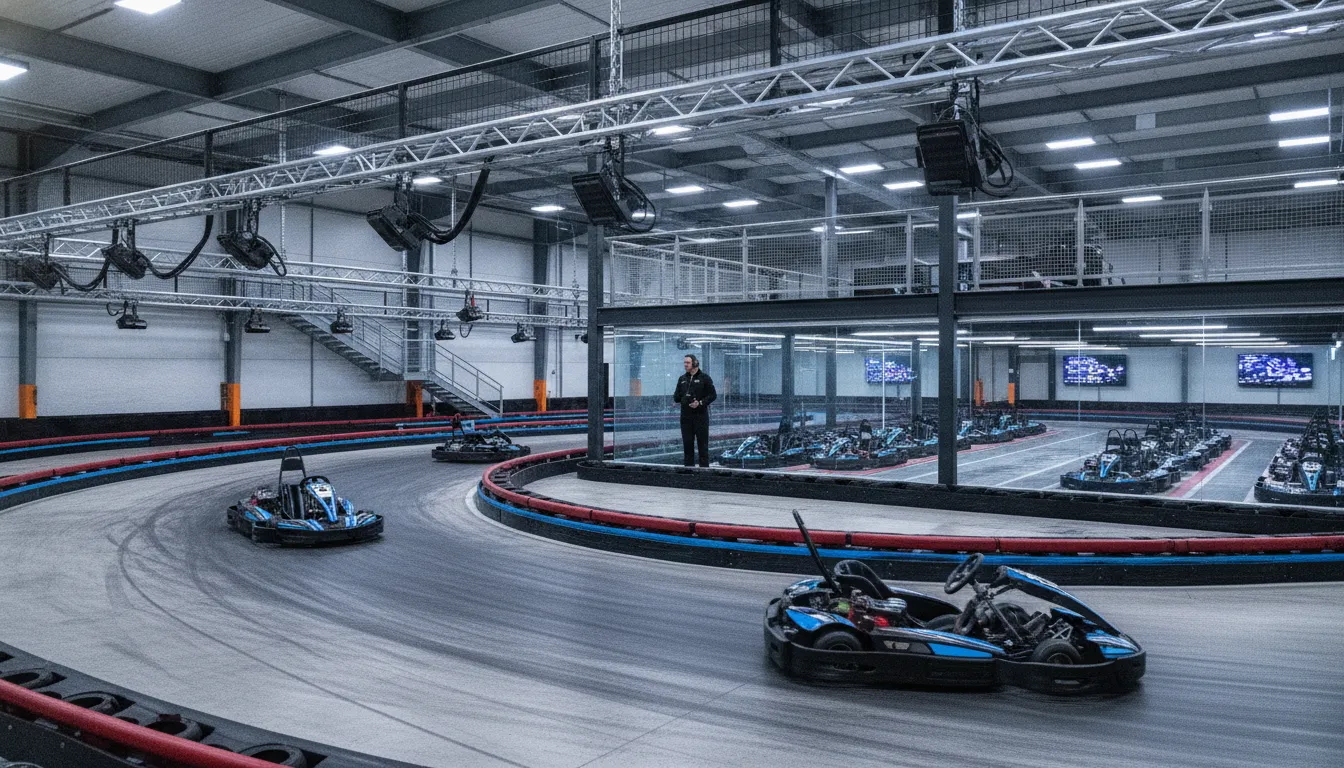
A timing system works best when it is planned as part of the track, not added after construction. The first question is where every lap will be measured. The start/finish detection point should sit across the defined race line so each kart passes the same timing location. The system can then associate the detected kart with its lap result. A basic setup typically includes one identification component per kart, timing software, a start/finish detection point, and optional additional detection points. See the go-kart race timing system page for the equipment overview.
Kart identification also affects placement. Each kart needs to be recognized consistently as it crosses the detection area, whether the equipment uses tags, transponders, or another approved identification method. Additional detection points can be useful when the operator needs information from more than the finish line. Such as a defined section of the course or an operational checkpoint. Their location should reflect the questions the facility needs the system to answer. Adding detection hardware without considering sight lines, wiring, access, or race procedures can create avoidable installation problems.
Coordinate timing with loading, unloading, and controls
Race timing does not operate separately from the guest and staff workflow. The system should align with where riders enter and exit the track, where karts are staged, and how staff release a race. Loading and unloading paths need to remain clear of detection equipment and service access. Traffic signals and the kart control system should also be considered together, so staff can manage starts, slowdowns, stops, and unusual events without creating conflicting signals.
Physical conditions matter just as much. Track slope, concrete flatness, and the turn radius of each corner influence how the equipment and kart operations fit the site. Amusement Products identifies these items as part of its planning process in its go-kart track design and consultation service. Operators evaluating commercial electric go-karts should have the actual equipment, track drawings, entry and exit points, and control requirements reviewed together.
Exact fit must be confirmed for the specific site and equipment. A supplier should verify the start/finish location, kart identification method, optional detection points, cable or network routes, service access, and integration with controls before installation begins. That site-specific review is more reliable than assuming a timing layout from another track will transfer unchanged.
What Should You Ask a Supplier Before Buying?
A supplier should be able to explain how a timing system fits your actual fleet, track, staffing model, and future plans. Ask for product-specific answers in writing, especially when a system is presented as a go kart timing system for sale. Timing, scoring, kart control, and gamification may be related, but they are not automatically the same system.
- Will it work with our karts and track layout? Ask which kart models, identification method, detection points, control systems, and track configurations are supported. Confirm whether indoor or outdoor operation changes the requirements. If you are replacing an existing fleet, ask whether the supplier has reviewed your current equipment rather than assuming compatibility.
- What does installation and commissioning include? Clarify who handles mounting, wiring, software setup, testing, calibration, safety verification, and integration with facility infrastructure. Ask whether the supplier needs track drawings, electrical details, network information, or a site visit before finalizing the configuration.
- What will operators do during a normal race? Request a demonstration of the startup, race-control, result-review, correction, and shutdown workflows. Ask how staff identify a kart, handle a missed or incorrect reading, and access results. A system that looks capable on paper still needs to be practical during a busy operating day.
- What training will our team receive? Confirm whether training covers daily operation, safety procedures, troubleshooting, inspections, and handoff to new employees. Ask who provides the training, when it occurs, and whether operating manuals or other reference materials are included.
- How are maintenance and replacement parts handled? Ask which components require routine inspection, what spare parts are recommended, and how technical support is reached. Confirm warranty terms, software-update responsibilities, remote diagnostic capabilities, and the process for resolving an issue that affects racing operations.
- What software, network, and display equipment do we need? Ask whether computers, registration equipment, leaderboards, LED or projection displays, cabling, and network services are supplied, compatible, or facility responsibilities. Confirm exactly what data the system stores and displays, and whether those functions are included in the proposed configuration.
- Can the system expand with our attraction? Discuss additional karts, detection points, displays, tracks, or future control-system changes. Ask what can be added later, what must be specified now, and whether expansion requires replacing core hardware or software.
These questions also help separate a standalone timing solution from broader kart-control or race-management technology. For related equipment decisions, review the electric kart operating system and confirm how its functions would interact with any timing setup.
Discuss your go-kart track design and consultation needs with Amusement Products.
How Do You Compare a Go Kart Timing System for Sale?
When evaluating a timing system, compare the supplier’s service model as carefully as the equipment itself. A technically capable system can still create operational problems if the documentation is incomplete or commissioning is rushed. Your team also needs a clear path for support and replacement parts.
Start with verified compatibility
Ask the supplier to explain how the timing components will work with your kart identification method, start and finish location, track layout, control system, and operating environment. The proposed configuration should account for the number of karts on track and any additional detection points needed for your race format. Do not accept a generic compatibility statement. Request a written equipment schedule and a clear description of what is included, what your facility must provide, and what remains optional.
For a practical example of the components and race-result workflow to review, see the go-kart race timing system page. It describes a complete racing management tool, including kart identification, start and finish detection, timing software, and optional additional detection points.
Evaluate installation and commissioning support
Supplier support should extend beyond shipping a box. Confirm who is responsible for installation guidance, system configuration, testing, staff handoff, and troubleshooting during commissioning. Documentation should give operators a usable process for assigning equipment, checking detection points, reviewing results, and responding when a component does not communicate correctly.
Look beyond launch day
Ask how technical support is handled after opening, which parts can be replaced, and whether future track or fleet changes require a complete redesign. A supplier that understands the wider attraction can also identify interactions with loading areas, traffic signals, kart controls, and other amenities. Amusement Products’ go-kart track design and consultation service addresses these broader planning considerations, including slope, concrete flatness, loading entry and exit, and turn radius.
The strongest comparison is not simply which supplier lists the most features. It is which one can document a compatible configuration, commission it responsibly, train the operating team, and remain useful as the facility develops.
How Should You Prepare for a Timing-System Consultation?
A productive consultation starts with a clear picture of how your facility operates today and what you want the timing system to support. Gather a current track plan, measurements, photos, and a simple description of a typical race from registration through checkered flag. Note the track slope, concrete surface, turn radii, loading entry and exit, traffic signals, and existing kart controls. These are among the site and operational factors Amusement Products considers during design planning.
Bring a fleet summary as well. Record the number and type of karts, how each kart is identified, and whether the fleet or control system is expected to change. Ask the supplier to confirm compatibility rather than assuming that every timing component, transponder, control, or display will work with your equipment.
Define the race format and display goals
Describe whether guests run timed laps, fixed-duration races, heats, or another format. Explain which results staff need during a race and which results guests should see afterward. You may want lap times, rankings, race history, or a leaderboard. Also identify where displays could be installed and whether your facility has suitable network connections, power, computers, or projection equipment. The basic system described by Amusement Products includes kart identification, a start/finish detection point, timing software, and optional additional detection points. Computers, displays, and registration pads are not included on the product page, so ask for a written equipment list.
Map the staff workflow and support expectations
Walk through who assigns karts, starts races, handles a missed identification, resolves a result question, and closes out a session. Ask how operators are trained, what documentation is provided, how replacement parts are identified, and who supports troubleshooting after installation. Amusement Products offers design consultation, construction planning, and staff training. Confirm which services apply to your project and which responsibilities remain with your team.
For product details, review the go-kart race timing system and the Amusement Products catalog before the call.
Request a go-kart track design and consultation to review your facility requirements.
Bring a list of unresolved questions, not assumptions. A supplier should distinguish confirmed system capabilities from items that require a site review, compatibility check, or final installation plan.
Frequently Asked Questions
What should a commercial go-kart timing system include?
Start by confirming that the system identifies each kart, detects the start and finish of each lap, and records results through timing software. Ask whether displays, registration equipment, computers, network hardware, and installation are included or must be supplied separately. The right package depends on your track layout, operating workflow, and how results need to reach staff and guests.
How accurate should go-kart race timing be?
Accuracy should be evaluated alongside consistency, kart identification, and reliable detection at the start/finish line. Amusement Products describes its race timing system as accurate to 1/1000 of a second. But operators should also ask how the system handles simultaneous karts, missed reads, stored results, and operational interruptions. Those details affect the usefulness of race results during busy sessions.
Can timing equipment be added to an existing go-kart track?
Often, but the supplier needs to review the facility before recommending equipment locations. The assessment should cover track slope, concrete flatness, turn radii, loading and unloading areas, traffic signals, kart controls, and available network or power connections. A site-specific plan helps place detection points without interfering with guest flow, maintenance access, or race operations.
What support should a supplier provide after installation?
Ask who handles commissioning, staff training, troubleshooting, software support, replacement parts, and future system changes. Training should cover daily operation as well as common fault conditions, result display, and safe procedures for restarting service. A supplier that understands track design and attraction operations can help connect timing equipment with the broader facility rather than treating it as an isolated purchase.
Ready to Plan the Right Timing System?
A design conversation can help connect your track layout, kart operation, timing requirements, and broader FEC plans before you commit to equipment. Request a design and consultation conversation with Amusement Products to discuss track fit, system requirements, installation planning, and the support your team will need to operate confidently.