Choosing a go-kart manufacturer is an operational decision, not simply a purchase comparison. The right partner affects daily throughput, maintenance demands, guest safety, fleet longevity, and the revenue your track can produce from each square foot.
A useful commercial go kart manufacturers comparison should weigh durability, safety practices, throughput, technical support, and long-term operating costs together. Electric systems such as Amusement Products’ ThunderVolt platform are designed to improve control, reduce maintenance demands, minimize downtime, and support consistent FEC revenue.
Start by defining what your facility needs from its fleet: track environment, expected ride volume. Speed and control requirements, service access, and the level of support your team will need after installation. Our Commercial Electric Go Karts for Family Entertainment Centers: The Complete Guide provides broader planning context. From there, a disciplined evaluation makes it easier to separate attractive specifications from the manufacturer capabilities that protect performance over time.
Request a quote for commercial go-karts built for your track
What Should a Commercial Go-Kart Manufacturers Comparison Include?
Choosing a manufacturer is an operating decision, not simply an equipment purchase. A useful evaluation should look beyond the initial specification sheet and examine how the karts will perform through repeated daily cycles. How safety is addressed, and how quickly the manufacturer can help when a facility is busy. For FEC operators, the core criteria are durability, safety, throughput, and technical support.
Safety compliance and ASTM guidance
Ask manufacturers to explain their safety design process in practical terms, including restraint systems, braking, controls, track compatibility, inspection procedures, and operator training. ASTM standards provide industry-recognized guidance across the safety, design, manufacturing, and operation of amusement rides. For motorized fun-karts, ASTM F2011 represents voluntary industry best practices for safety and performance. The U.S. Consumer Product Safety Commission notes that there is no mandatory CPSC fun-kart standard, which makes a manufacturer’s documented approach to recognized safety guidance especially important.
Do not settle for a general statement that a kart is “safe.” Request the applicable documentation and ask how the manufacturer keeps recommendations current as your attraction. Track layout, and operating model change.
Throughput, durability, and uptime
Compare the fleet’s expected throughput with your track capacity, dispatch process, and peak operating periods. A kart that performs well in a demonstration but requires frequent service can limit revenue and create avoidable guest interruptions. Examine chassis construction, corrosion protection, serviceable components, and the manufacturer’s maintenance recommendations. Some commercial chassis use phosphate treatment, electrostatic powder coating, and high-temperature curing to support a durable finish. But operators should verify which processes apply to the equipment under consideration.
Performance should also match the experience and facility. Commercial electric karts are advertised across a range that can reach 23 to 30 mph, but speed is only one input. Consistent control, predictable handling, and reliable dispatch matter just as much for productive operation.
Technical support and documentation
Before signing, confirm what support includes: installation guidance, training, parts access, troubleshooting resources, service response, and clear maintenance documentation. Ask who your team contacts after commissioning and what information is supplied for routine inspections. A strong manufacturer partnership should help operators protect uptime and make informed fleet decisions over the life of the attraction, rather than ending at delivery.
Are US-Made or Imported Commercial Go-Karts Right for Your FEC?
Origin is only one part of a purchasing decision, but it can affect how confidently an operator plans maintenance, replacement parts, and long-term uptime. A useful comparison focuses on documented manufacturing processes, support commitments. And the standards used to design and operate the attraction, rather than assuming every domestic or imported kart performs the same.
| Evaluation area | US-made karts | Imported karts |
|---|---|---|
| Build quality and durability | Ask for details on chassis materials, corrosion protection, weld quality, and finish durability. Powder-coating and high-temperature curing are examples of processes used to create a durable protective bond. | Evaluate the actual construction process and finish, not the country of origin alone. A supplier should explain how the chassis is protected against repeated impacts, moisture, and daily commercial use. |
| Lead times | Domestic production may make communication and production planning more direct. Confirm the current build schedule, fleet quantity, and delivery milestones in writing. | Ask how manufacturing, freight, customs, and replacement shipments affect the schedule. A lower initial quote may not offset uncertainty when an attraction opening has a fixed date. |
| Parts availability | Confirm which wear items are stocked domestically, how quickly they ship, and whether technical support can identify the correct part. | Verify regional inventory, shipping times, parts documentation, and the process for resolving a component issue during peak season. |
| Warranty and support | Compare written coverage, exclusions, response times, service manuals, and escalation contacts. A nearby support relationship can simplify troubleshooting. | Review who administers the warranty, where repairs occur, and who pays freight or labor when a covered issue affects operations. |
| Safety and compliance | Request documentation showing how the kart and operating system address applicable requirements, including relevant ASTM guidance and local rules. | Require the same documentation and confirm that imported equipment can be supported under the standards and operating requirements of your location. |
ASTM standards provide recognized guidance for amusement ride safety, design, and manufacturing, while ASTM F2011 represents industry best practices for motorized fun-karts. The US Consumer Product Safety Commission’s fun-kart guidance notes that F2011 is voluntary, so operators should still verify applicable state, local, and insurer requirements.
For many FECs, US-manufactured reliability is valuable because durability, safety documentation, parts access, and service continuity are connected. Compare the complete operating relationship, not just the kart’s purchase price.
How Do Commercial Go-Kart Manufacturer Warranties and Support Compare?
Warranty coverage is only one part of a commercial go-kart manufacturers comparison. For an FEC operator, the more important question is what happens when a kart needs attention during a busy operating week. A manufacturer should explain what the warranty covers, how exclusions are handled, which parts are stocked, and who your team can contact when a problem affects fleet availability.
Read the warranty beyond the headline
Ask whether coverage applies to the complete kart, the chassis, the drive system, or only selected components. Confirm the warranty period, service responsibilities, documentation requirements, and process for submitting a claim. These details matter because a short or narrowly defined warranty can shift repair costs and troubleshooting time back to the operator. As one point of comparison, J&J Amusements states that its GX engines of 100cc and larger carry a three-month commercial warranty. While also promoting a 10-year steel bumper warranty. Those terms illustrate why warranties should be reviewed component by component rather than compared as a single number.
Parts access protects revenue
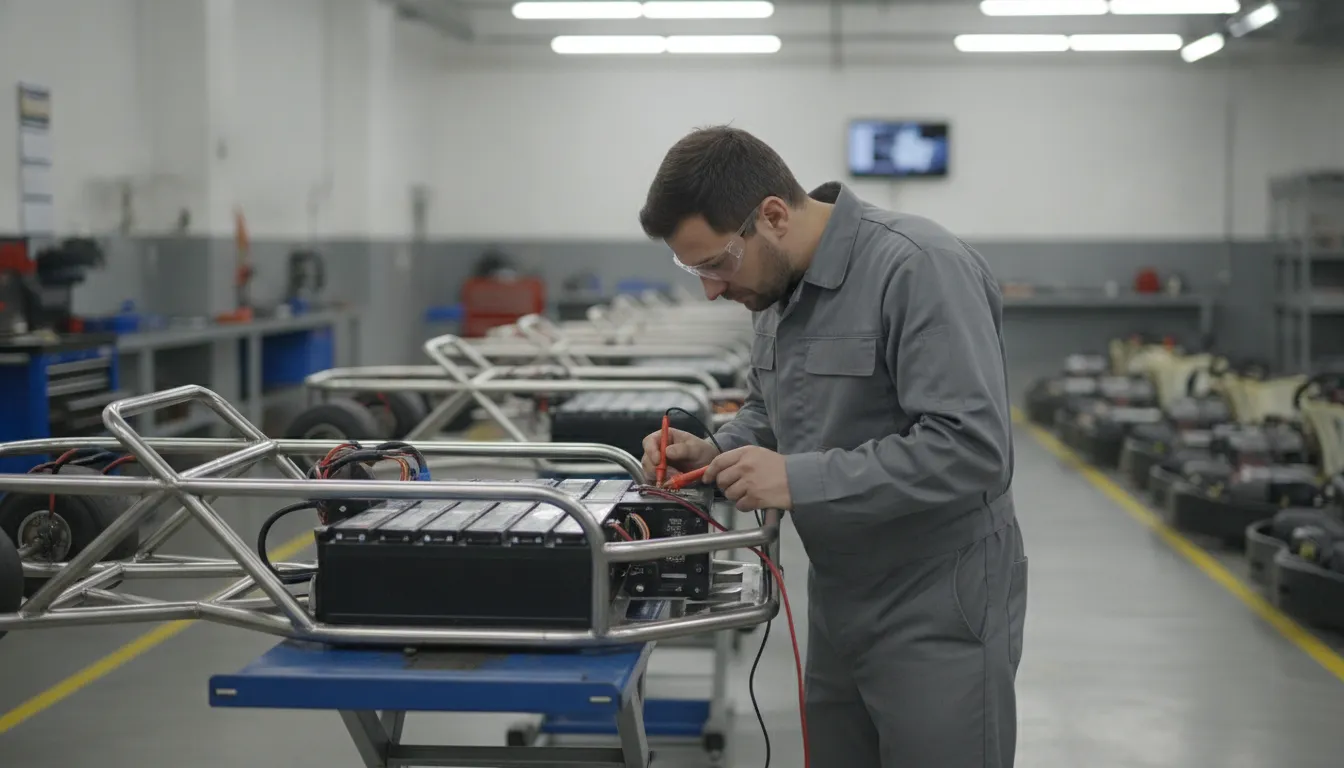
Parts availability directly affects downtime. A reliable supplier should identify common wear items, provide clear part numbers, and maintain a practical ordering process for replacement components. Service manuals that are available online can help trained technicians diagnose issues quickly and complete routine work without waiting for a specialist to arrive. Responsive technical support adds another layer of protection when a problem is unfamiliar or time-sensitive.
For electric fleets, the operating system and service process deserve particular attention. Advanced electric go-kart systems are designed to maximize throughput and minimize downtime, which supports more consistent FEC revenue when the fleet is properly maintained. Ask how the manufacturer supports batteries, controls, chargers, motors, and software-related diagnostics before signing an order. The strongest partner will provide a clear escalation path, realistic parts guidance, and support that continues after installation.
Why Does Industry Experience Matter in FEC Equipment?
Years in the FEC industry are meaningful when they translate into better decisions for your facility. A manufacturer with a long operating history has had more opportunities to refine equipment, understand maintenance realities, and support operators through changing guest expectations. That perspective can help you assess a partner beyond a product specification sheet.
- Start with the operating record. Ask how long the manufacturer has served family entertainment centers and whether its experience includes design, construction, operation, and equipment supply. Amusement Products brings more than 60 years of US-based industry experience across these areas. A broad track record can indicate that the partner understands how an attraction fits into staffing, facility layout, guest flow, and revenue planning.
- Examine the safety process. Experience should be visible in how a manufacturer approaches design, documentation, training, and ongoing support. ASTM standards provide industry-recognized guidance for the safety, design, and manufacturing of amusement rides. The US Consumer Product Safety Commission identifies ASTM F2011 as a voluntary standard representing industry best practices for the safety and performance of motorized fun-karts. Ask prospective partners how relevant standards inform their equipment and operating guidance, rather than accepting a general safety statement.
- Connect durability to uptime. Review how the manufacturer manages wear points, replacement parts, maintenance planning, and technical questions after installation. The goal is not simply equipment that performs well on opening day. It is a fleet that can support repeat operating cycles with predictable service needs. Advanced electric operating systems can also help maximize throughput and minimize downtime, protecting the consistency of attraction revenue.
- Test the partnership before committing. Request a clear process for site evaluation, fleet planning, operator training, parts support, and future expansion. Then compare those answers across manufacturers. This staged approach creates a more useful commercial go kart manufacturers comparison because it measures the complete operating relationship, not just the initial purchase.
How Does Amusement Products Compare to Other Commercial Kart Manufacturers?
For an FEC operator, a manufacturer comparison should go beyond vehicle specifications. The stronger question is how well a partner supports safe, consistent operations after the fleet is installed. Amusement Products brings more than 60 years of experience as a US-based manufacturer, operator, builder, and supplier of family entertainment equipment. That perspective connects kart design to the realities of staffing, guest flow, maintenance, and revenue per square foot.
US manufacturing with an operational focus
Amusement Products manufactures its electric go-kart systems in the United States, giving FEC developers a partner grounded in domestic production and commercial facility planning. The company also provides design, construction, and operational consultation, which can help align the track, fleet, controls, and guest experience before opening day. This broader capability matters when a project needs more than a catalog purchase or when an operator is building a complete attraction mix.
ThunderVolt is designed for daily throughput
The ThunderVolt Electric Operating System is built around the demands of commercial FEC use. Compared with traditional gasoline-powered alternatives, electric karts can provide superior safety, control, and revenue potential while reducing maintenance requirements. The operating system is also designed to maximize throughput and minimize downtime, helping operators keep races moving and protect earning capacity during peak periods.
Those advantages should be evaluated alongside service access, facility layout, training, and long-term parts planning. No single feature determines whether a fleet performs well. The best fit depends on the track design, expected attendance, operating model, and attraction mix. For a broader framework, review the Commercial Electric Go Karts for Family Entertainment Centers: The Complete Guide before comparing proposals.
A partner for the full FEC project
In a commercial go kart manufacturers comparison, Amusement Products stands apart through the combination of US manufacturing, electric operating technology, and end-to-end FEC expertise. That combination gives owners and developers a practical basis for evaluating safety, control, uptime, and revenue performance together rather than choosing on vehicle price or speed alone.
Speak with our design consultants about your commercial go-kart fleet
Frequently Asked Questions
Who are the best commercial go-kart manufacturers?
The best manufacturer depends on your track, operating model, and long-term priorities. Compare each supplier’s equipment durability, safety record, throughput capacity, technical support, parts access, and ability to support installation or facility planning. A manufacturer that can explain how its karts perform in an FEC environment is generally a stronger fit than one evaluated only on the initial equipment specification.
How do I choose a go-kart manufacturer for my FEC?
Start by documenting your track dimensions, expected guest volume, operating hours, rider requirements, and maintenance capabilities. Then ask shortlisted manufacturers for technical documentation, safety and training information, service procedures, replacement-parts guidance, and a clear explanation of how the fleet supports throughput. Review the complete operating cost and support model, not just the kart price, before requesting a custom quote.
Are electric go-karts better than gas for a commercial track?
Electric karts can offer advantages in safety, control, maintenance, and revenue potential compared with gas-powered alternatives, but the right choice depends on the facility and operating plan. Advanced electric operating systems are designed to maximize throughput and minimize downtime in FEC environments. Evaluate charging, power requirements, fleet controls, service support, and track use alongside the vehicle itself. See the electric vs gas go-karts comparison for more detail.
What safety standards should a commercial go-kart manufacturer address?
Ask how the manufacturer approaches applicable ASTM guidance, design documentation, operating procedures, and staff training. IAAPA explains that ASTM standards cover safety, design, manufacturing, and operation across amusement rides (IAAPA ASTM guidance). The CPSC identifies ASTM F2011-02 (2010) as a voluntary standard representing industry best practices for the safety and performance of motorized fun-karts (CPSC fun-kart FAQ).
Ready to Plan Your Commercial Go-Kart Fleet?
A consultation can help you align your attraction goals, operating requirements, and fleet needs before requesting a custom quote. Schedule a consultation with our design consultants to discuss your commercial electric go-kart fleet and determine the right next step for your FEC.