
Adding a miniature golf course to your family entertainment center is a proven way to increase repeat visits and grow your business. Many operators struggle to build a layout that keeps guests coming back for years.
Ready to build a high-revenue mini golf course? Speak with our championship miniature golf construction experts to get started on your project today.
Every successful family entertainment center starts with a clear plan to maximize floor space and earn a strong return on investment. If you want to build a premier attraction that drives steady foot traffic, understanding the core elements of the building process is key. Let us explore what goes into championship miniature golf construction and how it can help your business grow.
Miniature Golf Construction For Family Entertainment Centers: What Is Championship Miniature Golf Construction?
Modern miniature golf construction for family entertainment centers requires a smart design that balances fun, durability, and high guest throughput. A championship-quality course features challenging elevations, beautiful water elements, and ADA-compliant pathways that allow all visitors to enjoy the game. By choosing professional builders who offer turnkey construction services, owners can complete their new outdoor or indoor attraction in just two to six weeks. Grounding your project in expert planning ensures that your new attraction stands out from simple local courses. Keeps operational costs low, and delivers high profit margins for your facility.
Professional miniature golf construction has evolved far beyond the simple putt-putt layouts of the past. Today, championship-level courses are designed as high-quality, long-lasting attractions that boost guest time on site and drive significant repeat business. Building these courses requires a deep understanding of player flow, durability, and visual appeal. The first themed miniature golf course in the world was created in 1960, and over sixty years of design history has shaped modern industry standards. For family entertainment centers, investing in a custom layout is key to building a top-tier attraction.
Course Sizes and Space Needs
Modern miniature golf construction fits a wide range of properties and building sizes. Outdoor courses usually require between 13,000 and 30,000 square feet of land to build a full 18-hole course. The average size of a premium outdoor layout is about 22,000 square feet. This space allows for water hazards, walking paths, and major elevation changes that make play more fun. Indoor courses are built on a more compact scale, generally using between 2,500 and 10,000 square feet, with an average size of 6,500 square feet. Selecting the right size ensures your facility can handle high guest volume during peak hours.
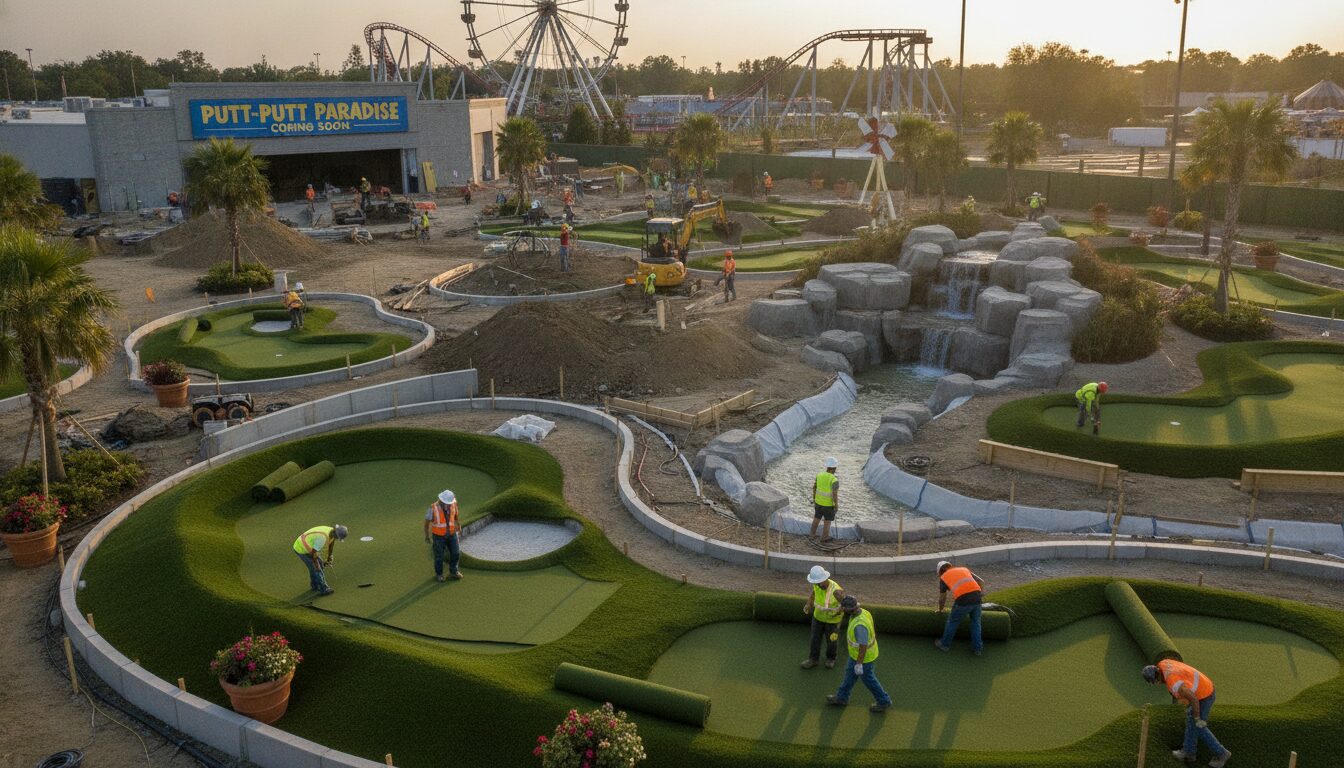
Accessibility and Support Structures
A championship course must be open and accessible to all guests. Experienced builders design every layout to meet strict ADA compliance standards, ensuring that wheel chairs can navigate the holes safely. According to state environmental planning reports, comprehensive miniature golf projects also involve creating clubhouse buildings, pro shops, and food service areas alongside the course itself to enhance the overall guest experience. Integrating these support spaces with your miniature golf course gallery creates a complete, high-traffic entertainment hub.
Theming and Play Features
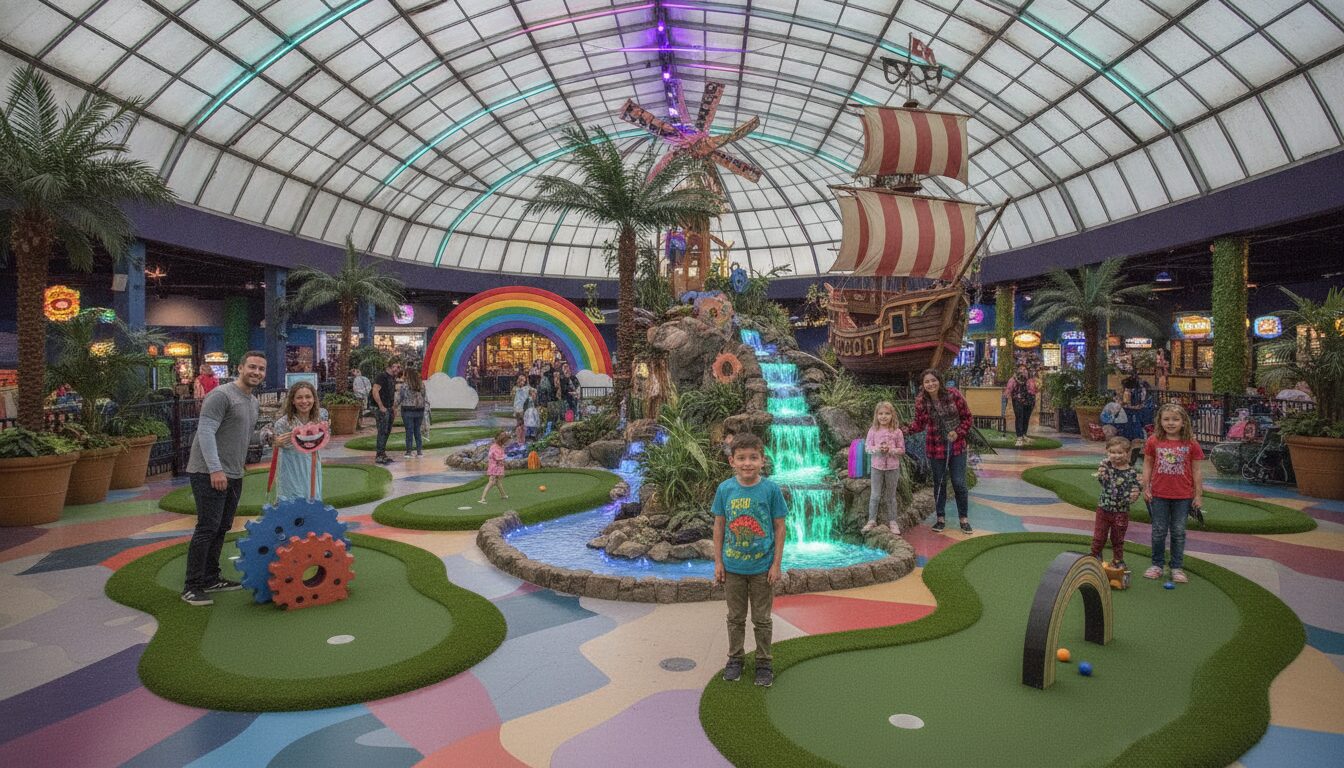
What truly separates a standard green from a championship course is the use of engaging terrain and theming. Instead of flat carpet, top courses use artificial rock work, cascading streams, and sand traps. These features challenge players while keeping the game fun for all ages and skill levels. Building a course with diverse elevations and creative obstacles helps your business stand out from the local competition. When you partner with experienced designers for your custom miniature golf course design, you can construct a visually stunning landmark that draws crowds for years.
Why Mini Golf Is a High-ROI Investment for Your FEC
Adding miniature golf to your family entertainment center is one of the most reliable ways to increase cash flow in your FEC. The global family entertainment center market was valued at 30.8 billion dollars in 2022. It is projected to reach 108.4 billion dollars by 2033, growing at a yearly rate of 12.1 percent. This growth shows that families are looking for fun, real-world experiences. Developers are using recreational assets like mini golf to capture this rising demand. If you want to expand your attraction mix, mini golf offers a simple path to strong returns.
Unmatched Throughput and Low Operating Costs
Mini golf is a high-volume attraction that keeps guests moving. A typical 18-hole course can handle 90 to 100 people per hour. This high throughput lets you serve large crowds during peak weekend hours without long lines. Even better, the ongoing cost to run the attraction is very low. You only need one or two staff members to run the counter, hand out clubs, and collect balls. Because the course does not have complex engines or parts, your utility bills and maintenance costs stay low. Most operators see a full return on their investment within two to three years.
A Case Study in Modern Upgrades
If you have an old, worn-out course, you are likely leaving money on the table. A recent case study shows how much of a difference professional design can make. One operator had an old mini golf course that only grossed 25,000 dollars a year. They chose to build a new championship course in its place. In the first year after rebuilding, the new course grossed 250,000 dollars. Investing in high-quality championship miniature golf equipment can turn a slow, ignored space into a top revenue driver for your site.
Universal Appeal Across All Age Groups
Most FEC attractions target a narrow group of guests, but mini golf brings everyone together. It has universal appeal for players from age six to over seventy. It works for birthday parties, corporate outings, and family gatherings. This broad appeal makes it easy to book group events during weekdays when other attractions sit empty. By serving multiple groups, you can keep your center busy all week long.
The Miniature Golf Construction Process: From Concept to Opening Day
Building a high-revenue course requires a clear, step-by-step roadmap. Through Amusement Construction Company, our team handles each stage of turnkey FEC construction services with precision. From the initial layout design to the final turf installation, we complete most building phases within a tight two-to-four-week window. This speed helps you open your doors quickly to start generating strong cash flow from miniature golf construction projects.
Our turnkey build process makes the path simple. We guide you through each part of the project with these six key steps:
- Initial Planning: First, we carry out a full site evaluation. At this stage, you must check with your local government to secure special use permits and zoning approvals before any ground is broken.
- Custom Course Design: Next, our team maps out a detailed plan with custom themes, hole layouts, water features, and ADA-compliant pathways. Designing for high player throughput helps prevent player bottlenecks on busy weekends.
- Ground Preparation: Crew members use heavy equipment to grade the site and shape the landscape. We install robust drainage systems to handle stormwater and keep your greens dry and playable.
- Foundation Base Construction: We pour a thick concrete or asphalt base to create the permanent shape of each putting green. A solid, durable foundation prevents settling and cracking over decades of heavy foot traffic.
- Course Building and Theming: Workers assemble themed obstacles, rock features, and water ponds. We then apply heavy-duty putting turf over the solid base and secure it tightly with custom borders.
- Quality Inspection and Launch: Before opening day, we test every water pump, light fixture, and play zone. Our turnkey services ensure a smooth hand-off, taking just two to six weeks from start to finish.
Initial Feasibility and Planning
The build starts with a site study. You must check local government rules to find if you need a special use permit for your site. It is vital to look at local ground space, guest access, and traffic flow before you break ground. Planning early helps you avoid costly delays with local boards later. We use our deep operational experience to help you pick the best layout for your specific parcel of land.
Custom Design and Layout
Once the land is cleared, our design team maps out the course. This includes planning the hole order, custom themes, obstacles, and ADA pathways so that at least half of your course is wheelchair-friendly. A good layout must guide guests naturally from one hole to the next to avoid bottlenecks. A smart, professional design ensures high player throughput during busy weekend hours.
Ground Prep and Concrete Bases
Next, heavy equipment moves in to shape the site, dig out water features, and set up critical drainage pipes. Proper drainage is key to keep heavy rain from flooding your course and halting your operations. Crew members lay down a strong base of poured concrete or thick asphalt to form the shape of each putting green. Building a solid foundation ensures your course remains level and durable for decades of constant foot traffic. Read our guide on championship miniature golf equipment to start planning your budget.
Indoor vs. Outdoor Mini Golf: Which Is Right for Your FEC?
Choosing between an indoor and outdoor course is a key step in miniature golf construction. Each option has unique space needs, build costs, and operational goals. You must weigh these factors to find the best fit for your local market and business model.
Space Needs and Operational Seasons
Outdoor courses require much more land than indoor setups. A standard outdoor course needs between 13,000 and 30,000 square feet, with an average size of 22,000 square feet. This large footprint allows for big water features, lush landscaping, and long holes. In contrast, indoor courses are much smaller. They fit within 2,500 to 10,000 square feet, with an average of 6,500 square feet. While outdoor courses are often seasonal in colder regions, indoor options provide stable, year-round revenue. You can find detailed startup guidelines in our guide on starting a mini golf business.
Maintenance and Climate Needs
Weather plays a huge role in how you run your facility. Outdoor courses must withstand rain, wind, and temperature changes. This means you will need to invest more in ongoing landscaping, leaf removal, and water care. Indoor courses are safe from the elements, which keeps daily cleanup simple. However, they place a heavy load on your building HVAC system to keep guests comfortable. To learn more about budget planning for both styles, read about mini golf course construction costs.
Cost, Theming, and Revenue Potential
Outdoor projects often have lower building costs per square foot but higher overall land costs. Indoor builds have higher initial costs per square foot due to complex lighting, blacklight themes, and HVAC needs. However, indoor courses make up for this with a higher revenue potential per square foot. They let you maximize small indoor spaces with high-density designs and high-throughput themes. No matter which option you choose, your facility must comply with federal accessibility guidelines. The State of California requires these projects to serve as valuable recreational assets that offer equal access for all guests.
| Feature | Indoor Mini Golf | Outdoor Mini Golf |
|---|---|---|
| Average Footprint | 6,500 square feet (2,500 to 10,000 range) | 22,000 square feet (13,000 to 30,000 range) |
| Operating Season | Year-round (climate controlled) | Seasonal (or year-round in warm climates) |
| Primary Maintenance | HVAC care, carpet cleaning, theme lights | Landscaping, pond care, debris removal |
| Revenue Potential | Higher per square foot | Higher total per guest capacity |
Key Features of a Championship-Quality Mini Golf Course
High-end course design is about more than just putting greens and obstacles. Successful miniature golf construction services focus on creating a memorable guest experience that drives repeat visits and strong cash flow. Adding key features to your course makes the attraction fun for players of all skill levels while keeping maintenance costs low.
Creative Themes and Varied Hole Layouts
Modern courses need custom themes to stand out in busy family entertainment center markets. A strong theme, such as a tropical jungle or a historic resort, connects the holes into a single story. Along with great theming, a good course must have a mix of hole designs. Some holes should test player skills with complex angles, while others offer easier straight shots to keep the game moving. This variety keeps players engaged and prevents long lines on the course.
Water Features and Elevation Changes
Top-tier designs use natural terrain, flowing water, and elevation changes to create an exciting environment. Running streams, spraying fountains, and large waterfalls add sound and visual appeal to the space. Elevating certain greens also adds a physical challenge to the game. These features make the course look highly professional and feel like a premium getaway. In addition, proper drainage systems must be put in place during construction to protect the turf and concrete from water damage over time.
The Penalty Cup System and ADA Accessibility
To ensure all guests have a great time, championship courses build with inclusivity in mind. One helpful design feature is the red penalty cup system. These larger five-inch cups are placed on half of the holes to give beginners, young children, and less-skilled players an easier putting target. This feature speeds up play and reduces frustration. At the same time, at least 50% of the holes must be fully ADA accessible. Designing wide, smooth concrete pathways ensures wheelchair users can easily navigate the course, which is a key standard for modern recreational facilities, as noted by the California Governor’s Office of Planning and Research.
Resort-Style Concepts and Interactive Play
Operators looking to maximize their revenue can use advanced concepts like the Champion’s Club resort-style miniature golf design, which launched in 2021. This style mimics the look of real golf clubs with high-end landscaping, premium turf, and natural rock borders. Adding interactive elements, such as scoreboards, motion sensors, and custom sound effects on specific holes, makes the game feel more modern. When you buy championship miniature golf equipment, these built-in upgrades help you stand out from old, basic putting greens.
Durable and Low-Maintenance Materials
High-quality construction relies on durable materials that can handle heavy daily use. Heavy-duty putting turf, thick concrete borders, and weather-proof brick pavers keep the course looking brand new for years. Using rot-resistant treated wood or composite boards for bridges and obstacles lowers long-term repair costs. These material choices mean your staff will spend less time on daily repairs and more time serving your guests.
How to Choose a Miniature Golf Construction Partner
Building a successful attraction requires more than just hiring a general contractor. Specialized miniature golf construction services understand player flow, turf durability, and commercial safety. Choosing the right building partner is the most critical decision in your development process.
Verify Industry Experience and Background
Look for a partner with decades of proven experience in the family entertainment center space. Partners with over 60 years of heritage in designing and operating courses bring deep operational insights to your project. An established builder like Amusement Construction Co., which was founded in 2000, has the specialized skills needed to avoid costly design mistakes.
Your builder should have a strong record of industry recognition. A partner with multiple IAAPA awards shows a commitment to innovation and quality. These awards prove the builder can deliver attractions that stand out in a competitive market.
Check Manufacturing Quality and Support
Ensure your builder uses high-quality parts made in the USA. American manufacturing in Chattanooga, Tennessee, ensures strict quality control and fast parts delivery. This local support prevents long delays when you need replacement parts or maintenance help. According to the California Governor’s Office of Planning and Research, high-quality miniature golf construction projects often integrate clubhouses and pro shops, which require reliable local support networks to build and maintain.
Ask about ongoing education and support programs for operators. Partners who run educational programs, such as the FEC Success Institute since 1997, help you learn how to run your business and train your staff. These programs teach you how to market your course and manage your daily operations to maximize your revenue.
Evaluate Full-Service and Financing Options
Choose a full-service partner who manages the project from initial design to the grand opening. A turnkey builder handles ground prep, water features, and landscaping without relying on unproven local subcontractors. This complete service keeps your project on budget and ensures a fast, reliable build timeline.
Finally, check if the builder offers flexible financing programs to help with your initial capital costs. Partners who provide in-house financing programs for projects over 10,000 dollars make it easier to get your business started. This financial support lets you build a championship-quality course while keeping your cash flow stable during construction.
Frequently Asked Questions
How much land is needed for an outdoor 18-hole miniature golf course?
An outdoor 18-hole miniature golf course typically requires between 13,000 and 30,000 square feet of land. The average size for a standard course is about 22,000 square feet. This footprint provides enough room for engaging hole designs, walking paths, and beautiful landscaping features while maintaining a smooth flow of traffic.
How much indoor space is needed for a miniature golf course?
Indoor miniature golf courses are more compact and usually require between 2,500 and 10,000 square feet of indoor space. The average indoor course occupies about 6,500 square feet. This smaller footprint makes it an excellent anchor attraction for indoor family entertainment centers looking to maximize their available floor space.
Are miniature golf courses wheelchair accessible?
Yes, modern miniature golf construction projects are designed to meet ADA guidelines. This ensures that guests of all ages and physical abilities can navigate the course. Under state environmental and accessibility standards, courses are planned with wide paths, gentle slopes, and flat surfaces so wheelchair users can safely play each hole.
What daily maintenance does a miniature golf course require?
Daily course upkeep is simple and highly manageable. It involves walking the greens to remove debris, emptying trash cans, and checking water features. You also need to clean out any pond filters or leaves from streams. Occasional tasks include watering live plants and checking the turf for wear to ensure a premium player experience.
Do you need local government permits to build a mini golf course?
Yes, you must secure local approvals before starting construction. Most municipalities require zoning permits, building permits, and environmental reviews. Depending on your location, you may also need a special use permit or a variance. Working with an experienced construction partner helps streamline this approval process to avoid project delays.
Ready to Schedule a Miniature Golf Construction Consultation?
Delaying your new attraction means missing out on high-margin revenue and letting local competitors win the market. Building a high-quality course now ensures your facility is ready to capture peak seasonal demand with a durable asset. Speak with our team today to turn your empty space into a steady stream of passive income.
Ready to build? Schedule a consultation with our design experts to start your project.