The best commercial pitching machines for batting cages are the ones that match your guests, ball type, operating plan, and facility constraints—not simply the machine with the most settings. For a family entertainment center or dedicated cage facility, the right choice should deliver repeatable sessions, suit the players you expect to serve, and fit your staffing and maintenance routines.
Discuss your batting cage plans
What Should a Commercial Pitching Machine Do?
A commercial pitching machine delivers balls to a batter at a controlled pace so guests can practice or enjoy a timed batting experience. In a paid venue, it is also part of a larger operating system: the cage, ball supply, controls, payment or session process, staffing, and maintenance all affect the guest experience.
That means the purchase decision starts with the intended session, not a product brochure. A machine suited to supervised baseball practice may not be the best fit for a mixed-age entertainment attraction. Before comparing models, outline who will use the cage, how sessions will be run, and what staff need to do between users.
Amusement Products offers pitching machines for commercial venues. Review the commercial pitching machine options and the company’s baseball and softball pitching machine overview as a starting point. Treat the specification sheet as the basis for comparison, then confirm that each model fits your particular plan.
How Do You Choose the Right Machine for Your Guests?
Start by identifying the people who will actually step into the cage. A venue serving families, birthday groups, and casual visitors may need a different experience from a facility focused on organized practice. Write down the main user groups and the experience each group should receive.
- Occasional or first-time players: Consider how quickly a guest can understand the session and whether staff can explain the controls in a few clear steps.
- Youth players: Confirm that the machine can be configured for the intended age and skill range, and ask how settings are selected and checked.
- Experienced players: Determine which pitches, speeds, or practice options are available and whether those options suit the training purpose.
- Mixed groups: Plan how the venue will change settings between sessions, communicate the next experience, and avoid confusing controls.
Do not assume that a broad speed range automatically makes a machine right for every player. Ask the supplier to explain which settings are recommended for the balls you plan to use, the cage dimensions, and the user groups you expect. Request a demonstration or written operating guidance where available.
Which Pitching Machine Style Fits a Batting Cage?
Commercial machines can differ in how they deliver the ball and how operators adjust them. The categories below are a framework for discussing a purchase, not a substitute for model specifications. Available features vary by product, so ask a supplier to confirm the details for each unit you are considering.
| Option to compare | Potential fit | Questions to verify |
|---|---|---|
| Wheel-based delivery | A venue prioritizing repeatable delivery and adjustable practice sessions | What adjustments are supported? Which ball types and conditions are approved? How is alignment checked? |
| Arm-style delivery | An operator considering a visible delivery motion as part of the guest experience | What pitch types and settings are available? What clearance and setup does the unit need? |
| Other delivery systems | A project where a particular practice or entertainment format calls for a different mechanism | What is the operating procedure? What consumables, power, guarding, or service access are required? |
Compare the equipment in the context of your full installation. A compact machine may simplify placement but could have different operating requirements from a larger unit. A more adjustable system may be useful if several user groups share a cage, but only if staff can set it consistently and guests understand the experience. Get the supplier to identify the exact model, included components, compatible balls, and any required accessories in writing.
What Should You Check Before You Compare Models?
1. Ball compatibility
Ask which balls the specific machine is designed to throw. Do not assume that baseballs, softballs, dimpled practice balls, and other ball types can be used interchangeably. Confirm the approved ball type and size, whether a particular condition is required, and how ball wear or dirt affects the operating instructions. Standardizing the ball supply makes it easier for staff to follow one procedure and replace worn balls consistently.
2. Speed, pitch options, and control
Request the available settings and the method used to select them. Clarify what the controls allow an operator to change, who should make adjustments, and how a setting is verified before a new session. If the experience uses several settings, ask whether the supplier provides an operating sequence or other documentation that can become part of staff training.
3. Power and installation requirements
Confirm the electrical, mounting, floor-space, clearance, and access requirements for the exact model. Have the project team check the proposed location before the cage layout is finalized. Leave room for routine inspection and service access rather than placing the unit where it is difficult to reach. Ask which work is included with delivery and which tasks must be completed by the venue or its contractors.
4. Duty cycle and commercial use
Ask the manufacturer how the machine is intended to be used, including any limits on continuous operation or rest periods. Estimate how many sessions the cage may run on a busy day, then discuss that operating pattern with the supplier. A machine’s suitability for a commercial schedule should be confirmed from its documentation, not inferred from the fact that it can throw a ball.
5. Maintenance and support
Find out which routine checks operators perform, which parts wear through use, how service issues are diagnosed, and what support is available. Ask for a recommended inspection schedule and a list of parts that the venue should keep on hand. Amusement Products provides maintenance training; consider how operator training and the machine’s own service instructions will fit into your opening plan.
How Do You Evaluate the Cage and Guest Experience Together?
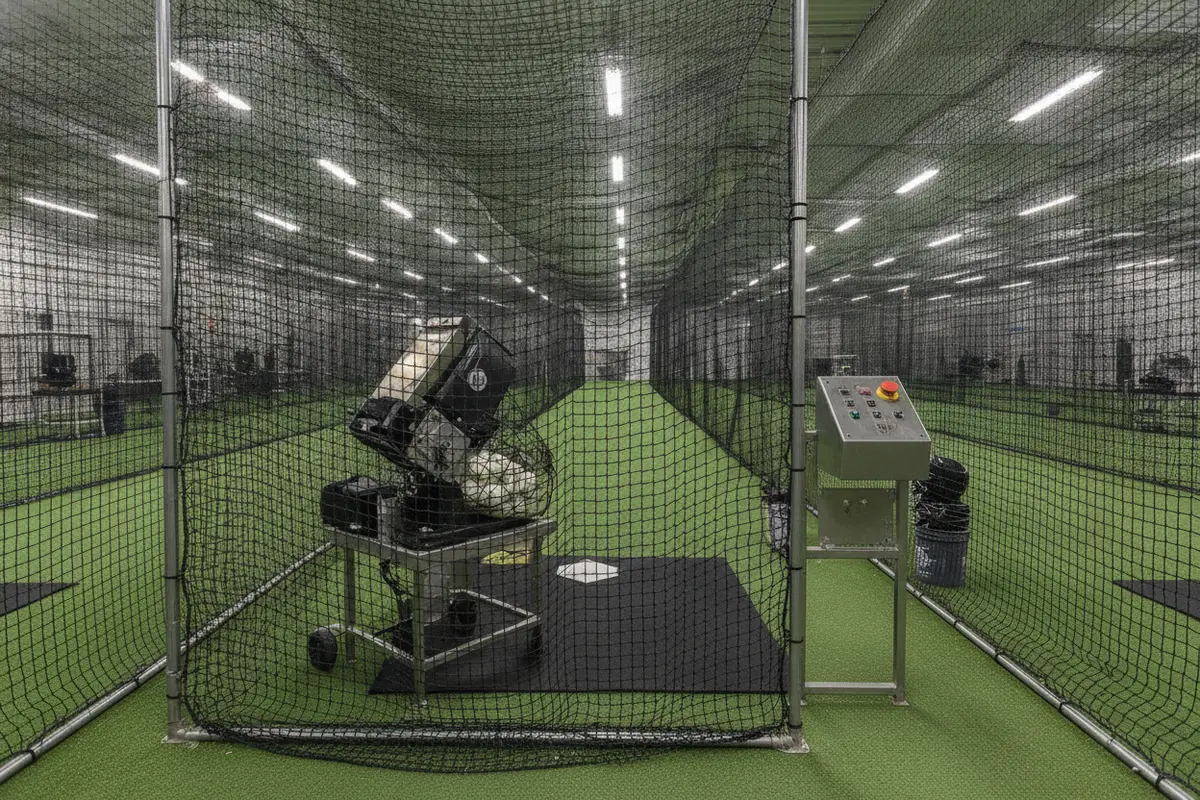
A pitching machine cannot be evaluated separately from its cage. Review the full ball path, the position of the operator, the batter’s entry and exit, and how guests wait for their turn. The layout should give staff a clear way to supervise the experience and carry out the specified operating procedure.
- Netting and containment: Confirm the enclosure and protective components are appropriate for the machine, ball, and intended use. Ask who specifies them and how they are inspected.
- Clear operating zones: Establish where staff and waiting guests may stand. Keep access to the equipment and controls clear.
- Guest instructions: Decide what a first-time user needs to know before entering. Use simple, consistent instructions that match the supplier’s operation guidance.
- Session flow: Consider how guests enter, start, stop, and exit a session, and how staff reset the space for the next group.
- Noise and neighboring attractions: Assess the cage’s placement in relation to other guest areas and operating teams.
Ask the project team to review local building, electrical, fire, accessibility, and operating requirements for the site. Requirements depend on location and project specifics. ASTM International develops voluntary consensus standards; ask qualified project professionals which standards, codes, and testing documentation apply to your installation. For questions about federal consumer product-safety oversight, consult the U.S. Consumer Product Safety Commission directly rather than assuming one general rule covers every commercial facility.
How Can You Compare Suppliers Fairly?
Use the same questions for every supplier. Comparing one proposal’s headline features with another proposal’s full installation plan can hide important differences. A concise written comparison helps the owner, designer, and operating team decide what is included and what remains unresolved.
- Identify the exact model. Record its model name, configuration, included controls, and approved ball types.
- Match it to the use case. State the expected user groups, session format, and anticipated schedule. Ask the supplier to address that use case directly.
- Document site requirements. Compare power, space, clearances, mounting, enclosure, and access needs.
- Review the operating plan. Identify who supervises sessions, selects settings, checks the equipment, and handles stoppages.
- Compare support. Ask about operator documentation, training, service access, replacement parts, and the process for requesting help.
- Resolve open items before ordering. Note exclusions, dependencies, site work, and decisions that must be made before installation.
For a wider view of available attractions and equipment, browse the FEC equipment catalog. If the batting cage is part of a larger venue, the design and consultation service can be a relevant starting point for discussing the overall project. The company’s design and consultation overview describes that planning focus.
How Should You Test a Shortlist Before Ordering?
If a supplier can provide a demonstration, use it to test the session you plan to sell—not just to watch the machine operate. Bring the operator who will train staff and, where appropriate, a representative who understands your intended guests. Keep the test controlled and follow the supplier’s directions.
- Ask the supplier to show the initial setup and the normal start-and-stop sequence.
- Have them explain which adjustments are available and how they confirm a selected setting.
- Check how the specified ball type is loaded, collected, and inspected between sessions.
- Observe the operator’s access to the controls and the maintenance points identified in the documentation.
- Ask what a staff member should do if delivery changes, a ball jams, or the equipment needs to be taken out of service.
Record what you learn and compare it with the proposal and product documentation. If a feature shown in a demonstration is not listed in the written scope, ask whether it is standard, optional, or specific to the demo configuration. Likewise, if the operating process depends on an accessory, training step, or site condition, include that dependency in the project plan.
A demonstration does not replace a safety review or confirm that a machine suits every user. It helps the buying team identify practical questions while there is still time to resolve them. Use the supplier’s written instructions, and have qualified professionals review the final installation and operating plan.
What Should Your Batting Cage Purchase Checklist Include?
Before selecting a machine, make sure the buying team can answer these questions or has assigned an owner to confirm them:
- Who are the primary and secondary user groups?
- What ball type will the venue use, and has the machine supplier confirmed compatibility?
- Which settings or pitch options does the experience need?
- How will staff start, supervise, stop, and reset a session?
- What are the documented power, clearance, mounting, and service-access needs?
- What cage, netting, and other protective components are specified for the installation?
- What daily or periodic checks and maintenance tasks will be required?
- Who will train staff, and where will operating instructions be kept?
- Which local approvals, codes, or reviews should the project team confirm?
- What is included in the supplier’s proposal, and what must the venue arrange separately?
Keep the answers with the project documents and use them to review proposals. If an important point remains unclear—such as ball compatibility or site preparation—get it resolved before committing to a layout or purchase. The company has more than 60 years of industry history, as described on its About Us page; focus any equipment discussion on the needs and constraints of your specific venue.
How Should a Family Entertainment Center Plan for Operations?
Build the operating plan at the same time as the equipment decision. Assign responsibility for opening checks, guest instructions, settings, and escalation when the machine behaves unexpectedly. Make sure the written procedure reflects the supplier’s guidance and can be followed consistently across shifts.
Plan how staff will identify a machine that needs attention and keep it out of use until it has been checked as directed. Set up a record for inspections, service, and recurring issues. A simple log can help the team spot patterns and pass useful information to the service contact. Do not let staff improvise repairs or bypass a protective feature; follow the manufacturer’s instructions and use qualified support where needed.
Staff readiness matters beyond the machine itself. Amusement Products’ FEC Success Institute is an education resource for operators looking at the wider business. For broader venue planning, the company’s family entertainment center guide can help place one attraction within the full guest experience.
Frequently Asked Questions
What is the best commercial pitching machine for a batting cage?
There is no single best option for every venue. Choose by matching the model’s documented delivery style, ball compatibility, settings, installation requirements, service needs, and operating instructions to your users and business plan. Ask suppliers to confirm the fit for your exact use case.
Can one pitching machine serve baseball and softball players?
That depends on the particular model and the balls it is designed to use. Confirm the approved ball types, sizes, settings, and any changeover procedure with the manufacturer. Do not assume a machine is suitable for both sports based on appearance or a general product description.
What should I ask about speed settings?
Ask for the supported settings, how they are selected, which ball types they apply to, and who should adjust them. Also ask how staff can confirm the correct setting before each session and whether the supplier recommends particular configurations for your user groups.
How do I know whether a machine will fit my facility?
Compare the model’s documented power, footprint, clearances, mounting, and service-access requirements with a measured site plan. Include the cage enclosure, guest circulation, staff position, and any local project requirements in the review. Have the relevant design and installation professionals verify the layout.
Should I decide on the machine before designing the cage?
Coordinate both decisions. The machine’s dimensions, delivery path, operating zone, power, and maintenance access can affect the cage layout, while the cage and session plan determine what the equipment needs to do. Confirm the selected machine’s requirements before finalizing the installation plan.
Plan a batting cage consultation
The strongest purchase is one supported by a clear use case, verified specifications, a workable cage layout, and a staff plan that keeps the experience consistent. Compare those pieces together before choosing a machine for your venue.