Commercial pitching machine ball selection affects how reliably a lane operates, what guests experience, and how easily a team manages its equipment. The right choice is not simply the ball that looks most like a game ball. Begin with the exact machine model’s approved specification, then evaluate the ball against your attraction purpose, facility layout, purchasing process, and staff routine.
Contact the team about your batting attraction
Call Amusement Products at 1-423-892-7264
Request a batting attraction design consultation
For an FEC operator, a ball is one part of a larger operating system. Machine, ball, lane, guest instructions, and staff practices need to fit together. If you are still planning the lane, first consider the principles in this indoor batting cage design guide. This article focuses on the buyer question of how to compare and select the ball supply. It does not replace a machine manual, manufacturer confirmation, or a venue-specific safety review.
What should commercial pitching machine ball selection accomplish?
Before reviewing a product list, define what a good outcome means for your venue. A family attraction with a broad range of guests may have different priorities from a practice-focused facility. The decision still begins with equipment compatibility, but a written set of goals helps your team compare options consistently rather than relying on appearance, habit, or one person’s preference.
- Reliable machine operation: The ball must meet the exact manufacturer requirements for the machine model and be used as instructed.
- A clear guest experience: The selected equipment should support the use and audience you plan to serve, without unsupported promises about training outcomes.
- Repeatable inventory: Staff need a practical way to identify the approved ball, check its condition, and keep unsuitable items out of the active supply.
- Manageable lane procedures: Collection, storage, counting, and replenishment should fit the way the facility is staffed.
- Fit with the whole attraction: Ball selection should be considered alongside machine model, lane configuration, netting, batter position, and guest flow.
Write down the priorities and identify who approves changes. For example, an operator might name model compatibility and a simple shift inspection as mandatory, while treating color or ease of sorting as preferences. This separates must-have requirements from details that can be compared after the machine’s approved specification is confirmed.
Which ball characteristics should buyers compare?
Do not assume two balls are interchangeable because they have a similar appearance or seem to fit. Request the approved specification from the manufacturer or authorized supplier for each machine model. Ask what properties matter for that particular unit, such as construction, dimensions, intended application, or condition. Do not fill in missing specifications from another venue’s setup.
Construction and intended use
Confirm the product’s stated construction and purpose, then ask whether the machine maker approves that exact ball for your model. If the supplier offers several options, ask for a clear explanation of which are supported and whether any have limitations. If you are considering a substitute, obtain confirmation before ordering or placing it into a guest lane. An informal statement that a ball is “close enough” is not a substitute for model-specific guidance.
Consistency across the supply
A purchasing standard is useful only if replacement stock follows it. Record the supplier, product identifier, and any approved specification in your equipment file. When replenishing, compare the received product with that record rather than relying on a generic description such as “practice ball.” If a supplier changes a product or specification, pause the substitution and reconfirm compatibility before it reaches the lane.
Condition and identification
Agree on how staff distinguish active inventory from questionable or damaged balls. The machine maker’s instructions should guide what condition is acceptable. A venue can then make the check practical: provide a designated place for items set aside, name who reviews them, and explain how staff record or replace them. Do not return an item to service just because it looks usable to one team member if it fails the agreed standard.
Guest-facing fit
Consider who will use the attraction, how instructions are delivered, and whether the ball and machine pairing supports the experience you intend to offer. Keep the language factual. Do not promise that a particular ball will improve performance or reproduce a specific game condition unless the machine manufacturer supports that statement. Guest expectations should be based on what the equipment is designed and approved to do.
How does commercial pitching machine ball selection work with machine compatibility?
Compatibility is the first decision gate, not one factor to average against convenience or appearance. A machine is designed to operate with specified equipment. The wrong ball may not feed or perform as intended, and physical fit alone does not establish approval. Check the manual or ask the manufacturer or authorized supplier for the requirements of the exact model you will operate.
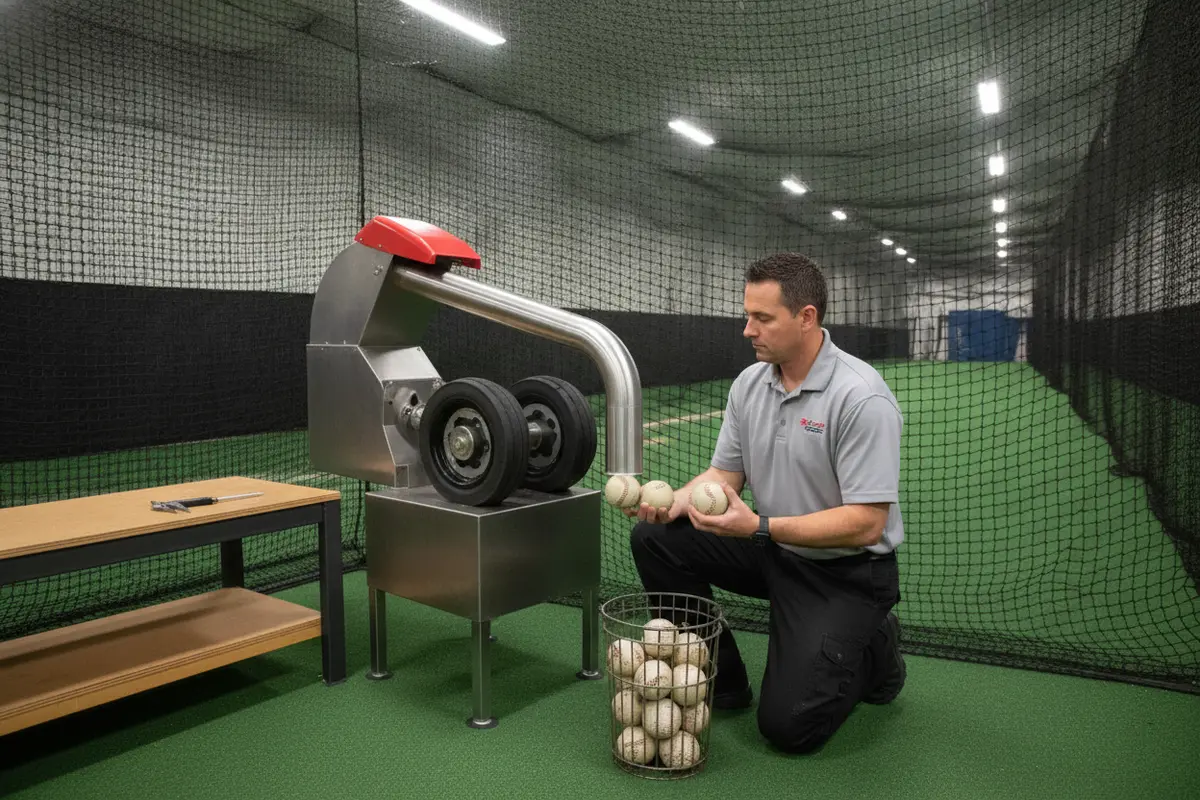
Amusement Products manufactures its Ultimate Trainer pitching machines. For those machines, and for any other equipment under consideration, use model-specific documentation and confirm ball requirements before purchasing. The company’s commercial pitching machine information is a useful starting point for understanding the attraction, but it does not replace the applicable machine instructions. If your project includes multiple lanes or more than one machine model, confirm each lane’s approved ball standard separately.
Keep the written answer with purchasing and operating records. If one approved ball is associated with one model, label the storage location or inventory record so staff do not treat the entire venue as having a single universal standard. A new machine, a replacement ball, or a change in lane setup is a reason to review the documentation again.
Do not try to compensate for an unknown compatibility issue by changing machine settings. If feeding or delivery changes, pause use as appropriate under the equipment instructions and have the responsible person inspect the setup. Resolve the cause with the manufacturer’s guidance before normal operation resumes. A consistent approved setup is safer and easier to manage than informal lane-by-lane adjustments.
How should you compare ball options?
Use a common checklist for every candidate. Fill the table only with answers confirmed by product documentation or the responsible supplier. If an answer is unknown, mark it as unknown and resolve it rather than treating the blank as approval. This keeps the comparison focused on operational fit, not just a product’s appearance or a sales description.
| Comparison point | What to confirm | How to use the answer |
|---|---|---|
| Machine approval | Approved ball specification for the exact machine model | Exclude options without model-specific confirmation |
| Construction and use | Product construction, dimensions, and intended application as documented | Compare only options the machine maker says are suitable |
| Supply continuity | Product identifier and process for confirming replacement stock | Keep replenishment aligned with the approved standard |
| Condition checks | Manufacturer guidance and venue process for removing questionable balls | Make acceptance and removal consistent across shifts |
| Guest and lane fit | Audience, attraction purpose, layout, and instructions | Check that equipment supports the intended experience |
| Daily operations | Collection, storage, counting, and staff ownership | Confirm the process is practical in the actual venue |
When a supplier offers samples, verify that they are the same specification you would purchase. Discuss any trial with the machine maker first and use only a controlled process that follows the equipment instructions and your facility procedures. A sample review is not permission to test an unapproved alternative in a live guest lane.
How can you validate a choice before opening a lane?
Turn the comparison into a simple approval sequence. It reduces the risk of making a rushed substitution during installation or after opening. The steps below are planning practices, not a machine-specific operating procedure; the manufacturer’s directions remain controlling.
- List the equipment. Record the machine model and the lane or attraction it will serve. If a project includes several models, make a separate record for each.
- Obtain the ball requirement. Consult the model documentation or ask the manufacturer or authorized supplier. Record the exact approved product details and any limitations they state.
- Match the procurement record. Compare the item being considered with the documented requirement. Ask the vendor to clarify any difference in product name, construction, or specification before placing the order.
- Review the intended use. Check that the product and machine arrangement fit the guest experience and lane plan. Keep this review separate from compatibility approval; a guest preference cannot override the equipment requirement.
- Write the operating routine. Decide where balls are stored, how staff check them, what happens to questionable items, and who may approve replacement stock.
- Brief the team and retain records. Put the approved standard where buyers and operators can find it. Explain how staff escalate a concern instead of improvising a change.
Imagine a venue planning two lanes with different machine models. The buyer receives two supplier descriptions that both say “machine pitch ball,” but only one includes a specific model reference. The useful next step is not to choose the more familiar-looking product. It is to get a model-specific answer for both lanes, record each approved product separately, and confirm the receiving process will preserve those distinctions.
Now consider a replacement order several months later. The established ball is unavailable, and a vendor proposes a similar alternative. Staff should compare the proposed item to the saved specification, request confirmation from the relevant manufacturer or supplier, and keep the substitute out of active use until approval is clear. That decision trail can prevent one purchasing change from becoming an undocumented operating change.
What safety and operating questions should you ask?
Ball choice belongs inside a broader equipment and lane safety plan. The U.S. Consumer Product Safety Commission issued a warning concerning a specific pitching machine with an unguarded rotating arm that could strike people in its path. That warning describes the hazard alleged for that equipment; it is not a claim about every pitching machine. Review the CPSC warning about hazardous pitching machines and follow the instructions for the particular equipment at your venue.
Define who can load, inspect, or service a machine and how the lane is controlled while it operates. Staff need to know how guests wait, enter, and leave, and how the attraction is stopped when the approved procedure calls for it. Do not reach into a machine or near a moving mechanism unless the manufacturer’s prescribed shutdown and service instructions permit the action. A ball issue should trigger the documented response, not a rushed attempt to clear a problem while equipment remains active.
For each shift, make responsibilities explicit. One person can be assigned to check that the approved supply is available and that questionable items have been separated, while the operator on duty follows the machine’s normal instructions. The exact checks should come from the equipment documentation and venue policy. Keep the process short enough to use consistently, but specific enough that a new team member knows what to do when an item looks different from the rest.
Plan storage as part of the routine. Keep approved inventory in a known location, separate items awaiting review, and avoid mixing unverified replacements into the active supply. A simple count or replenishment note can help identify when stock has changed. These steps do not replace a formal maintenance or safety program; they support consistent execution of the manufacturer’s directions.
How should the ball plan fit your facility?
The same approved ball can be easier or harder to manage depending on lane layout, guest flow, visibility, and staffing. Review how the experience works from arrival through exit, not only how the machine sits in the lane. An overview for commercial batting cage buyers and the wider FEC equipment catalog can help frame the attraction within a broader venue plan.
- Map guest movement. Note where guests receive instructions, wait, enter, use the lane, and return to shared areas. Keep ball handling and storage out of places where they complicate that movement.
- Check staff sightlines. Identify where the responsible team member will stand and what they need to see to follow the venue’s operating procedure. Avoid relying on a process that assumes staff can supervise a location they cannot readily observe.
- Match standards to machines. Make a machine-by-machine list of approved balls if equipment differs. Label records and storage clearly enough to prevent accidental cross-use.
- Plan collection and replenishment. Decide how the supply is collected, counted, inspected, and returned to its designated location. Set an escalation step for a short or inconsistent supply.
- Reassess after change. Reconfirm the plan when the machine, ball specification, lane arrangement, or procedure changes. A layout update can alter staff workflow even when the ball approval remains the same.
For example, a multi-lane venue may choose a shared storage room but separate, clearly identified bins for lane-specific approved stock. A smaller facility may keep each lane’s supply near its own operating area. Neither arrangement is automatically right for every site; select the one that preserves the approved specification and makes the staff routine clear.
Think through a busy operating period as well. Who handles a returned ball that appears damaged? Where does it go? Who checks whether enough approved stock remains? What happens if an alternative is offered before that person can verify it? Answering these questions in advance makes purchasing and shift handoffs less dependent on memory. The design and consultation team can help connect an attraction decision with facility layout and operating context.
What should you confirm with a supplier?
Prepare questions that invite a specific, checkable answer. Ask for the approved ball specification for each machine model; whether alternative constructions are supported; and how to identify products that should be removed from service. Clarify what documents apply to setup, routine checks, cleaning, storage, and replacement. If a supplier cannot answer a question, ask who can provide the manufacturer’s guidance and how you will receive it.
- Which exact machine model does this ball specification apply to?
- What product identifier should purchasing use to order the same approved item again?
- Are any substitutions approved, and how can that approval be verified in writing?
- What condition checks or removal criteria does the manufacturer specify?
- What should staff do if feeding or delivery seems different from normal?
- How should we document a change in machine, ball, or lane arrangement?
Share your operating context so the answers address your actual plan: intended audience, number and model of machines, lane arrangement, and how staff will supervise the attraction. Keep the resulting specification with equipment records and purchasing instructions. Amusement Products offers design consultation for FEC projects; you can also review its product gallery while preparing questions. For staff familiarization beyond ball selection, review the available maintenance training information and follow the directions for the specific machine.
When the project spans an entire venue, start with the facility’s attraction plan and the equipment requirements together. Amusement Products describes its role as a manufacturer of FEC equipment; its company background provides additional context. Keep product decisions anchored to documented model requirements rather than broad claims or assumptions about what another operator uses.
Request a batting attraction design consultation
Frequently asked questions
Can I use any ball that fits in the machine?
No. Physical fit alone does not establish that a ball is approved or suitable for the exact machine. Check the model-specific instructions and get confirmation from the manufacturer or authorized supplier before using a substitute.
Should an FEC choose a ball based only on guest age?
No. Guest mix is relevant to the planned experience, but it does not replace machine compatibility. Consider the approved specification, intended use, lane layout, staff procedures, and guest instructions together.
How should we handle damaged or inconsistent balls?
Follow the manufacturer’s condition guidance and apply a consistent venue process. Set questionable items aside, identify who reviews them, and do not return them to active inventory unless they meet the applicable standard.
Does changing the ball mean we should change machine settings?
Do not assume that it does. Confirm that the ball is approved for the machine, then follow the manufacturer’s instructions for any setup or adjustment. Do not use a setting change to conceal an unresolved compatibility concern.
What should we do if an approved item is unavailable?
Do not silently substitute a product based on appearance or a general description. Ask the machine manufacturer or authorized supplier to confirm an alternative for the exact model, record the answer, and update purchasing and operating information before using it.
Plan the ball choice as part of the attraction
Commercial pitching machine ball selection is strongest when it starts with the machine specification and continues through purchasing, lane layout, and daily staff routines. Confirm the approved ball for each model, document how inventory is checked and replenished, and revisit the plan whenever equipment or procedures change. A clear standard gives your team a practical basis for a consistent guest experience.
Discuss your FEC attraction plan with Amusement Products
With the approved specification and routine documented, your team can keep the ball decision consistent from purchasing through daily operation.