
FEC attractions for seniors should offer choice, not assumptions. Some older adults enjoy active play; others prefer social games, a slower pace, or a comfortable place to watch. For operators, the useful question is not which single attraction is ‘for seniors,’ but how the whole venue lets guests decide whether and how to participate. That means evaluating the journey from arrival to departure, not just selecting equipment.
Discuss your venue planning needs
What does a welcoming visit need to support?
Assess the visit as a sequence: arrival, orientation, movement to an activity, understanding its rules, participation or observation, and departure. An appealing attraction can still be hard to enjoy if the route is confusing, instructions are difficult to find, or companions have nowhere useful to wait. Walk through that sequence from a guest’s point of view instead of evaluating equipment in isolation.
Older adults are not a uniform audience. Age alone does not tell you a person’s mobility, hearing, vision, stamina, interests, or preferred activity level. The same guest may want a lively game on one visit and a quieter experience on another. A respectful plan makes options clear, explains what participation involves, and leaves the decision to each visitor.
Start by defining what a good visit could look like for different group members. One person might take a turn while friends watch. A couple could choose a shared, skill-based activity. A family group might split between activities and agree on a place to meet again. These are different patterns, and a venue can support more than one without labeling an attraction as suitable for every senior.
- Provide varied participation. Consider active, skill-based, social, and spectator-friendly formats that fit the venue concept.
- Make choices legible. Explain how an activity works, what participation involves, and where guests can ask for help.
- Design for groups. Let friends and families take turns, watch, or share an outing without requiring everyone to do the same thing.
- Respect individual decisions. A guest may participate, observe, pause, or move on; staff should not pressure anyone or make assumptions.
Which attraction formats are worth comparing?
Compare the experience and operating conditions, not just the attraction label. A self-paced course, a short interactive game, and a higher-energy ride create different demands on space, queues, staffing, and guest communication. Gather the requirements for each candidate before deciding how it fits a particular site. Separate what is confirmed by documentation from what still needs an answer.
| Format to assess | Potential role in a group visit | Questions to verify |
|---|---|---|
| Miniature golf | Social, turn-based play at a group pace | Are paths, transitions, and places to pause clearly planned? |
| Interactive games | Short sessions and friendly competition | Are controls and instructions easy to locate and understand? |
| Seated or spectator-friendly activity | Watching, cheering, or taking a turn can all be part of the visit | Can companions view the activity while waiting without blocking circulation? |
| Higher-energy attractions | An active option for guests who choose it | Are operating conditions, participation requirements, and alternatives clear? |
This table is a comparison framework, not a guarantee of suitability. For each specific attraction, ask the manufacturer or provider about entry, controls, operating rules, capacity, supervision, and any limitations. Operators can review the FEC equipment catalog and product gallery as starting points for discussions. The aim is to establish whether each option fits the site and the guest experience the operator wants to offer.
Use consistent questions across formats. For example, if you compare a miniature golf concept with an interactive game, examine how guests approach each one, where they wait, how long a turn might take under the planned operation, and whether a companion can follow the activity. Do not assume that the less physically demanding-looking option is automatically simpler: instructions, lighting, sound, controls, or queue organization may also shape the experience.
How do you map the route, seating, and wayfinding?
Begin with a simple plan of the guest journey. Mark the entrance, ticketing or check-in, attractions, restrooms, food areas, seating, and exits. Trace likely routes between them. Note where a queue might cross a main path, where a guest may want to pause, and whether a companion can remain nearby without obstructing other visitors.
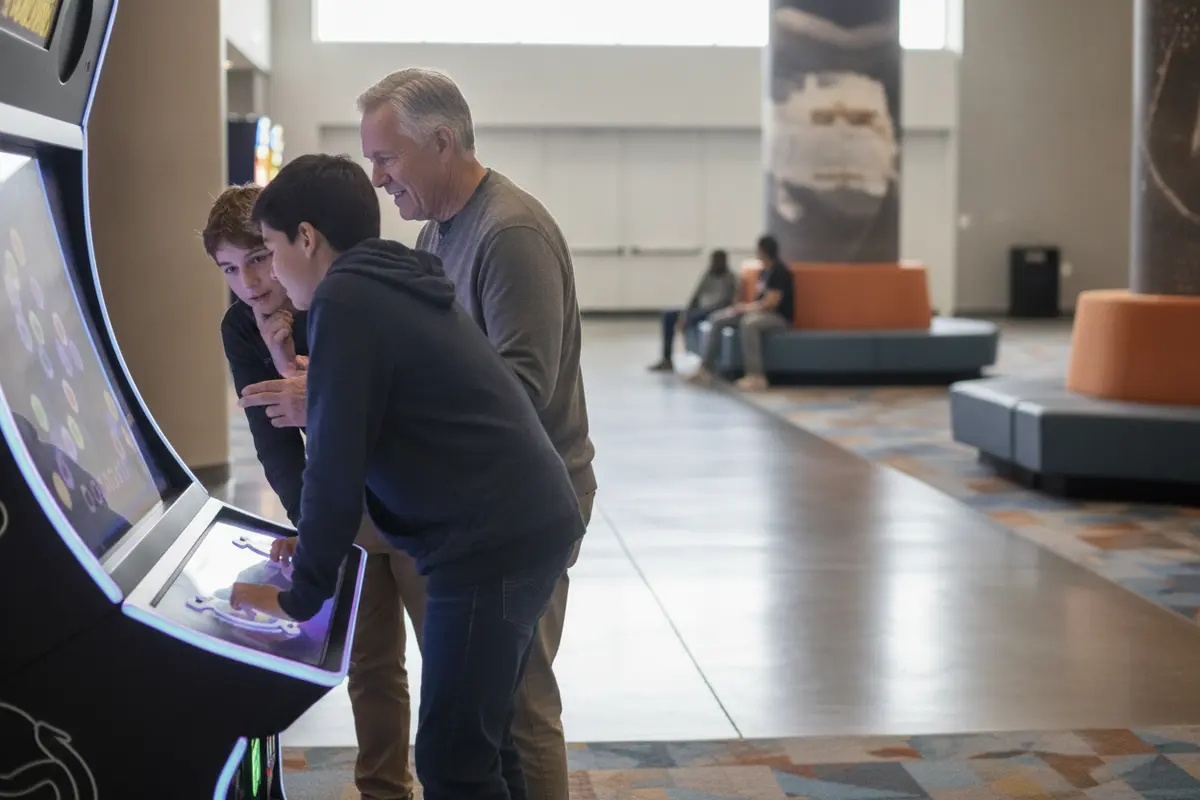
Walk the route physically when possible. A drawing may show enough room while the actual space feels confusing once signs, queue rails, furniture, and groups are present. Review both quiet and busy conditions. Ask people with varied mobility and sensory needs to describe what is confusing or uncomfortable; do not rely only on staff assumptions. If an in-person walk-through is not possible, mark the plan with likely decision points and ask reviewers to work through a realistic visit scenario.
- At decision points: Put concise, legible directions where guests need to choose a route or decide whether to join.
- At queues: Check that waiting guests do not block circulation, seating, or access to other activities.
- At attractions: Consider where companions can see the activity, wait, or regroup after a turn.
- Across the venue: Look for route continuity between the entrance, amenities, activities, and exit.
- For sensory conditions: Where practical, explain notable sound, lighting, or other effects before entry.
Seating helps more than the person taking a break. It can let a companion watch, support a group’s pace, or provide a clear meeting point. Check whether seats are visible from the activity and whether their placement leaves routes usable. A seat tucked behind a queue or facing away from the attraction may not serve the role intended. Also decide who checks that seating remains available and in the planned location during operating hours.
Wayfinding should work as a connected system. A sign at the entrance is not enough if guests face an unmarked choice farther inside. Walk from the entrance to a selected activity, then to a restroom or seating area and back to the exit. At each fork, ask whether the next step is apparent. Use consistent names and symbols where possible, and make sure signs remain visible when the venue is busy.
What accessibility requirements should you check?
General planning ideas do not replace a site-specific accessibility review. The U.S. Department of Justice provides information about the Americans with Disabilities Act. Use its official information as a starting point, then confirm which requirements apply to your facility, project, attraction, and operating arrangements with qualified professionals and the appropriate authorities.
Keep the review concrete. Ask which routes, spaces, signs, amenities, and attraction elements require evaluation. Confirm details against the actual site and equipment documentation rather than relying on a broad claim that a venue or ride is accessible. Record open questions, the person responsible for verifying each one, and the point in the project when an answer is needed. If plans change, revisit the questions affected by the new layout.
A practical question log might include the location or attraction, the issue to verify, the evidence needed, the responsible contact, and the decision date. For instance, a proposed queue change could affect circulation and the route to a nearby activity. Record that as an item to review on the plan, rather than assuming a proposed arrangement is acceptable because it worked elsewhere. This process helps operators keep design ideas separate from compliance determinations.
How should the operating plan support different guests?
Good design needs day-to-day support. Decide how team members will explain participation, respond to questions, manage queues, and point out alternatives. Train staff to address the guest directly and respectfully, rather than assuming a companion will speak for them. Staff can offer help without making a decision on a guest’s behalf.
Write brief instructions and place them where a guest decides whether to participate. Include practical details the operator has verified, such as how turns work, where to wait, how to request help, and what operating conditions apply. Avoid promises that an attraction will suit everyone. A clear explanation lets visitors decide whether the experience fits their preferences and circumstances.
Build checks into opening, mid-shift, and closing routines. At opening, confirm signs are visible, routes are unobstructed, seating is in place, and queues are arranged as planned. During a busy period, observe whether waiting groups spill into circulation or whether guests have difficulty identifying where to go next. At closing, record issues that need a layout, maintenance, or instruction change. When a problem repeats, assign an owner and brief the team on the change.
Use a short scenario exercise during staff preparation. One team member plays a visitor who wants to watch before deciding; another explains the activity and points out where a companion can wait. Then reverse roles and try a case where a guest asks a question not covered by the sign. The goal is not to script every interaction. It is to practice clear, respectful explanations and make sure the team knows when to direct a question to a supervisor.
- Train staff to explain choices without pressuring participation.
- Identify a clear method for requesting assistance.
- Keep circulation and waiting areas under observation during peak periods.
- Include seating, signs, and attraction surroundings in routine checks.
- Collect guest feedback and note recurring barriers, not only one-off complaints.
Operators may also look at miniature golf project examples when considering a course, and explore VirTech information if a concept includes digital experiences. These examples are references for attraction discussions, not evidence that a particular option meets an accessibility requirement. Confirm the design and operation of the specific option under consideration.
How can you compare candidate attractions systematically?
A consistent review makes trade-offs easier to see and reduces the chance that an appealing concept hides an operational issue. Create a worksheet with one row per attraction and columns for guest experience, site requirements, operating needs, access questions, and evidence still to collect. Use the same questions for each candidate. Mark unknowns plainly; an unknown should not quietly become an assumed yes as the project advances.
- Define the visit. Describe the group outing the venue wants to support. Consider whether visitors may arrive with family or friends and whether they want shared play, separate choices, or opportunities to watch.
- Map the whole journey. Trace arrival through activity and departure, including orientation, queues, rest points, amenities, and regrouping.
- Verify participation details. Ask about actual entry, controls, rules, instructions, and restrictions. Separate confirmed information from assumptions.
- Test the layout. Place the candidate on a site plan, then walk the route and check viewing, waiting, queueing, and circulation under realistic conditions.
- Review operations. Identify who explains the activity, monitors the line, maintains the area, and responds when a guest needs help.
- Validate accessibility and safety. Bring in appropriate specialists and authorities to review the particular facility and equipment.
- Gather feedback before committing. Show the proposed journey to people with varied needs and preferences. Record observations and adjust the plan.
Consider a worked comparison: a venue is choosing between adding another active attraction and adding a social, turn-based activity. The team first writes down what each format would add to the guest experience. It then places both candidates on the same floor plan and traces entrance, waiting, viewing, and departure paths. For each, the team notes the information a guest needs before joining and asks the provider to confirm participation requirements and operating conditions.
Next, the operator considers the daily plan. Does the proposed queue remain out of the main route? Can a companion watch without standing in the flow of traffic? Who will answer questions, and what will staff do if the area becomes crowded? The answers may show that both options could have a role, that one fits the site better, or that neither is ready for selection until an open question is resolved. The point is to compare evidence and intended experience, not to assume preferences based on age.
Make the worksheet useful after the initial decision, too. Before installation, revisit all unresolved questions with the relevant provider or qualified professional. Before opening, test signs, routes, and staff instructions in the actual arrangement. After opening, collect observations from different shifts and compare them with the original plan. If visitors repeatedly miss a turn, wait in an awkward place, or ask the same question, use that evidence to adjust the layout or explanation.
When should you involve a design partner?
Bring in a design partner when attraction choice, guest flow, and site constraints need to be considered together, or when the team has several plausible layouts and needs a structured comparison. Amusement Products provides design and consultation for operators framing attraction and layout questions. A discussion can be more productive when the operator brings a current floor plan, a list of candidate activities, expected group patterns, and known constraints.
Prepare a brief that separates decisions from questions. State what is already fixed, such as the location of an entrance or existing equipment, and what remains open, such as the placement of a new activity. Include photos or a plan that shows queues, seating, amenities, and circulation. List the information needed from equipment providers and note which accessibility or safety questions require qualified review. This gives a design conversation a practical focus without treating a preliminary concept as a compliance determination.
Ask the partner to explain the reasoning behind proposed choices. Which guest path does the arrangement support? Where would companions wait? What operating assumptions does the plan make? Which details still need confirmation? A useful planning exchange identifies both the potential fit and the evidence still required, so the operator can assign next steps rather than relying on a broad recommendation.
Prepare a design and layout discussion
What should you ask a design partner?
Specific questions make a consultation more useful than asking simply which attraction is best. Ask how a candidate affects guest movement and what needs to be verified before selecting it.
- What space, queue, power, supervision, and operating requirements should we confirm for this option?
- What information should a guest see before joining or entering?
- Where can companions wait or watch without obstructing a route?
- Which equipment details, restrictions, or operating conditions should be confirmed with the provider?
- How will the attraction surroundings be checked and maintained during daily operations?
- Which accessibility, building, or safety questions need review by qualified specialists?
- How could the layout preserve alternatives for guests who prefer not to participate?
- Which assumptions in the proposed layout should be tested during a walk-through or operating trial?
After the discussion, turn recommendations into an action list. For each item, note the person responsible, the evidence required, and when the answer affects the decision. For example, a provider may need to confirm an operating detail while a qualified professional reviews a site requirement. Keeping those actions distinct helps the operator avoid treating a design sketch, an equipment description, and an accessibility determination as interchangeable.
Frequently asked questions
Are there attractions designed specifically for seniors?
There is no one attraction that fits every older adult. Compare the activity, access, comfort, and operating requirements for your site, then give guests clear information and meaningful choices.
Should an FEC avoid active attractions for older guests?
No. Some older adults may enjoy active options, while others may choose a different activity or watch. Explain verified operating conditions and let each person decide whether to participate.
What is a practical first step?
Map the complete guest journey and mark points where routes, queues, instructions, seating, or assistance may create a barrier. Then validate the findings with people who bring varied needs and with qualified professionals where requirements need review.
Can a design consultation determine whether an attraction is accessible?
A design discussion can help identify layout questions, but it is not a substitute for confirming equipment-specific details and applicable requirements with qualified professionals and authorities.
How can operators tell whether improvements are working?
Observe whether guests can find the activity, understand how to participate, move through the area, and locate a place to wait or rest. Pair observations with guest and staff feedback, address recurring issues, and check the result during both quiet and busy periods.
Discuss your attraction and layout plans
When you plan for varied preferences, clear information, usable routes, and respectful assistance, older adults and their companions have more ways to enjoy a visit. Treat the full guest journey as part of attraction planning, and verify the details before opening.