
What is a family entertainment center? A family entertainment center, or FEC, is a venue where guests can take part in one or more leisure attractions and related activities in a managed setting. Some FECs focus on a single draw, while others bring several experiences together with food, parties, or other guest services. The right definition depends on the venue’s purpose, audience, and operating model—not on a fixed list of attractions.
Discuss your FEC concept with the design team
What Makes a Venue a Family Entertainment Center?
An FEC is a business designed around leisure, play, and shared experiences. It gives a family, group of friends, school group, or other guests a place to participate in activities on site. The venue may be indoors, outdoors, or a combination of the two. Its attractions might be the main reason visitors arrive, or they may form part of a broader outing that also includes food, events, or social time.
There is no single attraction that automatically makes a business an FEC. A miniature golf course, go-kart track, batting cage, or virtual reality experience can be part of one. But the wider business is defined by how it packages the visit, serves its audience, and operates the guest experience. A dedicated attraction can also be an independent business without offering the range or format people associate with an FEC.
For developers and operators, the practical question is not only what the letters FEC stand for. It is how the concept will work as a complete venue: who it serves, what guests will do, how activities connect, and what staff and systems are needed to keep the experience consistent. An early look at FEC equipment and attractions can help make the range of possible components more concrete.
Which Attractions Can an FEC Include?
Attractions are the activities that invite guests to participate. The mix varies widely by location, available space, audience, and business concept. One venue may build its identity around an anchor activity. Another may offer several different experiences so guests can choose how to spend their visit.
- Go-karting: A track gives guests a structured racing activity. Operators planning this type of attraction should consider the ride experience alongside track configuration, guest circulation, control systems, and maintenance routines. See commercial electric go-karts and the go-kart race timing system as examples of equipment and operating components.
- Miniature golf: A themed course can create a group activity with a different pace and format from a ride. Course design, guest flow, accessibility, and the surrounding venue plan should be considered together. Explore miniature golf projects for an example of this attraction category.
- Bumper cars: Bumper cars offer a shared ride experience, with equipment and operating needs that should be planned for the intended audience and facility. The Spin Zone Bumper Cars page describes one commercial attraction option.
- Batting cages and pitching machines: These activities give guests a chance to practice or play, and may be organized as an attraction area within a larger venue. Operators can review commercial pitching machines when exploring this category.
- Virtual reality and interactive attractions: Immersive or technology-enabled activities can add another format to an attraction mix. Venue planners should look at the experience itself, space needs, guest instructions, supervision, and operational support. Examples include VR arena projects and the LazerFury 360 attraction.
- Other activities: Depending on the concept, an FEC can also include arcade games, soft play, laser tag, party spaces, or seasonal outdoor activities. Not every venue needs every category. A clear reason for each attraction is more useful than a long list without a cohesive guest experience.
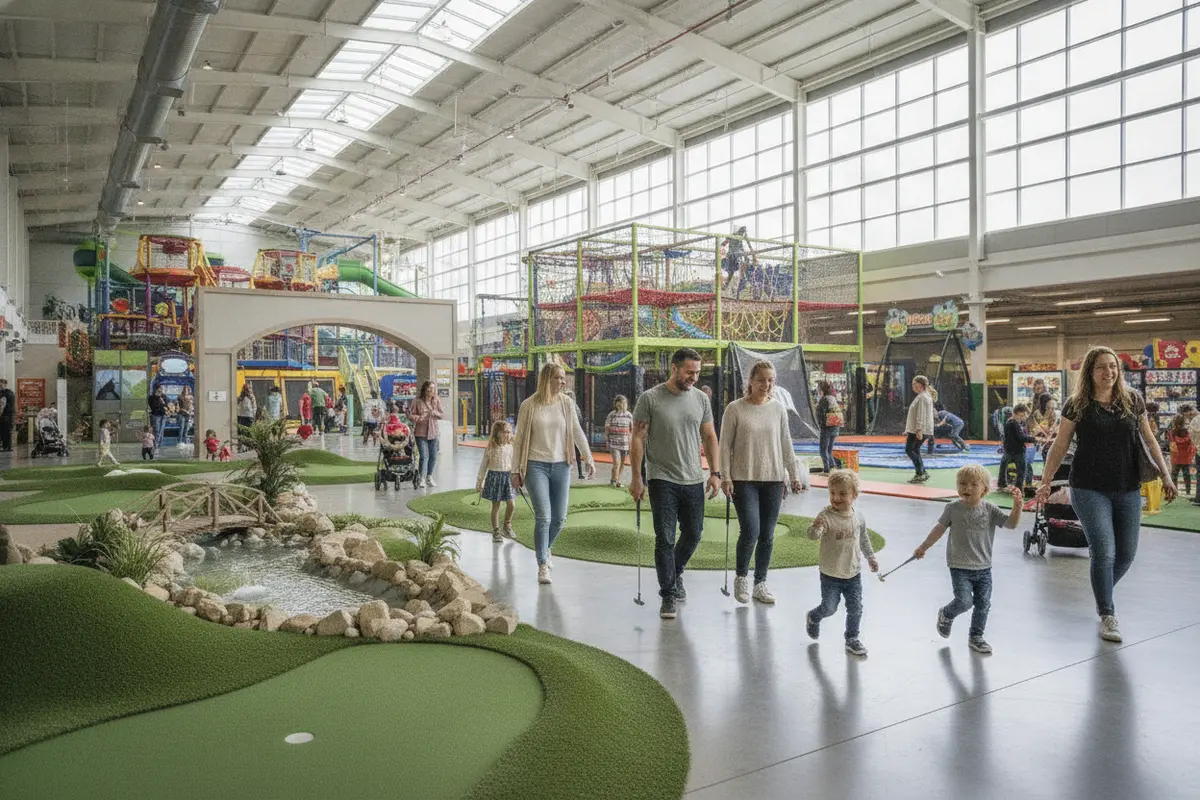
The attraction mix should reflect the intended visit. For example, a venue designed for short visits may emphasize activities guests can understand and join quickly. A destination-style concept may combine attractions and amenities to support a longer outing. These are planning choices, not universal rules; the best fit depends on the market, facility, and operating plan.
How Do Attractions, Amenities, and Operations Fit Together?
An FEC is more than the sum of its rides or games. The complete guest experience includes what visitors see when they arrive, how they understand the choices available, how they move between activities, and how staff support the visit. Amenities such as food service, party rooms, seating, or event areas may complement attractions, but their role varies by business.
Operators can think about the venue in three connected layers:
- The activity: What does a guest do, and what makes the activity appropriate for the intended audience?
- The guest journey: How does someone discover the activity, enter the area, get instructions, participate, and move on to the next part of the visit?
- The operating system: What staffing, training, equipment checks, maintenance, scheduling, and guest support make the experience ready day after day?
When these layers are planned together, the venue is easier to understand and manage. A thoughtfully selected attraction can still disappoint if guests cannot find it, the queue blocks another area, instructions are unclear, or the team has not defined who handles opening checks. Conversely, a coherent layout and clear operating procedures help make a varied attraction mix feel like one destination.
For an FEC with go-karts, for example, planning may include the track, the check-in and staging process, guest communication, timing or control technology, and routine maintenance. A park-and-charge system is one example of an operating component relevant to electric karting. For a venue with several activity zones, a control system for attractions may also be part of the technology discussion. The requirements are not identical across venues, so decisions should follow the chosen attraction and operating model.
What Types of FEC Business Models Are Common?
FECs can be organized in several ways. The labels are useful shorthand, not strict categories, and a venue can combine more than one model.
| Venue approach | What the visit centers on | Planning emphasis |
|---|---|---|
| Single-anchor attraction | One primary activity supported by the venue experience | Define the attraction’s capacity, guest process, support needs, and reasons to visit |
| Multi-attraction center | Several activities that guests can combine during a visit | Coordinate layout, wayfinding, schedules, staffing, and transitions between zones |
| Destination-style venue | A broader outing with attractions and complementary amenities | Plan the complete guest journey, visit duration, amenities, and operational coordination |
| Outdoor or seasonal facility | Activities whose use may be shaped by weather or season | Account for operating conditions, guest communication, maintenance, and seasonal planning |
| Specialized activity venue | A focused activity such as golf, racing, or batting | Match the experience, equipment, and operating procedures to a defined audience |
The table is a starting point for discussion, not a prescription. A small operator may build a compelling business around a specialized activity. A larger developer may combine attractions with food, events, and gathering areas. The appropriate format depends on the goals and constraints of the project, including the property, audience, staffing plan, and local market research.
Who Visits a Family Entertainment Center?
Families are central to the name, but FEC audiences can include more than parents and children. Depending on the concept, guests may include groups of friends, birthday parties, schools, corporate groups, tourists, or people looking for an activity as part of a larger outing. Each group may have different expectations for timing, information, access, and support.
Instead of assuming that every activity is right for everyone, operators can map the intended audience for each part of the venue. Consider who is likely to participate, whether guests need guidance, how a group joins together, and what accommodations or clear instructions may be needed. The aim is not to make every attraction identical. It is to help visitors understand what is available and select experiences that fit them.
Audience decisions also affect the relationship between attractions. A venue aimed at mixed-age groups may want activities with different levels of pace and participation. A focused sports or racing concept may prioritize a more specific guest interest. A developer can connect these choices to facility planning through FEC design and consultation, where attraction selection and layout can be considered as parts of the same concept.
What Should Operators Evaluate Before Developing or Updating an FEC?
Whether opening a new venue or improving an existing one, start with a written operating concept. It gives the team a way to test whether attractions, site conditions, guest expectations, and operating resources support one another. A useful first review covers the following questions.
1. Who is the intended guest?
Describe the audiences the venue intends to serve and the occasions that may bring them in. Avoid relying on a broad label such as “everyone.” A more useful plan names the priority groups, the activities relevant to them, and any differences in their needs. Local research can help validate assumptions about demand and competing leisure options.
2. What is the reason to choose this venue?
Identify the core experience in plain language. Is the draw a particular attraction, a selection of activities, a group event, or a combination? This helps avoid investing in disconnected components that do not strengthen the concept. It also guides decisions about communications, guest services, and future improvements.
3. Does the site support the concept?
Review the property, building, access, circulation, utilities, local requirements, and constraints relevant to the planned activities. Attraction requirements vary. The team should confirm applicable codes, permits, accessibility obligations, and safety requirements with qualified local professionals and the appropriate authorities. For general consumer product safety information, consult the U.S. Consumer Product Safety Commission; do not treat a generic FEC checklist as a substitute for site-specific review.
4. How will guests move through the venue?
Sketch the experience from arrival through departure. Include orientation, ticketing or check-in where applicable, waiting areas, activity entry and exit, rest areas, and transitions between attractions. Look for places where a line, gathering group, or staff task could interfere with another activity. A design and layout conversation can help the team identify those relationships early; the design and consultation portfolio shows the kind of planning work to explore.
5. What has to happen every operating day?
List the tasks that prepare each attraction for guests and keep the venue organized during operation. Depending on the attraction, this can include visual inspections, setup, cleanliness, guest briefings, equipment checks, opening and closing procedures, and escalation steps when something needs attention. Assigning responsibility is as important as writing the procedure.
6. What training and support will the team need?
Define the skills staff need for their roles, how new team members will learn procedures, and how managers will keep training current. If the venue includes technical equipment, the plan should also explain who performs routine maintenance, how service needs are reported, and where approved parts or technical guidance come from. Operators can review maintenance training resources as one possible place to learn about equipment-care education.
7. How will the concept evolve?
Consider how the team will gather feedback, observe bottlenecks, review equipment condition, and decide when an attraction or process needs attention. This does not mean making changes based on every individual comment. It means creating a consistent way to assess the guest experience and daily operation. For more about the company’s background and approach, see Amusement Products’ company information.
How Does Equipment Fit Into an FEC Plan?
Equipment is one part of the business plan, but it has a close relationship with layout, staffing, guest flow, and maintenance. Start with the purpose of the activity and the operating conditions it needs. Then compare equipment options in context rather than selecting from a product list alone.
Useful questions include: What guest experience should the attraction support? What space and surrounding functions does it require? What instructions or supervision will guests need? How will the team inspect, maintain, and service it? How does it connect to other activities and the facility’s operating systems? The answers may differ across attraction types, even within the same FEC.
Manufacturers and suppliers can explain equipment specifications and support considerations, while designers and operators can assess how those details work in the planned venue. Amusement Products works with FEC equipment and attraction planning; its product gallery provides examples of attraction categories. A complete evaluation should confirm the specific requirements for any equipment under consideration rather than assume that one solution suits every site.
Ongoing care belongs in the initial conversation. Establish how routine checks will be performed, how staff will record issues, and how the business will arrange parts and qualified service when needed. The parts department overview is relevant to operators researching equipment support. Keeping procedures, staff roles, and support contacts clear helps the team respond consistently.
What Is the Difference Between an FEC and an Amusement Park?
The terms can overlap in everyday conversation, but they often describe different venue scales and formats. An amusement park is commonly understood as a larger destination organized around rides and entertainment attractions, while an FEC often refers to a more compact or focused venue with one or more activities for a local or regional audience. These are general descriptions, not legal definitions, and real venues do not always fit neatly into either label.
For a business owner, the name matters less than the actual operation. Think about the number and type of attractions, whether the facility is indoor or outdoor, the intended visit, the guest mix, and the operational resources required. The project’s local rules and permitting requirements should be checked independently; terminology alone does not establish which standards apply.
When Should a Developer Seek Planning Support?
Bring in relevant expertise when the project needs decisions that are difficult to reverse, such as choosing an attraction mix, coordinating equipment with a floor plan, reviewing operational flows, or aligning the project team around a workable concept. Earlier discussion can help surface dependencies before construction or purchasing decisions limit options.
Planning support can involve several roles. Architects and engineers address building and site matters within their disciplines. Local authorities clarify applicable approvals. Attraction manufacturers and suppliers can explain product-specific considerations. Experienced operators can help test procedures against daily realities. The project owner remains responsible for assembling the right team and confirming requirements for the specific venue.
Amusement Products offers design and consultation for FEC projects. A conversation can help frame questions about attractions and layout; it is not a substitute for legal, engineering, code, or financial advice. To discuss a project, use the design and consultation contact path.
Request a consultation about your FEC plan
Frequently Asked Questions
What does FEC stand for?
FEC stands for family entertainment center. It generally describes a venue that brings leisure attractions or activities together in a managed guest setting. The exact mix and scale vary by business.
Does an FEC need to have multiple attractions?
No. Some centers are built around one anchor attraction, while others offer several activities. The important point is that the business’s concept and guest experience are clear and supported by an appropriate operating plan.
Can an FEC be outdoors?
Yes. An FEC may be indoors, outdoors, or combine indoor and outdoor areas. Outdoor concepts should assess site conditions, weather-related operations, guest communication, maintenance, and any local requirements relevant to the activities.
What attractions should a new FEC include?
There is no universal list. Select activities based on the intended audience, site, concept, operating capabilities, and local research. Consider how each attraction fits the guest journey and what it requires for staffing, space, care, and support.
What is the first step in planning an FEC?
Write down the intended audience, the reason guests would choose the venue, and the experience the business wants to provide. Then test that concept against the site, attraction requirements, guest flow, staffing, and applicable local approvals.
Talk with Amusement Products about planning your FEC
A well-planned family entertainment center connects the right activities with a clear guest experience and an operating plan the team can carry out consistently.