Poorly trained track staff can slow kart loading times and cut your hourly track revenue in half. To earn the most, family entertainment center owners must match daily staff schedules with smart track design and simple operating software.
Request a free consultation to right-size your go-kart track staffing plan.
This go kart track staffing operations guide shows family entertainment center (FEC) owners how to run a safe, profitable track team. To build a successful business, you must link proper staff planning with your broader commercial go-kart operations for family entertainment centers. State safety rules, such as the Ohio Administrative Code, separate track operators from general track attendants to keep guests safe.
This clear separation ensures that only trained staff handle kart dispatch, while other crew members focus on guest safety and track control. By matching clear staff roles with training and smart operating systems, you can reduce labor costs. This keeps your track running at peak capacity during busy weekend hours.
But how do you find the right balance of crew members for your facility? Scheduling too few workers causes long lines, but hiring too many will eat into your profits. To plan your roster, you must first ask, How Many Staff Does a Commercial Go-Kart Track Need? The path begins with:
How Many Staff Does a Commercial Go-Kart Track Need?
Staffing factors and headcount drivers
When creating a go kart track staffing operations guide, owners must look at the factors that shape daily labor needs. We suggest reading our guide on go-kart track staffing and operational needs before you launch. Headcount is not a single fixed number, as it varies based on track layout and throughput. To run a safe track, you must match your team size to the number of karts in use.
A standard track often needs a team of three to six people per shift, including track attendants, cashiers, and managers. Some states have strict rules about these roles. For example, Ohio laws separate track operators and attendants, where attendants help guide guests but do not dispatch karts. Knowing these local rules helps you run a safe track.
A standard shift team breakdown
To manage throughput, you must understand who does what on a shift. A typical track team has several key parts. First, you need a cashier to sell tickets and handle guest entry. Second, you must have a track operator or dispatcher to control the karts and watch safety. Third, you need a pit or launch attendant to help guests get in and out of karts safely.
During peak hours, you also need a lead manager on duty. The manager handles staff scheduling, guest issues, and urgent calls. If your team is small, your staff must be cross-trained. A pit worker should be able to step in as a cashier during slow times to keep your labor cost low.
| Shift role | Core responsibilities | When you need them |
|---|---|---|
| Cashier | Sell tickets and check waivers. | All open hours |
| Track operator or dispatcher | Dispatch karts and control speed and safety. | Every operating session |
| Pit or launch attendant | Help guests in and out and clear stalled karts. | Peak traffic hours |
| Lead manager | Handle scheduling and safety incidents. | Weekends and busy days |
How track design and technology cut labor
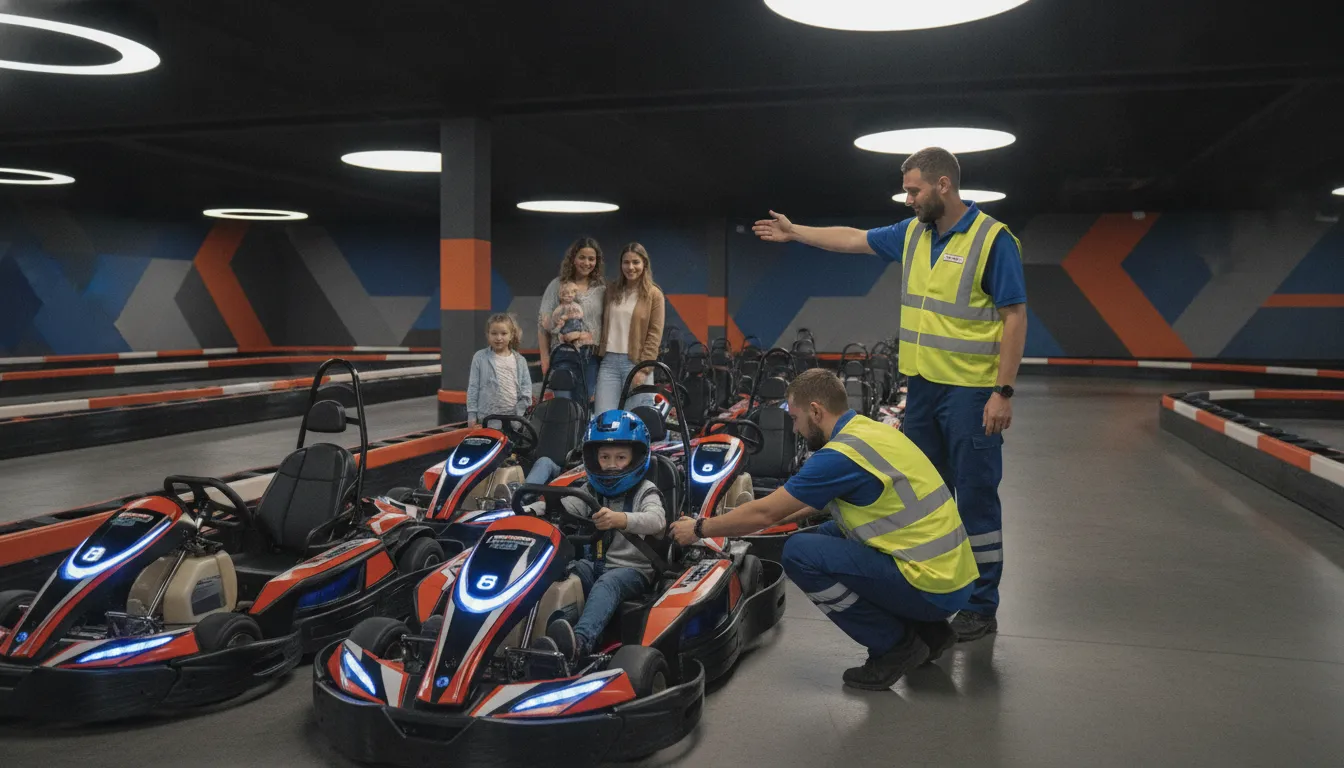
The layout of your venue plays a huge role in how many staff you need. Go-kart layout design for loading efficiency shapes staffing needs. A track designed with a smart pit area lets a single worker load and unload karts quickly. To learn more, read about commercial go-kart operations for family entertainment centers, as layout shapes your daily labor costs.
Modern technology also helps you run a track with fewer workers. Advanced systems like ThunderVolt and VirTech AI diagnostics reduce labor and upkeep time. These systems let you track kart health and control speeds from a single tablet. With these tools, one operator can manage a whole fleet without needing a large team of mechanics.
Training Requirements for Go-Kart Track Attendants
Safe track work starts with well-trained staff. Running a track is not just about the karts. It is about how well your team runs the track to keep guests safe. To help with this, Amusement Products provides full staff training with each kart sale. This training covers daily tasks, safety rules, and basic repairs. Your staff must know how to handle daily tasks to keep the track running well. This training is a key part of any go kart track staffing operations guide.
Daily startup and shutdown
Every day, your team must run through a clear list of checks before the first guest can ride. Staff must check tire pressure, brake feel, and steering response on each kart. They must also search the track for any trash or slick spots. These steps keep rides safe and prevent damage to your fleet.
At the end of the shift, staff must turn off the karts and plug them in to charge. This routine keeps your karts ready for the next day. Proper shutdown steps prevent dead karts and help extend the life of your fleet. Safe work needs strict rules for every shift.
Guest safety briefings
Track staff must give a clear safety brief to guests before they sit in the karts. Guests must know how to steer, speed up, and stop. Under Ohio OAC rule 901:9-1-42, a concession go-kart is a single, driver-controlled vehicle. This means guests have full control of their speed and steering. Track workers must teach riders how to use these controls.
State laws often split staff into different roles. For instance, an operator dispatches karts, while an attendant helps with guest direction but cannot start the race. Every worker must know their exact role to prevent track crashes. Your team must know these state rules to keep work legal and safe.
Basic maintenance and troubleshooting
Safe loading and unloading is another key skill for track staff. Attendants must help guests get in and out of karts with care. They must check that seat belts are tight before any kart can start. Basic upkeep is also part of daily work. Staff must learn how to find and fix small kart problems. For complex repairs, Amusement Products offers advanced classes.
You can send staff to their Chattanooga shop or have an expert train your team on-site. This extra training ensures your team gets hands-on staff training on kart safety systems. With these skills, your staff can keep karts running with less downtime. Well-maintained karts lead to happier guests and better track throughput.
Shift Scheduling for Peak FEC Traffic Hours
Shift scheduling for family entertainment centers requires a clear plan. Managing a track is a key part of commercial go-kart operations for family entertainment centers. If you have too few workers when crowds arrive, lines grow long. But if you have too many staff during slow times, you lose money. Finding the right balance is the key to a successful track.
Peak Traffic Patterns and Schedule Needs
You must first map when your guests visit. Most tracks see the biggest crowds on weekends, school breaks, and holidays. Event bookings also create sudden spikes in guest count. During these peak windows, you need a full crew to keep the track running safely. State safety rules, like those in the Ohio Administrative Code, show how vital proper staffing is for guest control and safe rides. Knowing these busy times allows you to schedule your team when they are needed most.
Your peak times will often fall into these groups:
- Weekend crowds from Friday evening to Sunday night.
- After-school hours on weekdays.
- School holidays and summer breaks.
- Pre-booked group events and birthday parties.
Cross-Training and Staggered Shifts
Cross-training is a great tool for smart schedules. Your staff should know how to do more than one job. When you cross-train your team, they can rotate between roles like pit stop crew, dispatch, and track attendant. This means a small team can shift to where they are needed most without hiring extra help. If the pit area is slow, a worker can quickly move to help load new riders.
Staggered shifts also keep labor costs low. Instead of having everyone start at the same time, bring workers in as crowds grow. You might start with two track workers in the morning. As the afternoon rush starts, you can add two more workers. This method stops you from paying too much for idle hours while making sure you have enough hands when the track gets busy.
Track Layout and Crew Efficiency
Your track design plays a huge role in daily staffing needs. A poor design slows down loading and needs more workers to watch the track. On the other hand, an efficient track design for better staffing flow makes loading fast and simple. When the pit lane and queue areas are placed well, riders can exit and board the karts in less time. This fast setup means fewer attendants can run the track safely and handle more riders per hour.
A smart layout also helps staff monitor the track with ease. Attendants can spot issues quickly if they have a clear line of sight across the entire course. This setup reduces the number of spotters you need to station around the curves. By using smart schedules, cross-trained staff, and a strong layout, you can keep your labor costs low while keeping your guests safe.
Emergency Protocols and Incident Response for Kart Operators
State Safety Rules and Roles
State laws set strict safety rules for concession go-kart tracks. For example, Ohio Administrative Code Rule 901:9-1-45 governs how tracks run their concession sites to protect riders. These rules are a key part of your go-kart track staffing operations guide. Proper planning keeps your park safe and follows state codes.
The state rules also split up the duties of your team. The Ohio state code makes a clear split between the track operator and the track attendant. An attendant can guide riders and control crowds, but only the lead operator can dispatch karts. This clear split keeps the track in order and stops mistakes before they happen.
Managing Stops and Stalls
If a kart spins or hits a wall, your team must act fast. Staff must learn how to use kart safety systems to stop all karts on the track at once. Modern electric karts let operators control and slow speeds with a remote. This quick stop prevents other drivers from hitting the stopped kart.
Once the track is stopped, staff can safely clear the stalled kart. Attendants should check on the rider first to ensure they are okay. If the kart cannot run, staff must push it to the pit lane safely. Team members must never step onto an active track while other karts are moving at full speed.
First Aid and Drills
Track staff must be ready to give basic first aid if a guest gets hurt. Every park needs a stocked first-aid kit close to the track. When a mishap occurs, your team must write down what happened right away in a safety log. Good records protect your business and help you spot safety trends over time.
To keep safety skills sharp, run weekly safety drills with your crew. These drills test how fast staff can stop the track, clear a kart, and help a rider. This practice ensures your team acts without delay during a real track crisis. Frequent drills build trust and make your track a safer place for guests to play.
Using Technology to Reduce Go-Kart Track Labor Costs
Finding good staff is a major challenge for family entertainment center owners today. High labor costs and staff shortages can hurt your bottom line. But you can use modern electric go-kart technology to run with a smaller crew. These advanced systems help you cut daily shift labor. If you want to boost your venue, smart tools make commercial go-kart operations for family entertainment centers much smoother.
Smart Systems Reduce Mechanical Labor
Electric karts do not need oil changes, fuel filters, or constant mechanical tune-ups. This design saves hours of maintenance work each week. To make things even easier, modern systems like ThunderVolt and VirTech AI diagnostics greatly cut labor and maintenance time. These tools change your staffing calculation by letting one person run a large fleet.
With VirTech AI diagnostics, karts monitor their own health and report issues in real time. Mechanics do not have to guess what is wrong or spend hours checking each kart. Also, the ThunderVolt operating system speeds up dispatch. Staff can control kart speeds and shut off karts remotely from a single tablet. This means you need fewer track operators to supervise rides safely.
Automated Software Eases Administrative Tasks
Administrative tasks can also slow down your track crew. If your staff must sell tickets, sign waivers, and group riders by hand, you will need a large team. Modern booking software moves this work online. Guests can book their slots and sign waivers before they arrive. This cuts the crowd at the counter and frees up your staff.
By automating these steps, your staff can focus purely on safety and track control. Using automated systems helps you follow state rules. For example, laws like the Ohio Administrative Code Rule 901:9-1-42 define the roles of operators and attendants strictly. When you use software for managing go-kart operating systems, your team can easily monitor kart speeds and track conditions. This ensures complete safety compliance with fewer people on the clock.
Advanced Maintenance Training Protects Your Investment
While smart technology cuts down on daily tasks, your team still needs to know how to maintain the karts. Teaching your staff the right skills ensures they work quickly and make fewer mistakes. To help you build a skilled team, advanced maintenance training is available at the Chattanooga facility or on-site. When your staff is well-trained, they can solve minor issues before they become major problems. This keeps your go-karts running and cuts the need for high-priced external support.
Talk to our team about electric go-kart systems and training that lower your labor costs.
Putting Together Your Go-Kart Track Staffing Operations Guide
To run a safe, successful track, you need a clear plan for your team. A great go kart track staffing operations guide turns your daily tasks into a simple, step-by-step system. This guide should show how to audit your track layout, define crew roles, set training rules, and plan shifts for peak hours. When you document these steps, you make sure your staff can do the job well.
Audit Track Layout and Classify Key Staff Roles
First, you must look closely at your track layout. Your track layout and pit area directly affect how many people you need on shift. An efficient track design for better staffing flow lets fewer workers manage more karts. Next, split your team into clear roles to avoid confusion. Under Ohio Administrative Code Rule 901:9-1-42, a track attendant assists with guest direction but does not dispatch concession go-karts. Splitting track operators from track attendants helps keep your operations in order and compliant. Each role must have a clear list of daily duties.
Establish Training Rules and Safety Protocols
Once you define roles, you must set clear safety rules. Your team needs to know how to handle daily startups, guest safety briefings, and emergency stops. You can build these steps into your daily checklists. Proper staff training on kart safety systems makes sure that your crew can act fast during a crash. Every staff member must know how to shut down the track and manage guests safely. Regular safety drills will keep these skills fresh for your team.
Schedule for Peak Traffic and Use Tech
Next, build a shift model based on your peak traffic hours. Do not schedule the same number of workers for a quiet Tuesday morning as you would for a busy Saturday night. Your team size should always match your guest throughput. Having too many workers on slow days hurts your profits. Running short-staffed during peak times leads to long lines and poor guest reviews. Training staff in two or more roles lets you move workers where they are needed most.
Finally, budget for tech that reduces your overall labor costs. Modern software helps with managing go-kart operating systems. This tech lets you control track speeds and find kart issues with fewer staff members on the floor. Smart systems handle kart shut-downs and safety alerts during a race. By using these tools, you can lower your labor hours while keeping guest safety high.
Follow these five steps to turn your staffing plan into a working operations document:
- Audit your track layout and pit area to see how many staff each shift really needs.
- Define clear roles for cashiers, track operators, pit attendants, and managers.
- Set training and safety baselines for daily startup, guest briefings, and emergency stops.
- Build a shift schedule around your peak traffic windows and cross-train staff to rotate roles.
- Budget for electric systems and software that reduce maintenance and administrative labor.
Frequently Asked Questions
What is the difference between a go-kart track operator and an attendant?
According to Ohio law, a track operator is the worker who guides guests and starts the karts. An attendant is a helper who assists with guest safety and control but does not start the ride. Knowing these roles helps family entertainment center owners run their team. It also keeps your track safe and in line with state rules.
How does track design affect go-kart staffing needs?
A smart pit layout makes loading and unloading much faster. An efficient track design for better staffing flow lets fewer workers manage more guests. If your pit is hard to enter or exit, you will need extra staff to guide drivers. Good layout design keeps labor costs low while keeping guest throughput high.
What is included in go-kart track staff training?
Every equipment purchase from Amusement Products includes full training for your team. This covers daily startup and shutdown steps, safety talk protocols, and basic track care. Your team will get hands-on staff training on kart safety systems to prevent track incidents. Proper instruction ensures your workers can handle guests safely and fix minor issues fast.
Can track software reduce the number of staff you need?
Yes. Modern control software like the ThunderVolt system allows one worker to manage the speed and safety of the entire fleet. With the touch of a button, an operator can slow down or stop all karts if an issue occurs. This tech-driven control means you need fewer track side helpers to keep guests safe.
Ready to Optimize Your Go-Kart Track Staffing?
Running a busy go-kart track without a solid staffing plan can quickly hurt your bottom line. When your facility is short on workers, your ride lines grow long, your karts sit idle, and your guests get upset.
Waiting to train your team or fix your schedules will lead to costly mistakes that put your brand at risk. When you set up a clear operational plan today, you will run a safer and more profitable business.